

Have you ever faced a challenge so great that you felt an overwhelming need for divine help? In Islam, there is a beautiful and powerful prayer specifically for such moments. Salat Ul Hajat, or the Prayer of Need, is a voluntary prayer performed to ask Allah (SWT) for the fulfillment of a specific need, the removal of a difficulty, or guidance through a trying time. It is a direct conversation with the Creator, expressing your vulnerability and complete reliance on His mercy and power.
Salat Ul Hajat is a special two-rak'at voluntary prayer (nafl) that a Muslim can perform whenever they have a particular need or are facing a hardship. It is a way to humbly petition Allah (SWT) for assistance, whether the need is worldly or spiritual. After completing the prayer, a specific supplication (dua) is recited, asking Allah to fulfill the specific purpose for which the prayer was offered. This act of worship reinforces one's faith and trust in Allah's plan.
Salat Ul Hajat is a non-obligatory prayer rooted in the practice of seeking Allah's intervention for personal needs. The term "Hajat" in Arabic translates to "need" or "necessity." Therefore, this prayer is a dedicated spiritual tool for believers to present their specific requests to Allah. Whether you are facing financial difficulties, health issues, decisions about marriage or career, or any other significant life event, this prayer serves as a means to seek divine support and solutions.

The foundation of this prayer lies in the understanding that Allah is the ultimate provider and the only one who can truly resolve our affairs. By turning to Him in a state of purity and humility through Salah, you acknowledge His supreme authority and your own dependence on Him. It is an intimate act of worship that strengthens the bond between a servant and their Lord, reminding us that no problem is too big for Allah to solve and no request is too small for Him to hear.
What Is the Best Time to Pray Salat Ul Hajat for Acceptance?
While Salat Ul Hajat can be prayed at any permissible time, certain times are considered more virtuous and conducive to the acceptance of duas. Choosing these blessed moments can enhance the spiritual experience and increase the likelihood of your prayers being answered. The most recommended time aligns with the moments when Allah's mercy is said to descend in abundance.
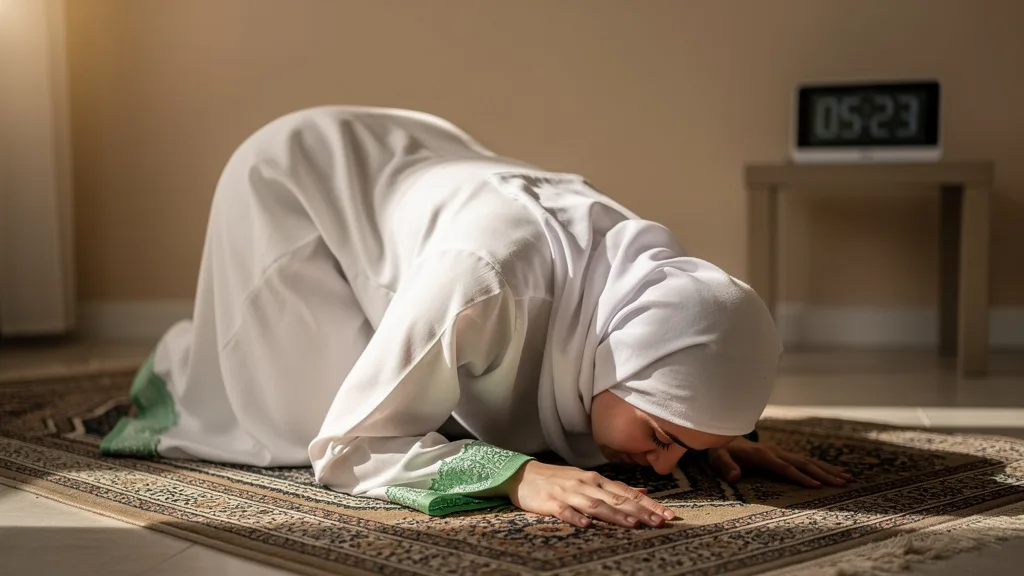
Understanding the optimal Salat Ul Hajat namaz time: when to pray in Arabic and English contexts is key to maximizing its benefits. Just as important as knowing when to pray is knowing which times to avoid, as certain periods of the day are prohibited for voluntary prayers. Aligning your prayer with the sunnah-approved times shows dedication and a deeper desire for your supplication to be accepted.
Praying in the Last Third of the Night (Tahajjud Time)
The most blessed and highly recommended time for Salat Ul Hajat is during the last third of the night, which is the same time as Tahajjud prayer. This period, roughly from 2 a.m. until Fajr begins, is a time of immense tranquility and spiritual connection. It is reported in authentic hadith that Allah (SWT) descends to the lowest heaven during this time and asks, "Who is calling upon Me that I may answer him? Who is asking from Me that I may give him? Who is seeking My forgiveness that I may forgive him?"
Praying when the world is asleep demonstrates sincerity and sacrifice, making your supplication more potent. The quiet and stillness of the night allow for deeper focus (khushu) and a more heartfelt conversation with your Creator. Combining your Prayer of Need with Tahajjud can be a profoundly moving experience, as you are presenting your needs at a time when Allah has promised to listen and respond.
General Permissible Times to Pray
If you are unable to pray during the last third of the night, do not be discouraged. Salat Ul Hajat can be performed at any time of the day or night, as long as it is not one of the forbidden times for voluntary prayer. You can offer this prayer after any of the obligatory prayers, such as after Dhuhr, Asr, or Isha, once you have completed your regular sunnah and nafl prayers.
The key is to approach the prayer with a sincere heart whenever you feel the urgency of your need. Allah's doors are always open to His servants. Whether it's in the middle of a busy workday or in the quiet of your home in the evening, you can turn to Allah with your request. The acceptance of prayer is ultimately tied to sincerity and faith, not just the time it is performed.
Times to Avoid for Voluntary Prayers
It is important to be aware of the times when offering voluntary prayers is discouraged or prohibited in Islam. These times are specifically linked to the position of the sun to avoid any semblance of sun worship, which was practiced by other religions. By respecting these timings, you ensure your act of worship is in full accordance with Islamic teachings.
The prohibited times for nafl (voluntary) prayers are:
- After the Fajr prayer until the sun has fully risen (approximately 15-20 minutes after sunrise).
- When the sun is at its zenith (midday), just before the Dhuhr prayer time begins.
- After the Asr prayer until the sun has completely set (Maghrib time begins).
During these specific windows, you should refrain from performing Salat Ul Hajat or any other voluntary prayer. Plan your prayer outside of these periods to ensure its validity and acceptance.
How to Perform Salat Ul Hajat: A Step-by-Step Guide
Performing Salat Ul Hajat is straightforward and follows the same format as any other two-rak'at nafl prayer. The main distinction lies in the intention behind it and the specific dua recited after its completion. Following these steps will help you perform the prayer correctly and with the right focus.
"Salat Ul Hajat is the believer's direct line to Allah when in need. It teaches us profound trust, reminding us to turn to the source of all solutions before seeking help from the creation. It is a beautiful expression of tawakkul (reliance on God)." - Hidayah Quran Academy Instructor
Step 1: Perform Wudu (Ablution)
Before any prayer, you must be in a state of physical and ritual purity. Begin by performing Wudu (ablution) thoroughly and mindfully. Wudu is not just a physical cleansing but also a spiritual preparation that washes away minor sins and helps you focus your mind and heart on the upcoming act of worship. Ensure you complete all the obligatory and recommended steps of ablution.

A proper ablution is a prerequisite for the validity of your Salah. As you wash each part of your body, reflect on the purity you are seeking, both externally and internally. This preparation sets the tone for a sincere and humble conversation with Allah. For those new to the practice, learning how to pray namaz correctly includes mastering the steps of wudu.
Step 2: Make the Intention (Niyyah)
Once you have completed Wudu, stand facing the Qibla and make your intention (Niyyah) in your heart. The intention does not need to be spoken out loud. You should silently and sincerely intend to pray two rak'ats of Salat Ul Hajat for the purpose of asking Allah to fulfill your specific need. For example, you might intend, "I intend to pray two rak'ats of Salat Ul Hajat for the sake of Allah, asking Him to grant me success in my exam."
The Niyyah is the cornerstone of any act of worship, as actions are judged by their intentions. This step is crucial as it differentiates Salat Ul Hajat from other prayers and focuses your mind on the specific reason you are turning to Allah. Your intention should be pure, seeking only help and approval from Allah (SWT).
Step 3: Pray Two Rak'ats
Proceed to pray two rak'ats of voluntary prayer just as you would any other nafl prayer, like the sunnah prayers. In the first rak'at, after reciting Surah Al-Fatihah, it is recommended to recite Surah Al-Kafirun (Chapter 109). In the second rak'at, after Surah Al-Fatihah, it is recommended to recite Surah Al-Ikhlas (Chapter 112). However, you are permitted to recite any surah you know well from the Quran.
Perform the bowing (ruku), prostrations (sujood), and sitting (tashahhud) with calmness and devotion. Concentrate on your prayer and the greatness of Allah. After completing the second prostration of the second rak'at and reciting the tashahhud, salawat, and other duas, you conclude the prayer with the tasleem (saying "Assalamu Alaikum wa Rahmatullah" to the right and then to the left).
Step 4: Recite the Specific Dua of Salat Ul Hajat
After completing the prayer, remain seated and praise Allah (SWT). It is recommended to glorify Him (e.g., by reciting SubhanAllah, Alhamdulillah, Allahu Akbar) and send blessings upon the Prophet Muhammad (peace be upon him). Then, with raised hands and a heart full of hope and humility, recite the specific dua for Salat Ul Hajat.
The traditional dua is: "La ilaha illallahul Halimul Karim. Subhanallahi Rabbil 'Arshil 'Azim. Alhamdulillahi Rabbil 'Alamin. As'aluka mujibati rahmatika, wa 'aza'ima maghfiratika, wal ghanimata min kulli birrin, was salamata min kulli ithmin, la tada' li dhanban illa ghafartahu, wa la hamman illa farrajtahu, wa la hajatan hiya laka ridan illa qadaytaha ya Arhamar Rahimin." You should then state your specific need clearly and sincerely to Allah. You can find more details in our dedicated guide to Salatul Hajat.
Salat Ul Hajat vs Tahajjud vs Istikhara: Understanding the Differences
While Salat Ul Hajat, Tahajjud, and Istikhara are all valuable voluntary prayers, they serve distinct purposes. Understanding their differences helps you know which prayer is most appropriate for your situation. Each one offers a unique way to connect with Allah and seek His guidance, mercy, or help.

All three prayers are highly recommended and demonstrate a believer's reliance on Allah. However, their intentions and outcomes are different. The following table breaks down the key distinctions to provide clarity.
| Feature | Salat Ul Hajat (Prayer of Need) | Tahajjud (Night Prayer) | Istikhara (Seeking Guidance) |
|---|---|---|---|
| Primary Purpose | To ask Allah to fulfill a specific, pressing need or remove a hardship. | To seek closeness to Allah, gain spiritual reward, and ask for forgiveness. A general act of worship. | To ask Allah for guidance in making a decision when one is uncertain between two or more permissible options. |
| Timing | Any permissible time, but the last third of the night is best. | Exclusively in the last third of the night after waking up from sleep. | Any permissible time, often recommended before making the final decision. |
| Structure | Two rak'ats followed by a specific dua stating the need. | Prayed in units of two rak'ats, with the number of rak'ats being flexible (e.g., 2, 4, 8). | Two rak'ats followed by a specific dua asking for guidance. |
| Outcome Sought | Fulfillment of the specific need or removal of the difficulty. | Spiritual elevation, forgiveness of sins, and general blessings. | Clarity and ease towards the better choice, or obstacles in the path of the wrong choice. |
The core purpose of Salat Ul Hajat is transactional in a spiritual sense. You are approaching Allah with a specific problem and a specific request. It is the go-to prayer when you are in debt, seeking a job, hoping for marriage, praying for healing, or facing any other worldly or religious need. The focus is singular: presenting a petition to the King of all kings.
This prayer is an acknowledgment that every solution comes from Allah alone. It empowers you by providing a direct and sanctioned method to ask for what you want, reinforcing the belief that with Allah's help, anything is possible. It is a proactive step of faith, combining action (the prayer) with trust (in Allah's response).
Purpose of Tahajjud: Seeking Closeness to Allah
Tahajjud, on the other hand, is not tied to a specific need. While you can certainly make any dua during Tahajjud, its primary purpose is to build a stronger, more intimate relationship with Allah. It is a prayer of devotion, performed at a time when most people are asleep, signifying a deep love and yearning for the Creator. Waking up for Tahajjud is considered a sign of a true believer.
This prayer is about worship for the sake of worship. It's about glorifying Allah, seeking His forgiveness, and thanking Him for His blessings. The reward for Tahajjud is immense spiritual growth and proximity to Allah. Any needs presented during this time are made potent by the sincerity of the worship itself.
Purpose of Istikhara: Seeking Divine Guidance
Istikhara is the prayer for decision-making. You perform it when you are at a crossroads and unsure which path to take. For example, you might pray Istikhara when choosing between two job offers, considering a marriage proposal, or deciding whether to move to a new city. You are not asking for a specific outcome but rather asking Allah to guide you to the choice that is best for you in this life and the hereafter.
After praying the two rak'ats and the specific Istikhara dua, you are advised to follow your inclination and trust that Allah will make the right path easy and the wrong path difficult. It's about surrendering your judgment to Allah's infinite wisdom. For a detailed guide, you can learn how to pray Istikhara and understand its profound meaning.
Signs That Your Prayer of Need Has Been Accepted
After performing Salat Ul Hajat, many people look for signs of acceptance. It's important to remember that Allah answers prayers in one of three ways: He may grant your request exactly as you asked, He may avert a calamity from you that is equal in measure to what you asked for, or He may save the reward for your prayer for you in the Hereafter. All outcomes are a sign of His mercy.
However, there are often subtle signs in your life and within yourself that can indicate a positive response. One of the foremost signs is a feeling of contentment and peace (sakina) in your heart. You may feel a sense of relief and a firm belief that Allah has taken care of your affair, regardless of the immediate outcome. This internal tranquility is a gift in itself.
Another sign can be the facilitation of the matter you prayed for. You might notice that obstacles are suddenly removed, doors begin to open, and people are made helpful to your cause. Things start to fall into place in a way that seems divinely guided. Trusting in Allah's timing is crucial, as the answer may not be immediate but will always arrive at the perfect moment.
Real-Life Success Stories from Praying Salat Ul Hajat in 2026
Throughout history and into 2026, countless Muslims have experienced the blessings of Salat Ul Hajat. These stories serve as powerful reminders of Allah's omnipotence and mercy. For instance, a student struggling with her final exams prayed Salat Ul Hajat every night for a week, asking for clarity and retention. She found that her anxiety lessened, and she was able to recall information during the exam that she thought she had forgotten, ultimately passing with excellent grades.
In another case, a family in the UK was facing a severe financial crisis. They turned to Allah with the Prayer of Need, asking for a lawful source of income. Shortly after, the husband received an unexpected job offer that not only solved their financial problems but was also a better position than his previous one. These are not coincidences but a testament to the power of sincere supplication.
A sister seeking a righteous spouse performed Salat Ul Hajat consistently, asking Allah for a partner who would be a comfort to her and help her in her deen. Within a few months, she was introduced to a person with wonderful character through a trusted family friend, leading to a blessed marriage. These stories from our community in 2026 reinforce the belief that when you turn to Allah with a sincere need, He will never leave you empty-handed.
Key Takeaways
Understanding and implementing Salat Ul Hajat in your life can be a transformative spiritual practice. It is a powerful tool for seeking divine assistance for all of your needs, big or small. By turning to Allah first, you affirm your faith and place your trust in the most capable hands.
- Purpose: Salat Ul Hajat is a two-rak'at voluntary prayer for asking Allah to fulfill a specific need or remove a hardship.
- Best Time: The most recommended time is the last third of the night (Tahajjud time), but it can be prayed at any permissible time.
- How to Perform: It involves performing Wudu, making the intention (Niyyah), praying two rak'ats, and then reciting the specific dua of need.
- Key Difference: Unlike Tahajjud (for general worship) or Istikhara (for guidance), Salat Ul Hajat is specifically for petitioning Allah for a particular outcome.
- Signs of Acceptance: Acceptance can manifest as the fulfillment of your need, the averting of a greater calamity, a reward in the hereafter, or a feeling of peace and contentment in your heart.
Frequently Asked Questions
Here are answers to some common questions about performing the Prayer of Need. These clarifications can help ensure you are approaching this important act of worship with confidence and correct knowledge.
Are there specific days of the week better for this prayer?
There are no specific days of the week, such as Friday, that are mentioned in authentic sources as being better for Salat Ul Hajat. The prayer is tied to your need, not a specific day. You should perform it whenever the need arises. The emphasis is on the sincerity of the worshipper and choosing blessed times of the day or night, rather than a particular day of the week.
However, certain times like the Day of Arafah or during the blessed nights of Ramadan are generally powerful times for any dua. If your need coincides with these times, it is certainly beneficial to take advantage of them, but it is not a requirement to wait for a specific day to perform the Prayer of Need.
What are the most recommended Surahs to recite during Salat Ul Hajat?
While you can recite any surah you are comfortable with after Surah Al-Fatihah, some scholarly traditions recommend specific ones. A common recommendation is to recite Surah Al-Kafirun (Chapter 109) in the first rak'at and Surah Al-Ikhlas (Chapter 112) in the second rak'at. This is based on narrations related to other voluntary prayers and is seen as a good practice.
The most important factor is your concentration and devotion in the prayer. If reciting other surahs that you know better or that feel more connected to your situation helps you focus, that is perfectly acceptable. The goal is to connect with Allah, and the recitation of any part of the Quran facilitates that connection.
How many times can you pray Salat Ul Hajat for the same need?
You can pray Salat Ul Hajat as many times as you wish for the same need. There is no limit. In fact, persistence in dua is a beloved act to Allah. Consistently asking for your need shows your reliance on Him and your patience. You can perform the prayer daily, weekly, or whenever you feel the urge to supplicate for your need again.
Prophet Muhammad (peace be upon him) taught us to be persistent in our supplications. Continuing to ask is a sign of good faith and trust in Allah's timing and wisdom. Do not despair if your need is not met immediately; continue to pray with a hopeful and sincere heart.
Can you pray the prayer of need for worldly matters?
Absolutely. Salat Ul Hajat can be prayed for any legitimate need, whether it is related to your worldly life (dunya) or your spiritual life (akhirah). Islam is a complete way of life and does not create a rigid separation between the two. You can pray for a new job, success in studies, financial stability, finding a good spouse, or healing from an illness.
As long as what you are asking for is permissible (halal) and not sinful, you are encouraged to ask Allah for it. The Prophet (peace be upon him) is reported to have said that we should ask Allah for everything, even for the salt for our food or the strap of our sandal if it breaks. This teaches us to rely on Him for all matters, big and small.
What should you do after completing Salat Ul Hajat?
After completing the prayer and the dua, the most important thing to do is to have Tawakkul, which is complete trust and reliance on Allah. Believe firmly that Allah has heard your prayer and will respond in the way that is best for you. Continue to strive and take the practical, halal steps necessary to achieve your goal. Dua and action go hand in hand.
You should also maintain patience (sabr) and avoid becoming anxious or despairing if you do not see an immediate result. Continue with your regular acts of worship, make general dua, and maintain a positive opinion of Allah. Trusting His plan is a crucial part of the process and an act of worship in itself.
Conclusion
Salat Ul Hajat is a profound gift, providing a direct channel to seek Allah's assistance for any need. By understanding the best Salat Ul Hajat namaz time: when to pray in Arabic and English, and following the correct steps, you can confidently present your requests to the One who has power over all things. Remember to combine your prayer with sincere trust, patience, and continued effort, knowing that Allah's response is always rooted in infinite wisdom and mercy.
If you or your children wish to deepen your understanding of the Quran and Islamic practices like Salah, our qualified female teachers are here to help. Hidayah Quran Academy offers private, one-on-one classes for sisters and children in a supportive online environment. Start your journey to a stronger connection with Allah today. Book Free Trial.