Children aged 4 and above
The Noorani Qaida is the perfect starting point for young children. Our teacher uses colourful, interactive and child-friendly methods to keep young learners engaged and motivated.
The Noorani Qaida is the foundation of Quran education. Learn every Arabic letter with perfect pronunciation before you open the Quran. 1-on-1 private classes, ideal for children, adult beginners and new Muslims.
Meet Your Teacher
Ustadha Fatima
Hafiza, female Quran teacher from Pakistan, teaching online since 2015.
Book a free 30-minute trial, meet the teacher, check the teaching style and then decide if regular classes are right for you.
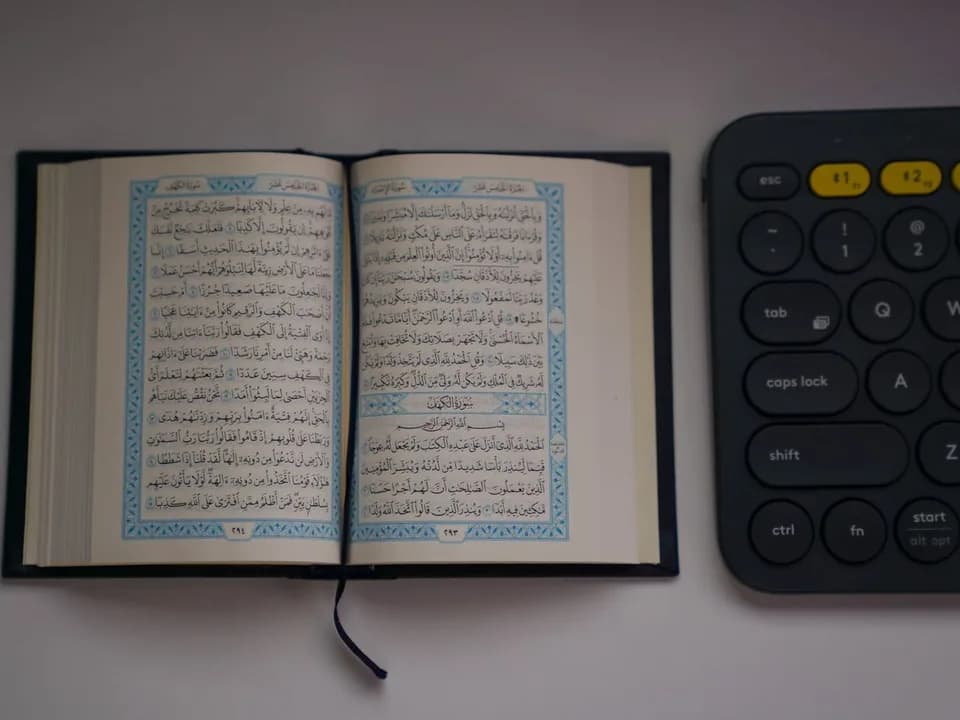
The Noorani Qaida is the foundation of Quran education. Before any student, child or adult, can begin reading the Holy Quran, they must first learn the Arabic alphabet and how Arabic letters are pronounced. The Noorani Qaida teaches exactly this, step by step, in a structured and proven way. At Hidayah Quran, we offer Noorani Qaida online classes delivered one-to-one by our qualified female teacher via Zoom, WhatsApp and Google Meet, available to students in the UK, USA, Australia and UAE.
The Noorani Qaida (also written as Norani Qaida or Noorani Qaeda) is a short book used across the Muslim world to teach beginners how to read Arabic text, specifically for the purpose of reading the Holy Quran. It was compiled by Molvi Noor Muhammad Haqqani and is the most widely used beginner's Arabic reading primer in Pakistan, India, Bangladesh and Muslim communities worldwide.
The Noorani Qaida covers:
Once a student can confidently recognise the Arabic alphabet, the next step in the Noorani Qaida is learning zabar, zer and pesh, the three short vowel signs that sit above or below a letter and give it its sound. These are the Urdu and South Asian names most families will recognise. In Arabic grammar, the same three signs are called Fatha, Kasra and Damma. A letter on its own is just a shape, it is zabar, zer and pesh that turn that shape into a sound you can actually recite.
A small diagonal stroke written above the letter, giving it a short "a" sound.
The letter Ba with a zabar is pronounced Ba, like the a in bat.
A small diagonal stroke written below the letter, giving it a short "i" sound.
The letter Ba with a zer is pronounced Bi, like the i in bit.
A small loop-like mark written above the letter, giving it a short "u" sound.
The letter Ba with a pesh is pronounced Bu, like the u in put.
Getting zabar, zer and pesh right is not a small detail, it is one of the most important parts of learning to recite the Quran correctly. A letter read with the wrong vowel sign can change the meaning of a word entirely, and in Quran recitation that matters a great deal. This is exactly why the Noorani Qaida spends so much time drilling zabar, zer and pesh long before a student opens the Quran itself: by the time they get there, recognising the correct vowel on sight should feel automatic rather than a guess.
This is also why zabar, zer and pesh are genuinely difficult to master from an app or a recorded video alone. In a live 1-on-1 online class, the teacher demonstrates the exact sound of each zabar, zer and pesh, listens closely as the student repeats it back, and corrects the sound immediately if it is even slightly off. A static app cannot hear a student's voice, and a video cannot tell them their zer sounded too much like a zabar. That real-time, back-and-forth correction from a qualified teacher is what makes these small marks truly stick.
If your child, or you, are ready to build this foundation the right way, book a free trial class on WhatsApp and hear how quickly zabar, zer and pesh start to feel natural, all from the comfort of home.
Many families make the mistake of trying to teach children the Quran before they have mastered the Noorani Qaida. This leads to weak foundations and poor pronunciation habits that are very hard to correct later.
The Noorani Qaida ensures students:
Learn to pronounce every Arabic letter correctly from its Makhraj (point of articulation)
Understand how vowels (harakat) change the sound of letters
Can decode any Arabic word they see, not just memorised phrases
Have a strong Tajweed foundation built in from the very beginning
The Noorani Qaida is the perfect starting point for young children. Our teacher uses colourful, interactive and child-friendly methods to keep young learners engaged and motivated.
Thousands of adult Muslims never had the opportunity to learn the Quran properly. Our teacher has helped many adults, including those in their 30s, 40s and beyond, complete the Noorani Qaida and move on to reading the Quran. There is absolutely no shame in starting at any age.
If you attended Quran classes as a child but still feel unsure about your Arabic letters, joining us for a Noorani Qaida refresh is the best thing you can do before moving on to Tajweed or Quran reading.
The Noorani Qaida is the recommended starting point for anyone who has recently accepted Islam. It gives you the tools to read the Quran yourself, the greatest gift you can give yourself as a new Muslim.
| Age Group | Classes Per Week | Estimated Duration |
|---|---|---|
| Children 4 to 6 | 3 to 4 sessions | 6 to 9 months |
| Children 7 to 12 | 4 to 5 sessions | 3 to 5 months |
| Teenagers | 3 to 5 sessions | 2 to 4 months |
| Adults | 3 to 5 sessions | 2 to 4 months |
These are approximate timelines. Some students progress faster, others need more time, and that is perfectly fine. Our teacher adjusts the pace to each individual student.
Every great Quran reciter began with the alphabet. Take the first step today with a free 30-minute trial class. No payment. No pressure. Just the beginning of something beautiful.
Book Free Trial, WhatsAppFree 30-minute trial class. No payment or commitment required.