
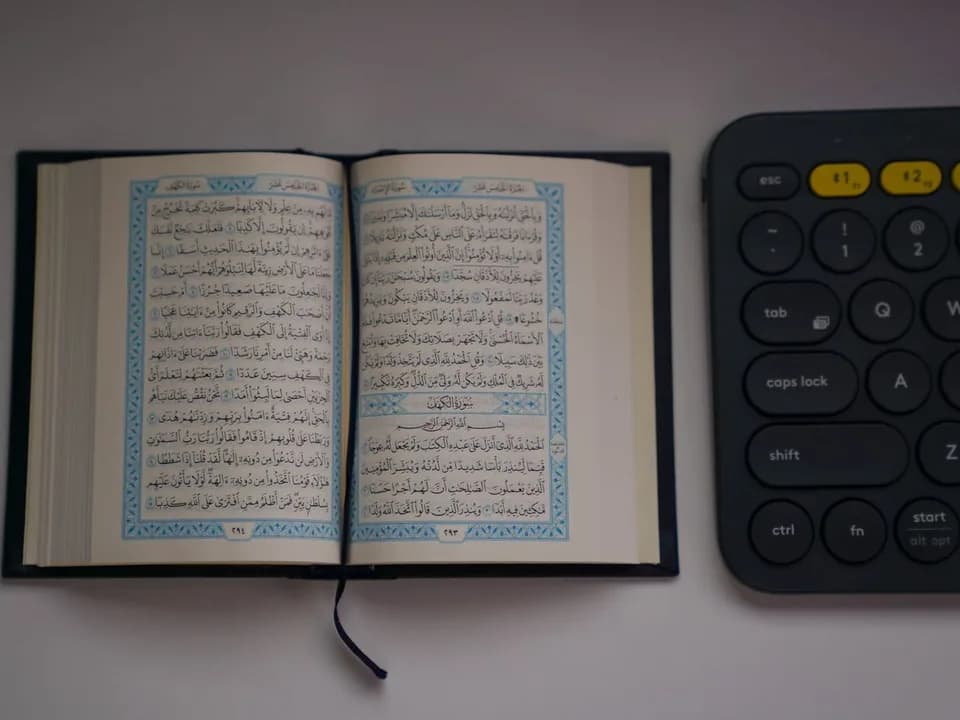
Surah 2, Revealed in Madinah, 286 Ayat

Surah Al-Baqarah: Read the Last 2 Ayat, Meaning and Virtues

The Quran's second and longest surah: its famous last two ayat with translation, their well known virtue, and where to read the complete 286-ayah surah.

Free Trial ClassFemale Teacher1-on-1 PrivateFlexible Timings

Surah Al-Baqarah, an orientation and reading guide

Surah Al-Baqarah is the second surah of the Quran and its longest, running to 286 ayat and revealed in Madinah. It covers belief, worship, law and guidance for daily life, alongside accounts connected to earlier prophets. This page explains what the surah is about, features its famous last two ayat with transliteration and translation, mentions a few of its other well known passages, and points you to a complete source for reading the whole surah in Arabic and English.

If you are here because you want to actually read or memorise Surah Al-Baqarah properly, with correct pronunciation rather than guesswork, that is exactly what our 1-on-1 online Quran classes are for. Read on for the two ayat, then see how a teacher fits in below.

286 ayat, the longest surah in the Quran
Revealed in Madinah
Home to the famous last 2 ayat and Ayat al-Kursi
Covers belief, worship, law and stories of earlier prophets
Background

What Is Surah Al-Baqarah?

Al-Baqarah means “The Cow” in Arabic, from an account involving a cow that Bani Israel were commanded to slaughter, not the wider subject matter of the surah.

At 286 ayat, it is the longest of the 114 surahs of the Quran, revealed in Madinah to the early Muslim community there. Its themes run wide: belief, guidelines for worship, law covering matters such as fasting and financial dealings, the change of the direction of prayer, and accounts connected to earlier prophets including Ibrahim and Musa.

Surah Al-Baqarah at a Glance

PositionSurah 2 of 114
Length286 ayat
RevealedMadinah
Meaning of NameThe Cow
Most Recited PassageLast 2 ayat, Amana ar-Rasoolu
The Most Recited Passage

The Last 2 Ayat of Surah Al-Baqarah, Amana Ar-Rasoolu

Ayah 285 and ayah 286, widely known by the opening words “Amana ar-Rasoolu,” the Messenger has believed, are among the most memorised and widely recited passages in the Quran. Because even a small transcription error in Quranic Arabic script is a real accuracy risk, we give them below as a transliteration and a translation of the meaning, rather than attempting the Arabic script itself. For the precise Arabic text, see the Quran.com link later on this page.

285

Ayah 285

Transliteration

Aamana ar-Rasoolu bimaa unzila ilayhi mir-Rabbihi wal-mu'minoona. Kullun aamana billaahi wa malaa'ikatihi wa kutubihi wa rusulihi, laa nufarriqu bayna ahadim-mir-rusulihi. Wa qaaloo: sami'naa wa ata'naa, ghufraanaka Rabbanaa wa ilaykal-maseer.

Translation of the Meaning

The Messenger believes in what has been sent down to him from his Lord, and so do the believers. Each one believes in Allah, His angels, His books and His messengers, saying, we do not distinguish between any of His messengers. And they say, we hear and we obey, grant us Your forgiveness, our Lord, and to You we all return.

286

Ayah 286

Transliteration

Laa yukallifullaahu nafsan illaa wus'ahaa. Lahaa maa kasabat wa alayhaa mak-tasabat. Rabbanaa laa tu'aakhithnaa in naseenaa aw akhta'naa. Rabbanaa wa laa tahmil alaynaa isran kamaa hamaltahu alal-lazeena min qablinaa. Rabbanaa wa laa tuhammilnaa maa laa taaqata lanaa bihi. Wa'fu annaa waghfir lanaa warhamnaa anta mawlaanaa fansurnaa alal-qawmil-kaafireen.

Translation of the Meaning

Allah does not burden any soul with more than it can bear. Every soul receives what it has earned of good, and bears what it has earned of wrong. Our Lord, do not take us to task if we forget or make a mistake. Our Lord, do not place upon us a burden like the one You placed on those before us. Our Lord, do not burden us with more than we have the strength to carry. Pardon us, forgive us and have mercy on us. You are our Protector, so grant us victory over the disbelieving people.

Transliteration is a phonetic guide to pronunciation. Spellings vary slightly between sources because Arabic sounds do not map perfectly onto English letters.

Why These Two Ayat Are Recited at Night

A well known and authentic hadith describes the Prophet, peace be upon him, encouraging recitation of these two ayat at night, saying they would be sufficient for whoever recites them, one reason “Amana ar-Rasoolu” is memorised so widely.

Elsewhere in the Surah

Other Well Known Passages in Surah Al-Baqarah

Surah Al-Baqarah also contains Ayat al-Kursi, widely known as “the Throne Verse,” regarded by many scholars as one of the most significant verses in the Quran for its description of the attributes of Allah. As with the last two ayat, we have not transcribed its Arabic text here, for the same accuracy reasons: it is correctly rendered on Quran.com, linked below. Elsewhere the surah includes the account that gives it its name, the change of the direction of prayer, and accounts connected to Ibrahim and Musa, all addressed to the early Muslim community in Madinah.

For the Complete Text

Read the Complete Surah Al-Baqarah

This page is deliberately an orientation guide, not a substitute for the mushaf. We have not attempted to reproduce all 286 ayat here: doing that accurately from memory is not something any reference page should risk. For the complete Arabic text, translation, tafsir and audio recitation, we recommend Quran.com, a widely trusted, complete Quran reference.

Read Surah Al-Baqarah on Quran.com
Beyond Reading

Reading About It Is the First Step, Reciting It Correctly Is the Next

A reference page can describe what Surah Al-Baqarah contains and set out its most famous two ayat, but it cannot listen to you recite them back. Correct pronunciation of Quranic Arabic is learned by ear, from a teacher who hears each letter and corrects it, not from a webpage. If you want to properly read or memorise passages like its last two ayat, our 1-on-1 online Quran classes are built for exactly that, taught by a qualified female teacher via Zoom and WhatsApp. Many students start with Quran reading classes to build fluency, or move directly into Hifz classes when memorisation is the goal.

Want to Read or Memorise Passages Like This Correctly?

Book a free 30-minute trial and our qualified female teacher will listen to your recitation and tell you honestly where to start.

Book My Free Trial →

No payment. No commitment. Free 30-minute class.

Common Questions

Surah Al-Baqarah, FAQ

Questions students ask us most before reading or memorising Surah Al-Baqarah.

Learn to Read and Recite the Quran With a Real Teacher

Thirty minutes, 1-on-1 with a qualified female teacher. Tell her which passages you want to read or memorise, including Surah Al-Baqarah, and get a clear plan to start. No payment, no card details, no commitment to continue.

Free 30-minute trial. From £4 per hour afterwards, monthly, no contract.

Book Free Trial