
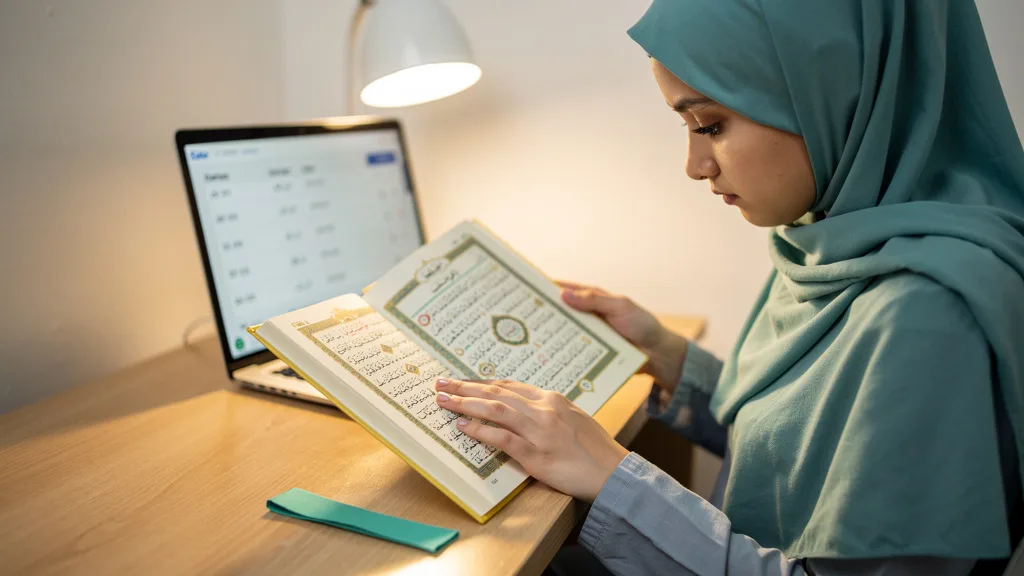
Have you ever wished you could feel the full power of the Quran's words directly in your heart during prayer? For countless Muslims, the journey to understand the Quran in its original language is a profound spiritual quest. It is the key that unlocks a more intimate and meaningful relationship with the divine text and with Allah (SWT) Himself.
Learning Quranic Arabic deepens your spiritual connection by allowing you to understand the divine message of the Quran in its original, untranslatable form. This direct comprehension enhances focus in Salah, enriches personal du'a, and unlocks profound layers of meaning, moving you beyond a reliance on translations and closer to the words of Allah. The answer to why learning Quranic Arabic deepens your connection lies in this transformative shift from passive reading to active, heartfelt comprehension.
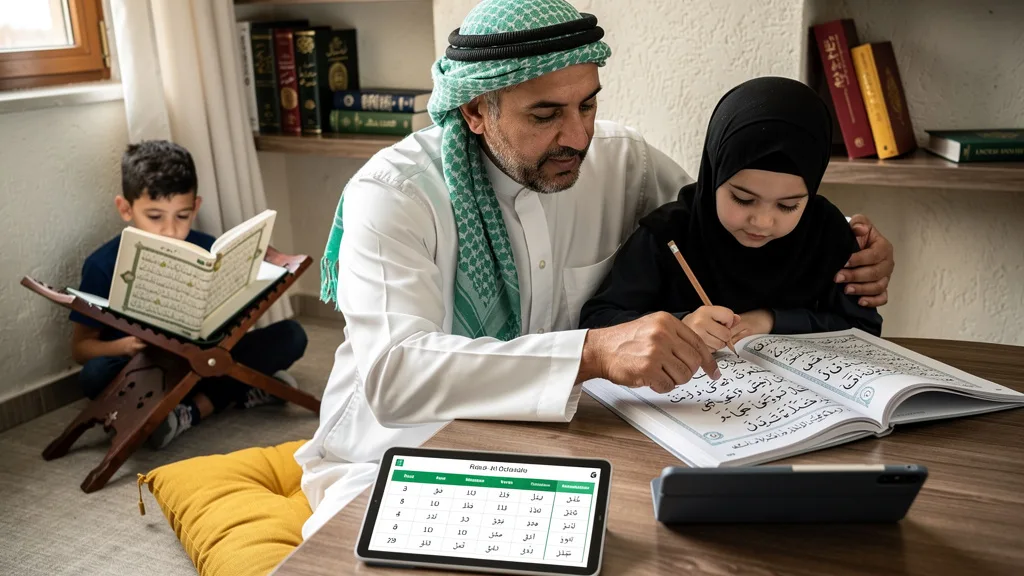
Embarking on the path to learn Quranic Arabic is far more than an academic exercise or a linguistic hobby. It is a spiritual imperative that lies at the very heart of a Muslim's faith. The Quran is the literal word of Allah, revealed in Arabic, and to engage with this divine language is to draw closer to the source of all guidance. This journey is not just about acquiring vocabulary and grammar; it is about immersing yourself in the language chosen by Allah for His final message to humanity.

The Arabic language itself is deeply intertwined with Islamic tradition and history. It is a rich Semitic language with historical and cultural connotations that have shaped civilizations for millennia. Understanding it allows you to connect with this vast heritage and appreciate why this specific language was the vessel for a message meant for all times and all people. By learning it, you are connecting to a legacy of scholarship and faith that spans over 1400 years.
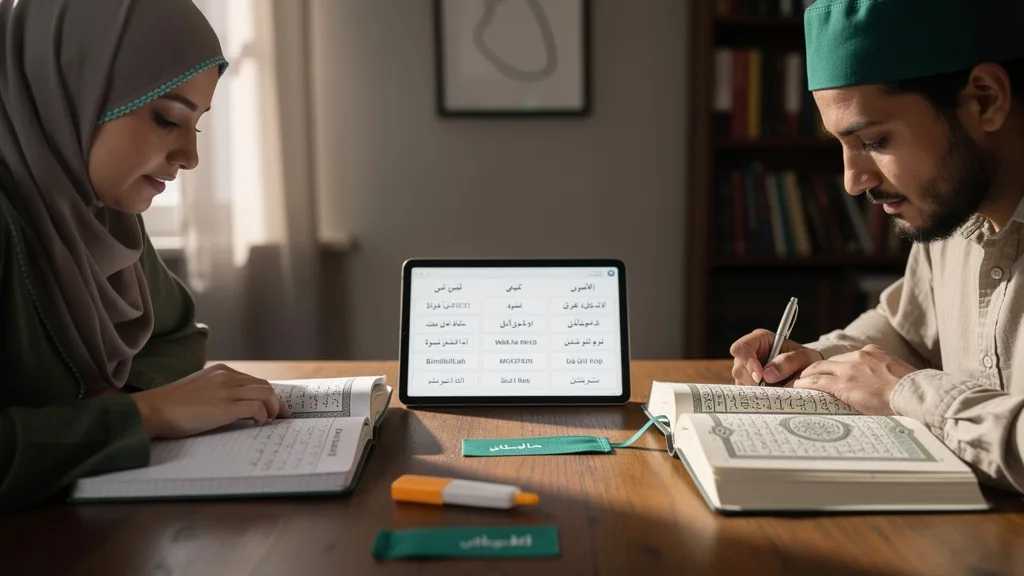
Understand the Quran Directly in Its Original Language
Relying on translations of the Quran is a valuable starting point, but it is like viewing a beautiful landscape through a window. Learning the original language allows you to step outside and experience that landscape in all its color, depth, and magnificence. The primary benefit of learning the language of the Quran is the ability to understand its meanings without relying on an intermediary, fostering a direct and unfiltered connection with Allah's words.

Appreciate the Divine Eloquence and Nuance
The Quran's linguistic and literary beauty is a miracle in itself, a quality that can never be fully captured in another language. Its rhetorical devices, wordplay, and rhythmic prose are elements of its divine nature that can only be truly appreciated in the original Arabic. When you begin to understand these subtleties, you witness the inimitable eloquence of the Quran, strengthening your awe and conviction.
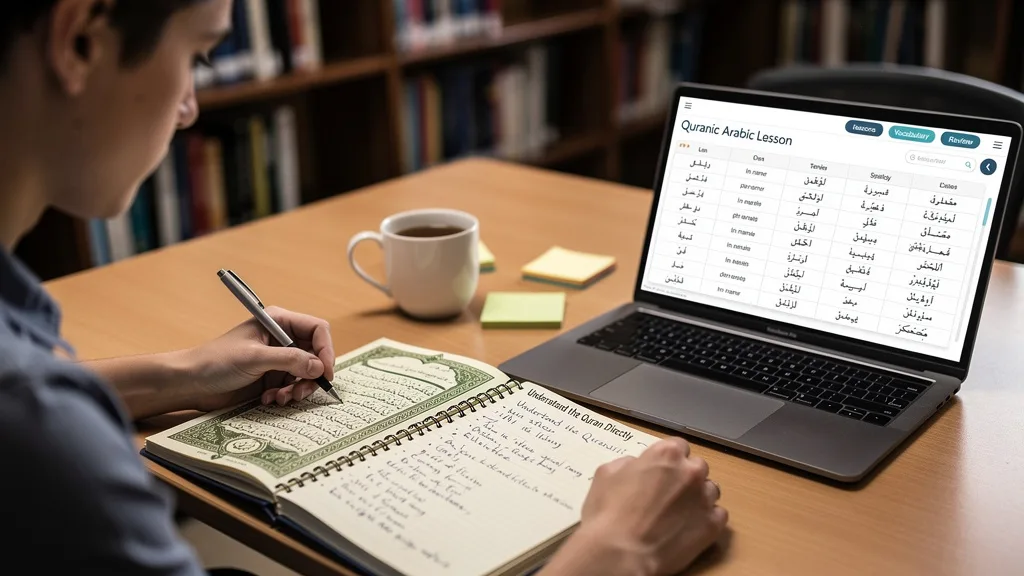
"Indeed, We have sent it down as an Arabic Qur'an that you might understand." (Surah Yusuf, 12:2). This verse highlights the intrinsic link between the Arabic language and the comprehension of the divine message, emphasizing that its full wisdom is unlocked through its original tongue.
Every word and phrase was chosen with perfect precision, and understanding this choice brings a new level of appreciation for the text. You begin to see the layers of meaning packed into a single word, a beauty that translations often flatten. This appreciation moves your recitation from a mere vocal exercise to a deeply moving experience as you begin to grasp the aural and literary beauty of beautiful Quranic verses.
Move Beyond a Reliance on Translations
Every translation is an interpretation. The translators, no matter how skilled and sincere, must make choices about which shade of meaning to convey for words that often have multiple layers. This means that when you read a translation, you are engaging with the translator's understanding of the text, not just the text itself. Learning Quranic Arabic empowers you to move beyond this reliance and form your own direct relationship with the words of Allah.
This independence is liberating and spiritually fulfilling. It allows you to ponder the verses for yourself, consult various scholarly interpretations (tafsir), and come to a more personal and robust understanding of your faith. You are no longer a passive recipient of information but an active participant in a conversation with the divine, which is a key reason why learning Quranic Arabic deepens your connection to Islam.
Unlock Profound Layers of Meaning and Wisdom
The Arabic language is known for its depth, where a single root can blossom into a family of words with interconnected meanings. When you learn Quranic Arabic, you begin to see these connections throughout the Quran, revealing profound layers of wisdom that are invisible in translation. You can appreciate the thematic links between different chapters and verses that are woven together through shared linguistic roots.
This deeper understanding of the ultimate source of guidance enriches your entire worldview. The principles and parables of the Quran become clearer and more applicable to your life. You start to recognize the divine wisdom in its commandments and prohibitions with greater clarity, strengthening your faith and your resolve to live by its teachings. This journey into the profound depths of the Quran is a continuous process of discovery that lasts a lifetime.
Elevate Your Connection During Salah and Personal Du'a
One of the most immediate and impactful benefits of learning Quranic Arabic is the transformation of your daily prayers. Salah is a direct conversation with Allah, and understanding the words you are reciting can change it from a ritual into a truly profound spiritual connection. Your focus sharpens, and your heart becomes more present.
Comprehend the Words You Recite in Prayer
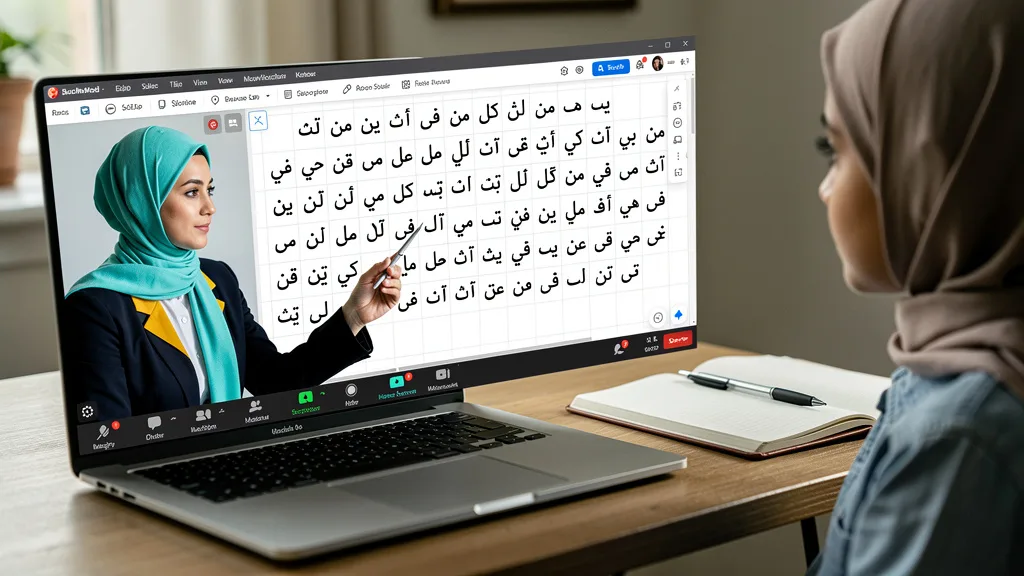
Imagine standing in prayer, reciting Surah Al-Fatiha, and not just repeating memorized sounds but fully understanding the praise, the supplication, and the declaration of faith you are making. This comprehension is the key to unlocking khushu', the state of humble submission and concentration in prayer. When your mind understands what your tongue is reciting, your heart can fully engage, and the prayer becomes a source of true peace and spiritual nourishment.
This enhanced focus helps you block out worldly distractions and be fully present in your conversation with your Creator. Each verse you recite resonates with its intended meaning, making the experience more powerful and personal. This is a fundamental aspect of strengthening your connection with Allah, turning a daily obligation into a cherished meeting.
Formulate More Personal and Heartfelt Supplications
While making du'a in any language is beloved to Allah, knowing Arabic opens up a new world of supplication. You can use the beautiful and comprehensive words from the Quran and the Sunnah in your own personal prayers. You can formulate your requests with the same eloquent and powerful language used by the prophets and the righteous.
This ability allows you to make du'a that is more specific, personal, and heartfelt. Instead of relying on a few memorized supplications, you can speak to Allah about your unique hopes, fears, and needs using a rich vocabulary of devotion. This is especially true when seeking specific outcomes, as you can draw upon a vast tradition of powerful duas for your needs, understanding their context and meaning fully.
Access the Full Scope of Islamic Knowledge
The Quran is the foundation of Islamic knowledge, but it is the gateway to a vast ocean of scholarship. Learning Quranic Arabic is the key that unlocks this gateway, giving you access to the primary sources of Islamic tradition in their original form. This allows for a more authentic and comprehensive education in your deen.
Engage with Hadith and the Seerah of the Prophet (PBUH)
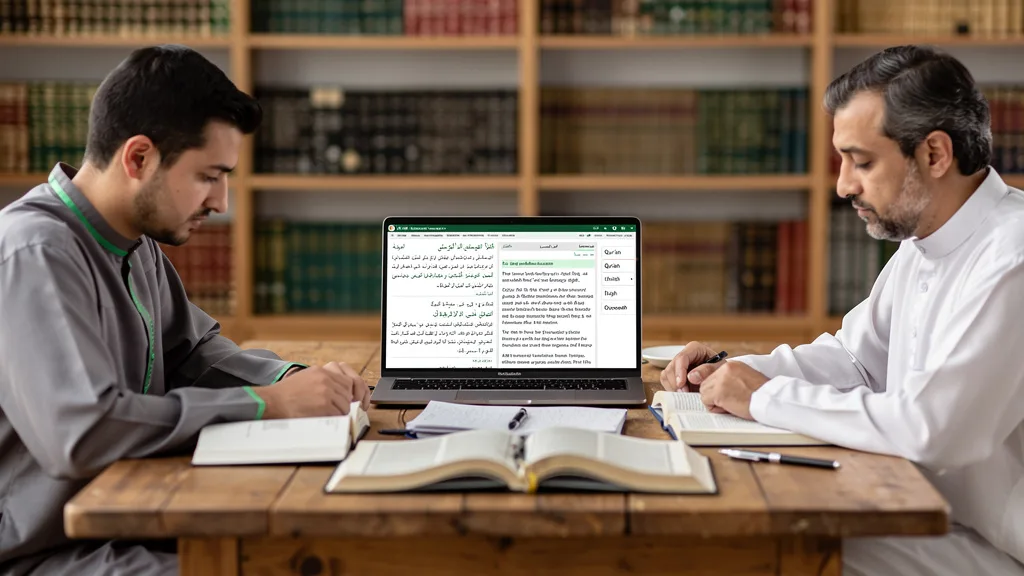
The sayings and actions of the Prophet Muhammad (peace be upon him), known as Hadith, are the second primary source of Islamic law and guidance. Like the Quran, these were transmitted in Arabic. While translations are available, they often miss the subtle legal and ethical implications embedded in the original wording. Learning Arabic allows you to engage directly with these texts.
Similarly, the Seerah, the biography of the Prophet (PBUH), is best studied in its original language. Doing so provides a more vivid and nuanced picture of his life, character, and mission. This direct engagement with the primary sources of Hadith and Seerah deepens your love for the Prophet (PBUH) and your understanding of his teachings.
Study the Works of Classical Islamic Scholars
For over a millennium, the greatest minds in the Muslim world have produced monumental works in theology, law (fiqh), spirituality (tasawwuf), and Quranic exegesis (tafsir). The overwhelming majority of this rich intellectual heritage remains in its original Arabic. To truly appreciate the depth and breadth of Islamic scholarship, a working knowledge of Quranic Arabic is indispensable.
Whether you wish to understand the detailed legal reasoning of Imam al-Shafi'i or the profound spiritual insights of Imam al-Ghazali, direct access to their texts is transformative. You can explore the rich historical and cultural connotations of the Islamic intellectual tradition without the filter of translation. This access allows you to appreciate the diversity of scholarly opinion and the rigorous methodology that has characterized Islamic thought for centuries.
Your Path to Learning Quranic Arabic in 2026
Starting the journey to learn Quranic Arabic can feel daunting, but with the right approach and resources, it is an achievable and incredibly rewarding goal. The key is to have a clear intention, set realistic expectations, and utilize effective tools. In 2026, a wealth of resources is available to help you succeed on this blessed path.

Quranic Arabic vs. Modern Standard Arabic
It is crucial to understand the distinction between Quranic Arabic (also known as Classical Arabic) and Modern Standard Arabic (MSA). While they share a grammatical foundation, their vocabulary and usage differ significantly. For the purpose of understanding the Quran and classical texts, your focus must be on Quranic Arabic.
| Feature | Quranic (Classical) Arabic | Modern Standard Arabic (MSA) |
|---|---|---|
| Primary Use | The Quran, Hadith, classical Islamic literature, and religious contexts. | News, modern literature, politics, and formal communication across the Arab world. |
| Vocabulary | Rooted in the 7th-century text of the Quran; some words are archaic. | Includes modern vocabulary for technology, politics, and contemporary life. |
| Goal for a Muslim | To understand the divine message, improve worship, and access sacred texts. | To communicate with contemporary Arabic speakers or consume modern media. |
| Learning Focus | Focuses on Quranic vocabulary, grammar, and scriptural analysis. | Focuses on conversational skills, media literacy, and modern terminology. |
Setting Realistic Goals for Your Learning Journey
You do not need to become a master grammarian overnight. The path to learning is a gradual one, and every step forward is a victory. Start with small, manageable goals. Your first goal might be to simply master the Arabic alphabet and its pronunciation correctly.
From there, you can aim to understand the words you recite daily in Salah. Focus on Surah Al-Fatiha and other short surahs. As your vocabulary grows, you can set goals to read and understand one verse of the Quran a day. Consistency is more important than intensity. A little bit of study each day is far more effective than cramming once a week. Applying these effective online learning strategies can help structure your progress, whether you are an adult or arranging studies for your child.
Essential Tools and Resources for Beginners
Having the right support system and tools is essential for success. In today's digital age, you have access to more resources than ever before. Combining traditional methods with modern technology can create a powerful and effective learning environment.
- A Qualified Teacher: This is the most crucial resource. A good teacher can provide structured lessons, correct your pronunciation, answer your questions, and keep you motivated. A private, one-on-one setting with a dedicated female Quran teacher can be particularly beneficial for sisters and children.
- A Quranic Dictionary: A dictionary like the Hans Wehr Dictionary of Modern Written Arabic is a valuable tool, but specialized Quranic dictionaries that focus on word roots are even more helpful for a student of the Quran.
- Flashcard Apps: Applications like Anki or Quizlet are excellent for memorizing vocabulary through spaced repetition. You can create your own decks or find pre-made ones for Quranic Arabic.
- The Quran Itself: Your primary textbook should be the Quran. Use a Quran that has a word-for-word translation to help you connect the Arabic word with its English meaning as you read.
Key Takeaways
Embarking on the journey of learning Quranic Arabic is a profound act of worship that transforms your relationship with your faith. It is an investment that pays lifelong spiritual dividends. Here are the key benefits to remember:
- Direct Understanding: Learning Quranic Arabic removes the barrier of translation, allowing you to engage directly with the words of Allah and appreciate the Quran's miraculous eloquence and nuance.
- Spiritual Enhancement: Your connection in Salah deepens significantly when you comprehend the words you recite, leading to greater khushu' (concentration). It also empowers you to make more personal and heartfelt du'a.
- Access to Knowledge: It unlocks the vast heritage of Islamic scholarship, giving you direct access to the Hadith, the Seerah, and the works of classical scholars in their original language.
- An Achievable Goal: With a focus on Quranic (Classical) Arabic, realistic goals, and the right resources like a dedicated teacher, this beautiful journey is accessible to every Muslim in 2026.
Frequently Asked Questions
How long does it take to learn Quranic Arabic?
The time it takes to learn Quranic Arabic varies greatly depending on the student's background, effort, and learning methods. However, the goal is not necessarily fluency. A dedicated student can begin to understand the basic vocabulary of Salah and short surahs within a few months of consistent study with a qualified teacher.
Achieving a level of proficiency where you can read and understand the Quran with the help of a dictionary may take one to three years. The journey is lifelong, and even learning a small amount can bring immense spiritual benefits. The key is consistency and a sincere intention.
Which type of Arabic is best for understanding the Quran?
The best and only type of Arabic for understanding the Quran is Quranic Arabic, also known as Classical Arabic. This is the language in which the Quran was revealed. While Modern Standard Arabic (MSA) and various spoken dialects are useful for communication in the modern world, they are not the language of the Quran.
Focusing your studies specifically on Quranic Arabic will ensure that your time and effort are directed toward your primary goal: connecting with the divine text. A good curriculum will focus on the grammar, vocabulary, and structure used in the Quran and other classical Islamic texts.
Can I rely solely on translations to understand the Quran?
Translations are a necessary and beneficial starting point for non-Arabic speakers. They provide access to the general meanings and guidance of the Quran. However, relying solely on them means you are missing the depth, eloquence, and nuance of the original text. Every translation is an interpretation and cannot be considered the literal word of Allah.
Think of translations as a bridge to the Quran. They are helpful for crossing over, but the ultimate goal is to reach the other side and experience the beauty of the destination directly. Using translations alongside your Arabic studies is an effective strategy.
Do I need to be fluent to benefit from learning Arabic?
Absolutely not. You do not need to be fluent to reap immense benefits. Simply learning the meaning of the words in Surah Al-Fatiha will transform your daily prayers. With every new word you learn, a new layer of the Quran's beauty and wisdom will be unveiled to you.
The journey of learning Arabic is itself an act of worship. Allah rewards the effort, not just the result. Even a basic understanding will significantly enhance your spiritual connection and appreciation for the divine revelation, making the effort worthwhile from the very first lesson.
What are the first steps to start learning Quranic Arabic?
The first step is to make a sincere intention (niyyah) to learn for the sake of Allah. Next, find a structured learning path. This begins with mastering the Arabic alphabet and its correct pronunciation (makharij), which is the foundation for everything that follows.
After mastering the alphabet, the most effective step is to find a qualified teacher who specializes in Quranic Arabic. A teacher can provide personalized guidance, structure, and accountability. Setting small, consistent goals, like learning 5 new vocabulary words a week, will help you build momentum without feeling overwhelmed.
Conclusion
The journey to learn the language of the Quran is one of the most significant spiritual investments a Muslim can make. It directly addresses the question of why learning Quranic Arabic deepens your connection by fundamentally changing how you interact with the core of your faith. It moves you from a passive listener to an active participant in the divine conversation, transforming your prayers, your understanding, and your relationship with Allah (SWT).
Throughout this guide, we've seen that the benefits are both immediate and lifelong. You will experience a profound increase in concentration and emotion during your Salah, gain the ability to make more personal du'a, and unlock a direct path to the vast ocean of Islamic knowledge contained in the Hadith and the works of classical scholars. This is not about achieving academic fluency overnight; it is about taking sincere, consistent steps toward understanding the words of your Creator.
While self-study has its place, the guidance of a qualified teacher is invaluable in navigating this path. A teacher provides the structure, correction, and motivation needed to overcome challenges and ensure you are learning correctly. They can tailor the lessons to your pace and goals, making the journey much more efficient and rewarding. This is especially true for sisters, children, and beginners who benefit from a supportive and private learning environment.
Ready to begin this beautiful journey and experience the Quran as it was revealed? Our qualified female teachers at Hidayah Quran Academy are here to guide you one-on-one through every step, from the alphabet to understanding the profound meanings of the verses. We create a comfortable and encouraging space for sisters and children to learn at their own pace. Take the first step today. Book Free Trial.