
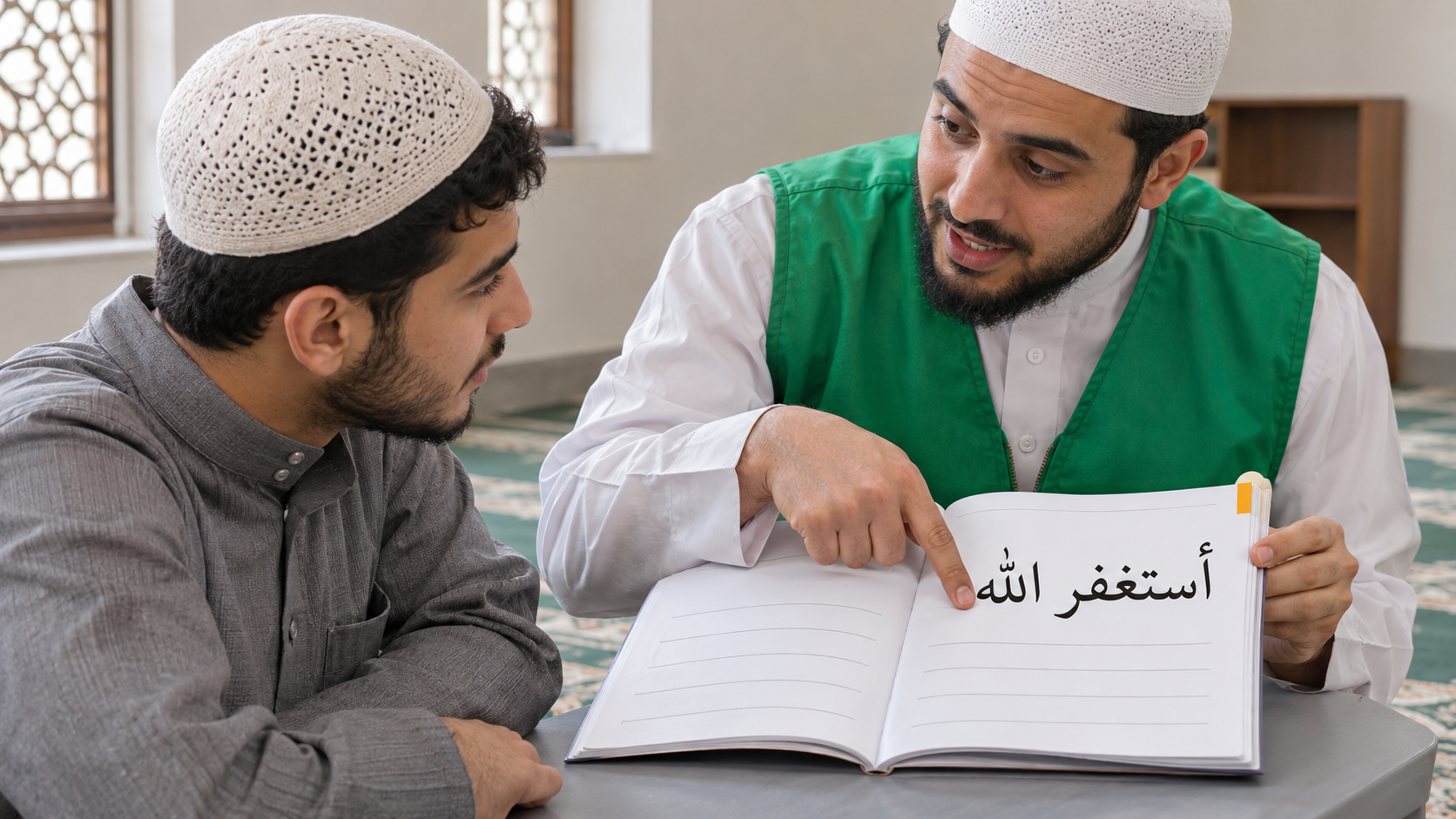
What can you say when you realize your words have hurt someone and you want to ask Allah for forgiveness? Say Astaghfirullah, which means “I seek forgiveness from Allah.” You can say it when you recognize a mistake, after completing an obligatory prayer, or as part of your daily remembrance.
If you searched for Astagfirullah Meaning and When to Say It, the spelling Astaghfirullah gives you a clearer clue to the Arabic pronunciation. Say it sincerely whenever you want to ask Allah to forgive you, including at quiet moments when no particular wrongdoing comes to mind. If your actions harmed someone, follow the supplication with a step that addresses what happened.
Astaghfirullah is the Arabic expression أَسْتَغْفِرُ اللَّهَ, meaning “I seek forgiveness from Allah.” The first word, astaghfiru, means “I seek forgiveness,” and Allah is the one you are asking. The broader practice of seeking forgiveness is called istighfar. You can say this short phrase on its own or use a longer supplication that asks for forgiveness and expresses repentance.
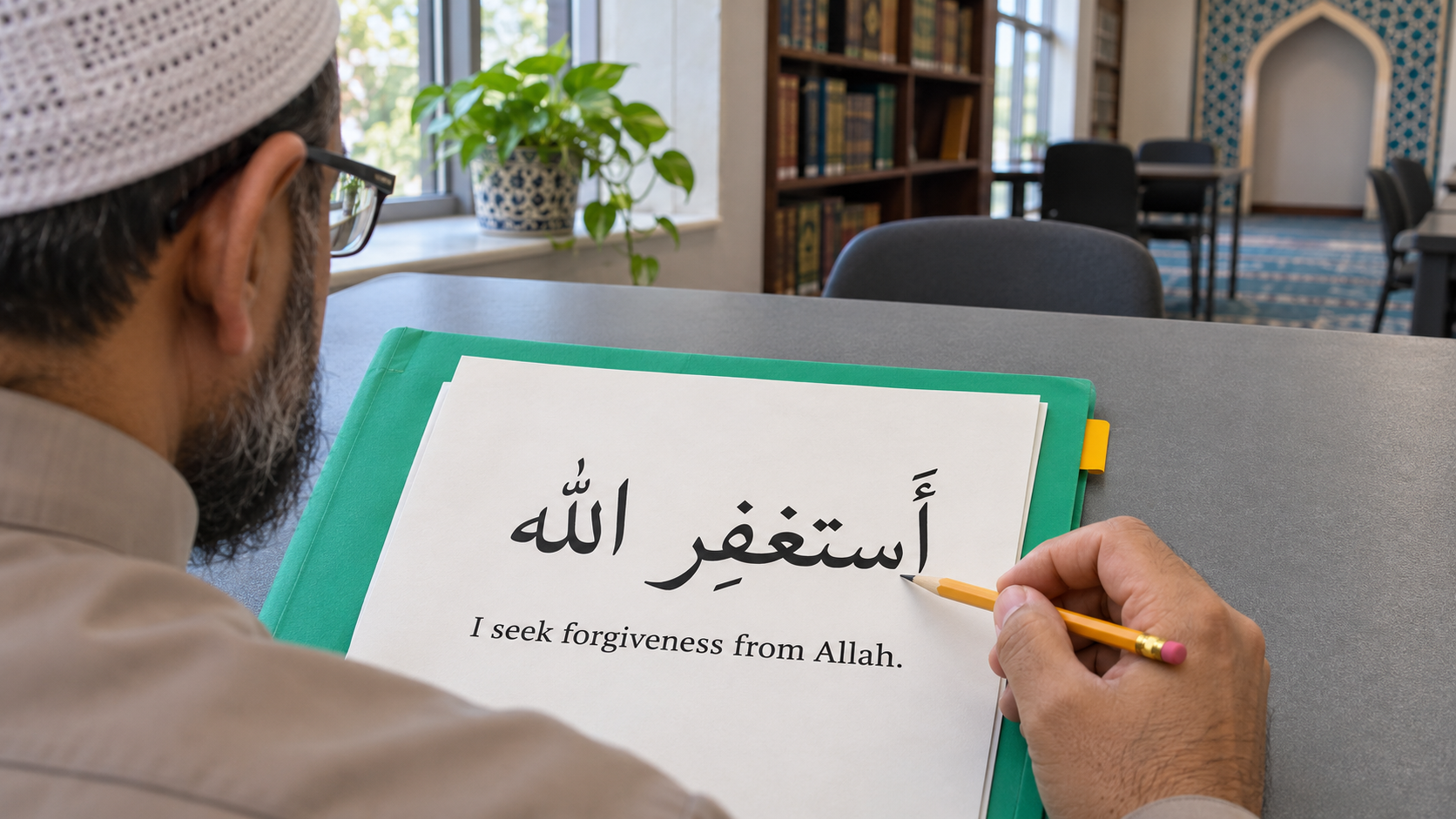
You can use the phrase as soon as you recognize a wrong and during ordinary moments of dhikr, the remembrance of Allah. You may also hear it when someone reacts to disturbing news or offensive speech. In that setting, the words still carry their basic meaning, though the person may also be expressing shock or disapproval. The context helps you understand the speaker’s reaction without assuming what they intend.
| Situation | What you can say | What you are expressing |
|---|---|---|
| You realize you spoke unfairly about someone | Astaghfirullah | You ask Allah to forgive what you said. |
| You finish an obligatory prayer | Astaghfirullah three times | You seek forgiveness as part of the remembrance that follows prayer. |
| You receive good news or recognize a blessing | Alhamdulillah | You praise Allah and express gratitude. |
| You remember a mistake and feel grateful for a chance to put it right | Astaghfirullah and Alhamdulillah | You can ask for forgiveness and express gratitude in the same moment. |
Why Astagfirullah Meaning and When to Matters in 2026
Knowing what Astaghfirullah means helps you recognize a request for forgiveness even when you encounter it as a quick reaction in a message or video. If a friend types it after seeing an offensive post, the immediate context may explain the reaction. When you say it yourself, you can pause long enough to remember whom you are addressing and what you are asking for. That small pause can also give you time to consider what should happen next.
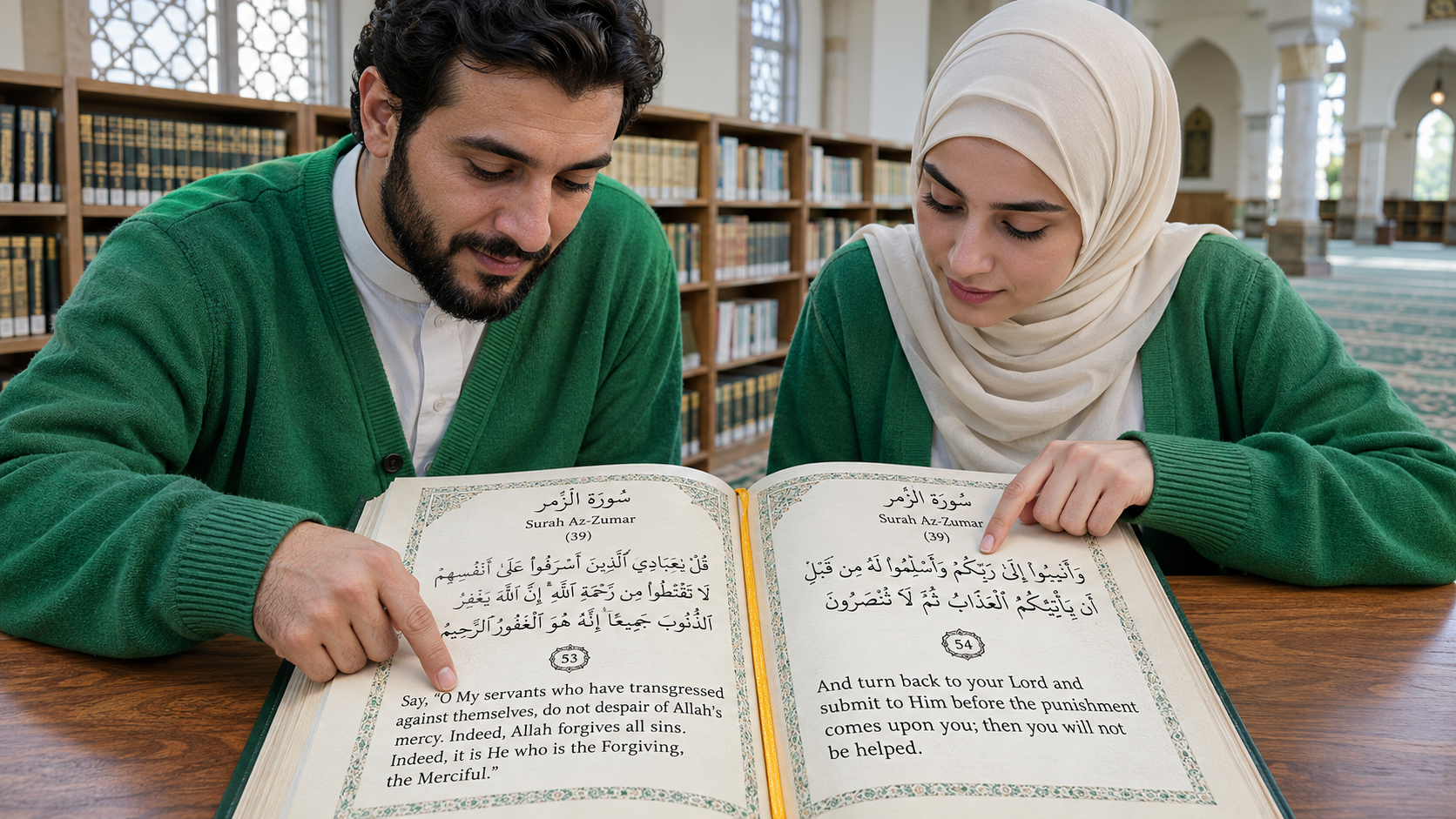
The Qur’an connects hope in Allah’s mercy with turning back to Him. In Surah Az-Zumar, verse 53 calls on people who have wronged themselves to keep hope in Allah’s mercy, and verse 54 urges them to turn back to their Lord. When you remember an old wrong, you can take that recognition as an opportunity to seek forgiveness and change what you do now. Read the two verses together in Surah Az Zumar.
How to Get Started with Astagfirullah Dhikr
To pronounce Astaghfirullah, start slowly with as-tagh-fi-rul-laah. The gh stands for ghayn (غ), a voiced sound made toward the back of the mouth. If you hear a plain English g when you practice, listen to a fluent Arabic speaker and imitate the sound in isolation first. Then put the phrase together, holding the final aa a little longer than the short vowels.
For your first practice session, say the phrase slowly, recall the English meaning, and then say it again at a natural pace. Carry it into a routine you already have, such as the moments after prayer or a quiet pause before sleep. If you want to learn additional wording after getting comfortable with the shorter phrase, you can explore ways to say istighfar. Learn each expression with its meaning so you know what you are asking for.
Best Practices for Astagfirullah
Make seeking forgiveness a regular practice and remember the request you are making as you repeat the words. Thawban reported that the Prophet Muhammad sought forgiveness three times after finishing his prayer. If you want a specific place to begin, use those moments after an obligatory prayer to ask Allah for forgiveness. The report is recorded in Sahih Muslim 591.
Saying Astaghfirullah 100 times gives you 100 occasions to ask Allah for forgiveness, and a daily count of 100 has a basis in the Sunnah. The Prophet Muhammad said that he sought Allah’s forgiveness 100 times a day. His example establishes a practice of frequent remembrance, while the report itself promises no particular worldly outcome for reaching that number. You can read the account in Sahih Muslim 2702b.
“I seek forgiveness from Allah.” Sahih Muslim 591.
Common Mistakes to Avoid
A common mistake is to ask Allah for forgiveness and leave a wrong against another person unaddressed. If you shared a false claim about a colleague, correct it with the people who heard it. If you kept something that belongs to someone else, return it. In Islamic teaching, tawbah, or repentance, involves leaving the wrong, regretting it, and resolving to avoid it, with the rights of others addressed where applicable.
Another mistake is to assume that hearing Astaghfirullah calls for a fixed reply. If someone says it as personal remembrance, you can let the moment pass quietly. If they say it in a conversation about something upsetting, you can respond to what happened or offer a simple prayer such as “May Allah forgive us.” When the other person is reacting to something you said, listen first and clarify or apologize if the situation calls for it.
Key Takeaways
You can put the phrase into practice by connecting its meaning to a moment you already recognize. After a mistake, say it and identify one concrete action you can take to address what happened. After prayer, use the familiar routine to practice saying it with attention. If you are teaching a child or helping a new Arabic learner, start with the translation and one example from their day.
If one kind of mistake keeps recurring, notice when it happens and decide in advance what you will do differently. For example, if a group chat draws you into hurtful jokes, pause before replying, change the subject, or step away. If you want to explore that example further, read about hurtful jokes in Islam. You can use the same approach when you catch yourself passing on a rumor or responding in anger.
- Ask for forgiveness with Astaghfirullah and express gratitude with Alhamdulillah.
- Learn the ghayn by listening to a fluent speaker and repeating it slowly.
- Connect regular remembrance to a familiar moment, such as after prayer.
- When you harm someone, make a practical effort to put things right.
Conclusion
With Astagfirullah Meaning and When to Say It clear, start with one moment this week when you can ask Allah for forgiveness deliberately. Practice saying the words slowly after prayer or use them as soon as you recognize a mistake. If someone was affected, decide what you can do to repair the harm and take that step.
If you are learning to read or pronounce Arabic, a guided lesson gives you a chance to hear the sounds and practice them with feedback. Tell Hidayah Quran what you would like to work on when you Book Free Trial.