
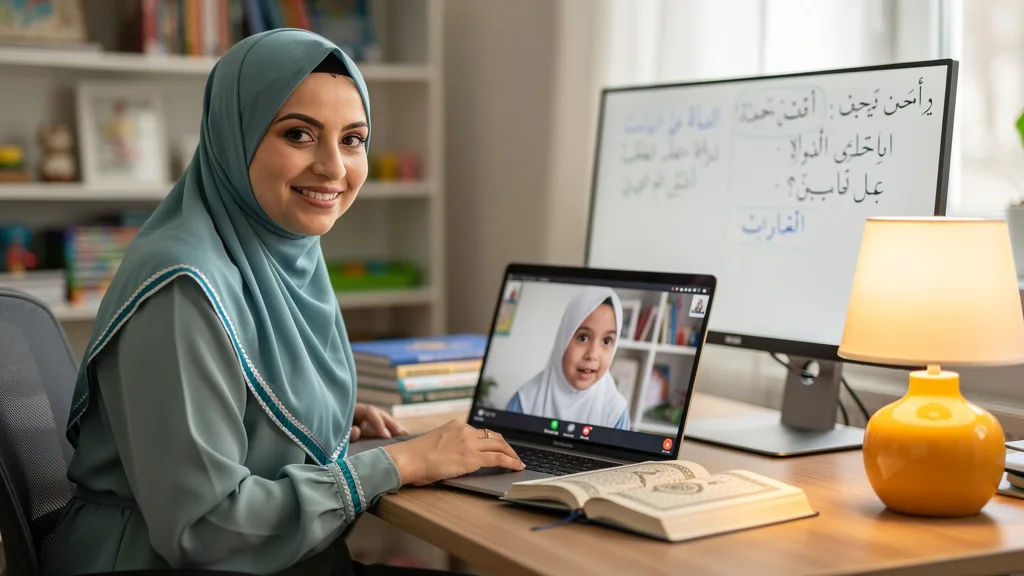
Are you searching for a qualified female Quran teacher but feel overwhelmed by the options? Finding the right mentor for yourself or your children is a significant decision, and ensuring they are a perfect fit is crucial for a successful and rewarding learning journey. The key is to know exactly what to ask before you commit.
This Female Quran Teacher Checklist provides 10 essential questions to vet any potential teacher or online Quran academy. By using this guide, you can confidently verify qualifications, understand teaching methods, and ensure a safe, comfortable, and effective learning environment. This checklist empowers you to look past marketing claims and select a teacher who is genuinely certified, experienced, and compatible with your family's needs.
Why Choose a Female Quran Teacher for Yourself or Your Children
Choosing a female Quran teacher offers a unique sense of comfort, modesty, and relatability, especially for sisters, young girls, and mothers. For many women and girls, learning from a female teacher creates a more relaxed and open environment where they feel comfortable asking questions without hesitation. This is particularly important when discussing sensitive topics or navigating the personal journey of connecting with the Quran.
A female teacher also serves as a powerful and positive role model for daughters, demonstrating a deep connection to Islamic knowledge and a commitment to lifelong learning. For mothers, it presents an opportunity to learn alongside their children, fostering a shared family experience centered on faith. This shared journey can strengthen family bonds and create lasting memories, all while ensuring the learning environment aligns with your family's values of modesty and privacy. At Hidayah Quran Academy, we specialize in providing this nurturing environment through our dedicated private classes for sisters and children.
What Makes a Great Online Quran Teacher in 2026
The digital landscape has expanded access to Quranic education, but it also means you must be more discerning. In 2026, a great online Quran teacher is more than just someone who can recite the Quran. They must possess a combination of formal qualifications, technical skills, and personal attributes to be truly effective in a virtual classroom.
Ijazah Certification and Formal Quranic Training
The most crucial qualification for a Quran teacher is an Ijazah. This is a formal license, passed down through a chain of certified scholars (sanad) back to the Prophet Muhammad (PBUH), authorizing the holder to teach the Quran. An Ijazah in Tajweed or Hifz ensures the teacher has mastered the art of recitation and its rules with impeccable precision. Beyond this, look for graduates of respected Islamic universities like Al-Azhar, as this indicates a deep and comprehensive understanding of the Quranic sciences.
Don't settle for vague claims of being 'qualified'. Always ask for specific certifications. A reputable academy will be transparent about their teachers' credentials and proud to share them. This formal training guarantees that the knowledge being passed to you or your child is authentic, accurate, and preserved in its original form, protecting you from unintentional errors in recitation and understanding.
Fluency in Your Native Language for Clear Explanations
While the teacher must be an expert in Arabic, their ability to explain complex concepts in your native language, such as English, is equally important. Tajweed rules, for example, involve precise points of articulation and phonetic details that can be difficult to grasp without clear, relatable explanations. A teacher who is fluent in both Arabic and English can bridge this gap effectively.
This bilingual proficiency ensures that no question goes unanswered and no concept is left misunderstood. It allows for a dynamic learning environment where students can engage in meaningful dialogue, ask for clarification, and truly comprehend the 'why' behind the rules, not just the 'how'. This is especially vital for beginners and children who are building their foundational knowledge from scratch.
Experience with Your Specific Age Group
Teaching a five-year-old the basics of Noorani Qaida requires a vastly different approach than guiding an adult beginner through the nuances of Surah Al-Baqarah. A great teacher has proven experience working with your specific age group. For children, this means using engaging techniques, visual aids, and a patient, encouraging tone to keep them focused and motivated.
For adult learners, a great teacher understands the unique challenges they face, such as balancing studies with family or work commitments. They can adapt their teaching style to be more analytical and provide deeper context. When vetting a teacher, ask about their experience with students of a similar age and learning goals to yours. This ensures the teaching method is not one-size-fits-all but tailored for maximum impact, whether for adult Quran classes for women beginners or for young children.
Patience and Effective Communication Skills
Beyond any certificate, the personal qualities of a teacher make a profound difference. Patience is paramount in Quranic education, as memorization and mastering Tajweed take time and consistent effort. A patient teacher creates a supportive space where students feel safe to make mistakes and learn at their own pace without fear of judgment.
"The best online Quran teachers in 2026 combine authentic Ijazah certification with a patient heart and the ability to communicate complex rules simply. This blend of knowledge and empathy is what truly transforms a student's connection with the Quran."
Effective communication is the backbone of online learning. This includes not only clear verbal instruction but also being an active listener, providing constructive feedback, and maintaining an encouraging and positive demeanor. These soft skills are what build a strong student-teacher relationship, which is the foundation of successful and joyful learning.
The 10-Point Checklist for Vetting Your Female Quran Teacher
Finding the right teacher is a process of due diligence. Arm yourself with these ten critical questions to ensure you make an informed choice for your family's Quranic education. Each question is designed to uncover the quality, reliability, and transparency of a teacher or academy.
1. Can You Meet the Teacher Before Committing?
This is the single most important step. A reputable online Quran academy should always offer a free trial lesson. This is not just a demo, but a chance for you or your child to meet the actual teacher, experience their teaching style, and see if the personalities connect. It allows you to assess their communication skills and patience firsthand.

A trial class removes all the guesswork. It gives you a clear picture of what the regular lessons will be like. If an academy is hesitant to offer a free trial or charges for it, consider it a major red flag. They should be confident enough in their teachers and methodology to let you experience it without any financial commitment.
2. What Are Her Specific Quranic Qualifications?
Do not accept vague answers like "our teachers are all qualified." Ask for specifics. Does the teacher hold an Ijazah? If so, in what area (e.g., Tajweed, Hifz)? From which institution did she receive it? A professional academy will have this information readily available and will be proud to share it.
Verifying credentials ensures that you are learning from someone with an authentic and unbroken chain of knowledge. It is your right as a student to know that the person entrusted with your religious education is genuinely certified. For a deeper dive, review our guide on how to choose an online Quran teacher.
3. Will You Have the Same Teacher for Every Lesson?
Consistency is crucial for building a strong student-teacher relationship and ensuring steady progress. Constantly switching teachers disrupts the learning flow, as each new teacher has to reassess your level and build rapport from scratch. This can be particularly unsettling for children.
Ask directly if you will be assigned a dedicated teacher who will be with you for the long term. While occasional substitutions for emergencies are understandable, high teacher turnover is a sign of an unstable or poorly managed academy. A dedicated teacher gets to know your unique strengths, weaknesses, and learning style, allowing them to tailor the lessons for you perfectly.
4. How Is Your Current Level Assessed Before Starting?
A professional learning program begins with a thorough assessment. Before your first official lesson, the teacher or an academic advisor should evaluate your current level of Quranic knowledge. This includes your ability to recognize Arabic letters, your fluency in recitation, and your current understanding of Tajweed rules.
This initial assessment is not a test to be nervous about; it is a diagnostic tool. It allows the teacher to design a personalized learning plan that starts exactly where you need it to, whether that's from the very beginning with Noorani Qaida or with advanced Tajweed practice. Without an assessment, you risk wasting time on material you already know or struggling with concepts that are too advanced.
5. Are the Lessons Genuinely One-to-One?
Many platforms advertise "private" lessons that are actually small group sessions. Be sure to clarify this. A genuine one-to-one lesson means you or your child have the teacher's undivided attention for the entire duration of the class. This is essential for personalized feedback and focused instruction.
In a one-to-one setting, the teacher can correct mistakes immediately, tailor the pace of the lesson, and focus entirely on your specific learning goals. This level of individual attention is what accelerates progress and makes online learning so effective. Don't be afraid to ask: "Will there be any other students in the class with me?"
6. What Kind of Progress Reports Are Provided?
How will you know if you are making progress? A structured program should include a system for tracking and reporting on your development. Ask if they provide regular progress reports, for example, on a monthly or quarterly basis. This is especially important for parents who want to stay informed about their child's learning.
A good progress report should be more than just an attendance record. It should provide feedback on specific areas like Makharij (pronunciation), application of Tajweed rules, memorization progress, and areas that require more focus. This feedback loop is vital for staying motivated and understanding where to direct your efforts.
7. What Does the Free Trial Lesson Actually Include?
A quality free trial is more than just a sales pitch. It should be a mini-lesson that provides real value. Ask what will happen during the trial. A comprehensive trial, like the one we offer at Hidayah Quran Academy, should include a brief introduction, a friendly assessment of your current level, a short, practical lesson, and time for you to ask questions.
This experience allows you to evaluate the teacher's methodology and technical setup. Did the video and audio work well? Was the teacher engaging and patient? You should leave the trial lesson with a clear understanding of the teacher's style and what you can expect from future classes. Learn more about what to expect in your first Quran class to be better prepared.
8. How Flexible Is the Lesson Scheduling?
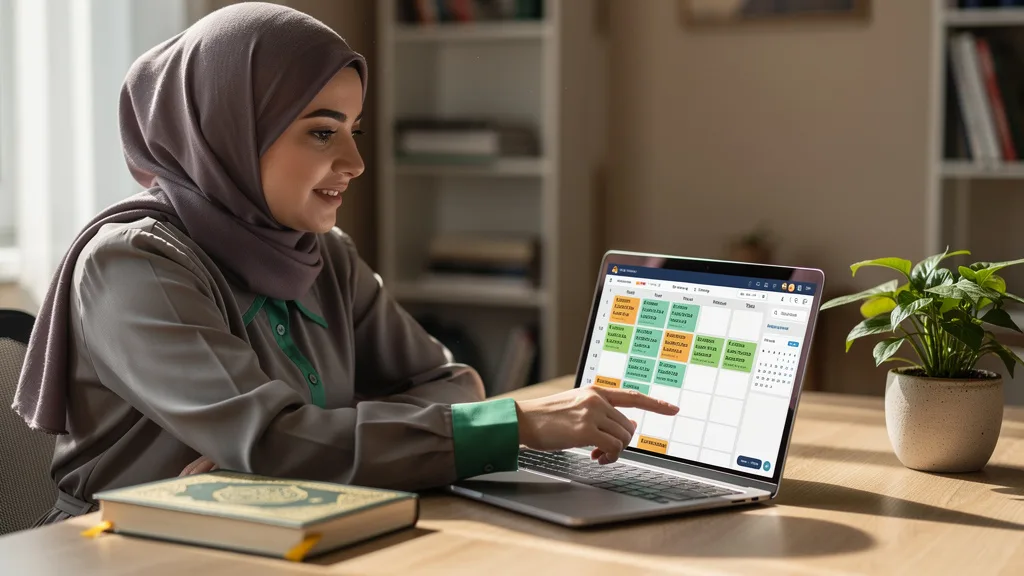
Life is busy, and families in the UK, USA, Australia, and UAE operate on different time zones. A good online academy understands this and offers flexible scheduling options. Ask about their ability to accommodate your preferred days and times. Can you reschedule a class if something unexpected comes up?
Find out their policy on cancellations and make-up classes. A flexible policy shows that the academy values your time and is willing to work with you. This is a key advantage of online learning, so make sure the provider you choose truly offers the convenience you need.
9. What Is the Teaching Methodology or Curriculum?
Ask about the specific curriculum they follow. For beginners, will they start with a foundational program like Noorani Qaida? For more advanced students, how do they structure Tajweed or Hifz (memorization) classes? A structured curriculum ensures a logical and progressive learning path.
A professional teacher will be able to explain their teaching methodology clearly. Do they use digital whiteboards, screen sharing, or other interactive tools? Understanding their approach helps you determine if it aligns with your learning style. For more insights, you can review this external guide on How to Choose a Female Quran Teacher.
10. What Are the Full Costs and Payment Policies?
Finally, ensure you have complete clarity on the costs. Ask for a clear fee structure. Are there any hidden charges, such as registration fees or material costs? What are the payment methods and billing cycles (e.g., monthly, quarterly)?
A transparent academy will provide all this information upfront. Be wary of any provider that is not forthcoming about their prices. Understanding the full financial commitment and policies helps you budget accordingly and avoids any unwelcome surprises down the line. We discuss this in-depth in our article about the cost of an online female Quran teacher.
Online vs. In-Person Quran Classes: A Practical Comparison
Deciding between online and in-person Quran classes depends on your family's priorities, location, and learning style. While traditional in-person learning has its merits, online education has emerged as a highly effective and convenient alternative for families worldwide. Here is a practical comparison to help you decide.
| Feature | Online Quran Classes | In-Person Quran Classes |
|---|---|---|
| Teacher Access | Global access to Ijazah-certified female teachers, not limited by location. | Limited to teachers available in your local community or mosque. |
| Flexibility | Highly flexible scheduling to fit any time zone (UK, USA, UAE) and busy lifestyle. | Fixed class times and requires travel to a specific location. |
| Cost & Value | Often more affordable due to no travel costs and competitive global pricing. | Can be more expensive, including tuition plus transportation costs. |
| Learning Environment | Comfortable, private one-to-one learning from your own home. | Group settings are common, which may offer less individual attention. |
| Convenience | Learn from anywhere with an internet connection. No travel time required. | Requires commuting, which can be time-consuming and challenging. |
Flexibility and Convenience
Online classes offer unparalleled flexibility. You can schedule lessons at times that suit your family, whether it's early in the morning before school, during a lunch break, or late in the evening. This is a game-changer for busy parents and professionals. There is no time wasted commuting to a mosque or a teacher's home, making it much easier to stay consistent with your lessons.

This convenience is especially beneficial for families with multiple children or those living in areas with harsh weather or limited transportation. The ability to learn from the comfort and safety of your own home makes the entire process stress-free and more sustainable in the long run.
Access to Qualified Teachers Globally
Perhaps the biggest advantage of online learning is the access it provides to a global pool of talent. You are no longer limited to the teachers in your immediate vicinity. With an online academy, you can connect with a highly qualified, Ijazah-certified female teacher from Egypt, Pakistan, or Jordan, regardless of where you live.
This means you don't have to compromise on quality. You can find a teacher who not only has the best credentials but also speaks your language fluently and has experience with your specific learning needs. This global access ensures you receive the highest standard of Quranic education possible.
Cost and Overall Value
Online Quran classes are often more cost-effective than their in-person counterparts. Academies can offer competitive pricing because they have lower overheads. For families, this means no money spent on fuel or public transport to get to class. These savings can add up significantly over time.
When you consider the quality of instruction you can receive from a certified teacher, the one-to-one attention, and the sheer convenience, online classes offer exceptional value. It is an investment in authentic knowledge that is both affordable and accessible for families around the world.
Common Red Flags to Watch for in an Online Quran Academy
While there are many excellent online Quran academies, there are also some that do not meet professional standards. Being aware of common red flags can protect you from a frustrating and unproductive experience. Here is what to look out for during your search.
Vague Answers About Teacher Credentials
If you ask about a teacher's qualifications and receive a generic response like "all our teachers are experienced" without any specific details, be cautious. A reputable academy will be transparent and proud of its teachers' certifications, such as an Ijazah or a degree from a known Islamic university. Hesitation or vagueness on this point often means the credentials are not as strong as they should be.
Always press for specifics. As mentioned in our checklist, you have the right to know who is teaching you or your child. A lack of transparency about qualifications is a significant red flag that suggests a lack of professionalism and commitment to authentic knowledge.
No Free Trial or a Paid-Only 'Trial'
A free trial is the industry standard for a reason: it allows you to make an informed decision without risk. If an academy does not offer a free trial, ask yourself why. They may be worried that their service won't impress you. Even worse is a "paid trial," which is not a trial at all but simply your first paid lesson.
A genuine free trial shows that an academy is confident in the quality of its teachers and its platform. It demonstrates a customer-centric approach that prioritizes finding the right fit over simply making a sale. Steer clear of any organization that asks for payment before you have even had a chance to meet the teacher.
High Teacher Turnover Rates
While you may not discover this until after you have signed up, high teacher turnover is a major issue. If your child is assigned a new teacher every few months, it disrupts their learning and breaks the bond of trust and rapport that is so essential for progress. It often points to poor management or unhappy teachers.
During your initial conversations, you can ask about their teacher retention. A question like, "How long has the assigned teacher been with your academy?" can be very revealing. Look for an academy that values its teachers and fosters a stable, long-term learning environment for its students.
Inflexible and Long-Term Contracts
Be wary of any academy that tries to lock you into a long-term contract, such as a 6-month or 12-month commitment, especially at the beginning. A flexible, pay-as-you-go or monthly payment plan is much more student-friendly. It shows that the academy is confident it can retain you through the quality of its service, not through a binding contract.
Life happens, and your circumstances might change. You should have the freedom to pause or stop your lessons if needed without facing a financial penalty. Read the terms and conditions carefully and avoid any agreement that does not offer reasonable flexibility.
Key Takeaways
Choosing the right female Quran teacher is a critical step in your or your child's spiritual and educational journey. To ensure you make the best choice, remember these key points:
- Vet Qualifications Rigorously: Always prioritize teachers with an Ijazah or formal training from a reputable Islamic institution. Do not settle for vague claims of experience.
- Insist on a Free Trial: A complimentary trial lesson is non-negotiable. It is your best opportunity to meet the teacher, assess their style, and ensure compatibility before making any commitment.
- Prioritize Consistency and Personalization: Ensure you will have one dedicated teacher for all lessons and that they will perform an initial assessment to create a customized learning plan.
- Look for Transparency: A trustworthy academy will be open about teacher credentials, scheduling flexibility, progress reporting, and all associated costs. Hidden fees and inflexible contracts are major red flags.
- Value Communication and Patience: The best teachers are not just knowledgeable but are also patient, empathetic, and fluent in your language to ensure concepts are clearly understood.
Frequently Asked Questions
What is the average salary for an online Quran teacher?
The average salary for an online Quran teacher can vary widely based on their qualifications, experience, location, and the platform they work for. Generally, it can range from $10 to $30 USD per hour. Teachers with an Ijazah and extensive experience who teach specialized subjects like Qira'at tend to command higher rates.
At Hidayah Quran Academy, we believe in compensating our teachers fairly for their expertise, which allows us to attract and retain top-tier female tutors. This ensures our students receive the highest quality of instruction.
What is the difference between Tajweed, Tafsir, and Hifz classes?
These are three distinct areas of Quranic study. Tajweed focuses on the rules of Quranic recitation, ensuring you pronounce every letter and word exactly as it should be. Hifz is the memorization of the Quran. Tafsir is the exegesis or interpretation of the Quran, where you study the meaning, context, and wisdom behind the verses.
For beginners, the journey typically starts with Noorani Qaida to learn the alphabet, followed by Tajweed to perfect recitation. Hifz and Tafsir are generally pursued after a student has a strong foundation in reading the Quran correctly. Our female Tajweed teachers specialize in making these rules easy to understand.
Can I learn Quran online as a complete beginner?
Absolutely. Online Quran classes are an excellent option for complete beginners, including adults and reverts. A qualified teacher will start with the very basics, using a curriculum like the Noorani Qaida to teach you the Arabic alphabet, how to join letters, and basic pronunciation. The one-to-one format allows you to learn at your own pace in a supportive, non-judgmental environment.
Many adult beginners find the privacy and convenience of online learning to be the perfect way to start their journey with the Quran without feeling intimidated. Our teachers have extensive experience guiding new learners from the very first letter to fluent recitation.
What technology do I need for online Quran classes?
The technology required for online Quran classes is simple and accessible. All you need is a reliable internet connection and a device with a camera and microphone, such as a laptop, tablet, or smartphone. Most classes are conducted over popular video conferencing applications like Zoom, WhatsApp, or Google Meet, which are free and easy to use.
Your teacher will typically share their screen to show you the Quranic text or use a digital whiteboard to explain concepts. The setup is straightforward, and our support team can help you with any technical questions before your first class.
How long does it take to learn to read the Quran fluently?
The time it takes to learn to read the Quran fluently depends on several factors, including your starting level, the frequency of your classes, and the amount of time you dedicate to practice between lessons. For a complete beginner, it typically takes between 6 to 12 months of consistent study to learn to read the Quran with basic fluency and application of Tajweed rules.
However, learning the Quran is a lifelong journey. The key is consistency, not speed. A good teacher will help you set realistic goals and celebrate your progress along the way, ensuring the journey is rewarding and sustainable.
Conclusion
Finding the right female Quran teacher is an investment in your or your child's connection with the words of Allah. Using this 10-point checklist transforms the search from a game of chance into a structured, confident decision. By asking targeted questions about qualifications, teaching methods, and academy policies, you can effectively filter out unsuitable options and identify a mentor who is truly dedicated to your success.
The most important takeaways are to never compromise on authentic qualifications like an Ijazah and to always insist on a free trial lesson. This single step allows you to experience the teaching style firsthand and ensure a comfortable and productive relationship. A great teacher does more than just instruct; she inspires, motivates, and nurtures a lifelong love for the Quran in a safe and supportive environment.
Navigating the world of online academies can be daunting, but you don't have to do it alone. The right partner will be transparent, flexible, and committed to your educational journey from day one. Taking the time to vet your options thoroughly ensures that your investment of time and resources yields beautiful and lasting results.
At Hidayah Quran Academy, we believe in building this trust from the very first interaction. We invite you to experience our approach with a complimentary 30-minute trial class with one of our qualified female teachers. See for yourself how our personalized, one-to-one instruction can help you or your family achieve your Quranic learning goals. Book Free Trial today and take the first step with confidence.