

Do you wish you could understand the Quran directly, without constantly relying on translations? The path to a deeper connection with the divine text begins with its language, and the first step on that path is building your vocabulary.
This guide provides a foundational Quranic Arabic vocabulary list for beginners, starting with 20 core words and expanding to the 100 most frequent terms in the Quran. Mastering these words is a powerful shortcut, as studies show they make up a significant portion of the entire text, allowing you to quickly grasp the meaning of many verses and begin your journey of tadabbur (reflection).
Why Mastering Core Vocabulary Is Your First Step
Beginning the journey of learning Quranic Arabic can feel immense, but the principle of focusing on high-frequency words makes it achievable. A small number of words appear very frequently throughout the Quran. By learning these core terms first, you unlock a surprisingly large percentage of the holy book, building your confidence and motivation to continue.

Think of it as building the foundation of a house. Before you can construct walls and a roof, you need a solid base. These initial words are your base. They are the nouns, verbs, and particles that form the backbone of Quranic sentences. Instead of getting lost in complex grammar, you can start recognizing patterns and understanding key concepts from day one. This approach accelerates comprehension and makes the learning process more rewarding. If you haven't already, ensure you are comfortable with the Arabic alphabet and its pronunciation as a crucial first step.
Foundational Quranic Words: Your First 20 to Learn
Starting with a small, manageable list is the best way to avoid feeling overwhelmed. The 20 words below are some of the most common and essential terms you will encounter on almost every page of the Quran. Commit these to memory, and you will immediately start to see the text in a new light.

Focus on understanding their meaning and recognizing their script. Practice writing them down and saying them aloud. This initial set will serve as your entry point into the beautiful and profound language of the Quran, providing immediate wins that will fuel your desire to learn more.
| Arabic | Transliteration | English Meaning |
|---|---|---|
| ٱللَّه | Allah | The God |
| رَبّ | Rabb | Lord, Master |
| مِن | min | from |
| فِي | fi | in, concerning |
| إِنَّ | inna | indeed, truly |
| عَلَىٰ | 'ala | on, upon |
| قَالَ | qala | he said |
| كَانَ | kana | he was |
| ٱلَّذِي | alladhi | who, which (masc. sing.) |
| هُوَ | huwa | he, it |
| كِتَـٰب | kitab | book |
| يَوْم | yawm | day |
| إِلَىٰ | ila | to, towards |
| ءَامَنُوا۟ | amanu | they believed |
| أَرْض | ard | earth |
| سَمَـٰوَات | samawat | heavens |
| كُلّ | kull | all, every |
| وَلَا | wa la | and not |
| بِ | bi | with, in, by |
| رَسُول | rasul | messenger |
Expanding to 50 Essential Words for Quranic Understanding
Once you are comfortable with the first 20 words, you are ready to expand your vocabulary. The next set of words introduces more specific nouns, common verbs describing actions, and essential particles that connect ideas within a sentence. Breaking them down by category can make them easier to learn and remember.

This structured approach helps you understand how sentences are built. You will start to recognize not just individual words, but the relationships between them. This is a critical step in moving from simple recognition to true comprehension of the Quranic message.
Key Nouns and Divine Names
Nouns are the building blocks that name people, places, things, and concepts. In the Quran, many nouns refer to core theological concepts and the attributes of Allah (SWT). Learning these words will give you insight into the central themes of the scripture.
Focus on connecting these words to the stories and lessons you may already know from translations. For example, when you learn the word for Paradise (Jannah), you can recall the verses that describe it, reinforcing both your vocabulary and your understanding of the Quran's teachings.
| Arabic | Transliteration | English Meaning |
|---|---|---|
| ٱلْقُرْءَان | Al-Quran | The Quran |
| ءَايَـٰت | ayat | signs, verses |
| نَاس | nas | people, mankind |
| جَنَّة | jannah | garden, paradise |
| نَار | nar | fire |
| ٱلْحَقّ | al-haqq | the truth |
| عَذَاب | 'adhab | punishment, torment |
| ٱلرَّحْمَـٰن | Ar-Rahman | The Most Merciful |
| ٱلرَّحِيم | Ar-Rahim | The Most Compassionate |
| شَىْء | shay' | thing |
Common Verbs and Actions
Verbs bring the Quran to life by describing actions, events, and states of being. Learning the most common verbs will allow you to understand the narratives and commands within the text. Many Quranic verbs appear in different forms, but starting with the basic past tense form (he did something) is a great foundation.
As you read, try to spot these verbs and identify who is performing the action. This active engagement transforms reading from a passive activity into an interactive study session. It helps you follow the stories of the prophets, understand divine commands, and appreciate the dynamic nature of the Quranic discourse.
| Arabic | Transliteration | English Meaning |
|---|---|---|
| جَعَلَ | ja'ala | he made |
| عَمِلَ | 'amila | he did, he worked |
| جَآءَ | ja'a | he came |
| عَلِمَ | 'alima | he knew |
| أَنزَلَ | anzala | he sent down |
| يُرِيدُ | yuridu | he wants, he intends |
| يَعْلَمُ | ya'lamu | he knows |
| ٱتَّقَىٰ | ittaqaw | they are god-fearing |
| كَفَرَ | kafara | he disbelieved |
| خَلَقَ | khalaqa | he created |
Essential Particles and Prepositions
Particles and prepositions are the glue that holds sentences together. They may seem small, but they are incredibly powerful and frequent. These words define relationships between other words, indicating location (in, on, from), conjunctions (and, but, so), and emphasis (indeed, truly).
Mastering these particles is crucial for accurate understanding. A single particle can change the entire meaning of a phrase. Pay close attention to them as you read, and you will notice how they structure the flow of each verse and connect different ideas together seamlessly.
| Arabic | Transliteration | English Meaning |
|---|---|---|
| مَا | ma | what, that which, not |
| أَنَّ | anna | that |
| لَا | la | no, not |
| إِلَّا | illa | except, but |
| مَعَ | ma'a | with |
| لِ | li | for, to |
| ثُمَّ | thumma | then, thereafter |
| أَوْ | aw | or |
| إِذَا | idha | when, if |
| قَدْ | qad | indeed, has already |
The 100 Most Frequent Words in the Quran
Reaching the milestone of 100 words is a significant achievement in your Quranic Arabic journey. This comprehensive list builds upon the previous sections to give you a powerful toolkit for comprehension. These 100 words are estimated to cover a large percentage of the Quranic text, meaning you will recognize at least a few words in almost every verse you read.
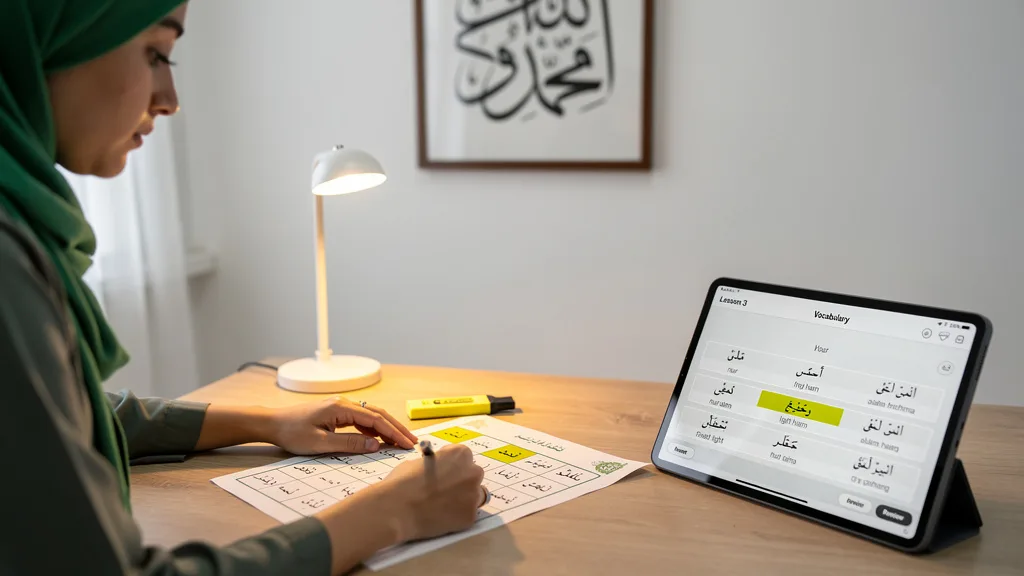
This list combines the most frequent nouns, verbs, pronouns, and particles. As you study this list, you will begin to see the interconnectedness of the language. Use this table as your primary reference as you begin reading the Quran. Test yourself regularly, and celebrate your progress as more and more of the text becomes clear to you. Quranic verses.
| # | Arabic | Transliteration | English Meaning |
|---|---|---|---|
| 1 | مِن | min | from |
| 2 | إِنَّ | inna | indeed |
| 3 | ٱللَّه | Allah | The God |
| 4 | فِي | fi | in |
| 5 | قَالَ | qala | he said |
| 6 | لَا | la | not |
| 7 | مَا | ma | what, not |
| 8 | كَانَ | kana | he was |
| 9 | عَلَىٰ | 'ala | on, upon |
| 10 | ٱلَّذِينَ | alladhina | those who |
| 11 | رَبّ | Rabb | Lord |
| 12 | إِلَىٰ | ila | to |
| 13 | بِ | bi | with, in |
| 14 | لِ | li | for, to |
| 15 | يَـٰٓأَيُّهَا | ya ayyuha | O you who |
| 16 | هُوَ | huwa | he, it |
| 17 | ءَامَنُوا۟ | amanu | they believed |
| 18 | وَمَا | wa ma | and what, and not |
| 19 | أَنَّ | anna | that |
| 20 | إِلَّا | illa | except |
| 21 | أَرْض | ard | earth |
| 22 | يَوْم | yawm | day |
| 23 | وَلَا | wa la | and not |
| 24 | كُلّ | kull | all, every |
| 25 | هَـٰذَا | hadha | this |
| 26 | سَمَـٰوَات | samawat | heavens |
| 27 | قَوْم | qawm | people, nation |
| 28 | جَعَلَ | ja'ala | he made |
| 29 | ٱلَّذِي | alladhi | who, which (m. sing.) |
| 30 | ءَايَـٰت | ayat | signs, verses |
| 31 | نَاس | nas | people, mankind |
| 32 | عَذَاب | 'adhab | punishment |
| 33 | هُمْ | hum | they, them |
| 34 | ٱلْحَقّ | al-haqq | the truth |
| 35 | رَسُول | rasul | messenger |
| 36 | إِذَا | idha | when, if |
| 37 | شَىْء | shay' | thing |
| 38 | نَفْس | nafs | soul, self |
| 39 | كَفَرُوا۟ | kafaru | they disbelieved |
| 40 | بَعْض | ba'd | some |
| 41 | ثُمَّ | thumma | then |
| 42 | بَيْنَ | bayna | between |
| 43 | خَيْر | khayr | good, better |
| 44 | أَنزَلَ | anzala | he sent down |
| 45 | عَمِلُوا۟ | 'amilu | they did, they worked |
| 46 | قَبْل | qabl | before |
| 47 | جَآءَ | ja'a | he came |
| 48 | مَعَ | ma'a | with |
| 49 | قَلْب | qalb | heart |
| 50 | ءَال | aal | family, people of |
| 51 | لَكُمْ | lakum | for you (pl.) |
| 52 | بَعْد | ba'd | after |
| 53 | أَمْر | amr | matter, command |
| 54 | كِتَـٰب | kitab | book |
| 55 | عِندَ | 'inda | with, near |
| 56 | أَهْل | ahl | people of |
| 57 | دُون | dun | besides, other than |
| 58 | يَعْلَمُونَ | ya'lamuna | they know |
| 59 | خَلَقَ | khalaqa | he created |
| 60 | سَبِيل | sabil | way, path |
| 61 | ٱلْءَاخِرَة | al-akhirah | the Hereafter |
| 62 | أَنْتُمْ | antum | you (pl.) |
| 63 | مَثَل | mathal | example, likeness |
| 64 | أَوْ | aw | or |
| 65 | لَقَدْ | laqad | indeed, certainly |
| 66 | سُوء | su' | evil |
| 67 | أَب | ab | father |
| 68 | جَنَّـٰت | jannat | gardens |
| 69 | نُور | nur | light |
| 70 | عِلْم | 'ilm | knowledge |
| 71 | فَضْل | fadl | grace, bounty |
| 72 | مَن | man | who |
| 73 | أَجْر | ajr | reward |
| 74 | ذَٰلِكَ | dhalika | that |
| 75 | مُؤْمِنُون | mu'minun | believers |
| 76 | رَحْمَة | rahmah | mercy |
| 77 | بَلَىٰ | bala | yes, indeed |
| 78 | أَيّ | ayy | which |
| 79 | إِنَّمَا | innama | only |
| 80 | غَيْر | ghayr | other than, without |
| 81 | صَـٰلِحَـٰت | salihat | righteous deeds |
| 82 | عَنْ | 'an | about, from |
| 83 | لَوْ | law | if |
| 84 | نَار | nar | fire |
| 85 | ٱلَّتِى | allati | who, which (f. sing.) |
| 86 | لَعَلَّ | la'alla | so that, perhaps |
| 87 | لَهُمْ | lahum | for them |
| 88 | يَد | yad | hand |
| 89 | مَلَـٰٓئِكَة | mala'ikah | angels |
| 90 | قُرْءَان | qur'an | recitation, Quran |
| 91 | حَتَّىٰ | hatta | until |
| 92 | أَنَا | ana | I |
| 93 | مَاء | ma' | water |
| 94 | إِنِّى | inni | indeed I |
| 95 | فَوْق | fawqa | above |
| 96 | عَيْن | 'ayn | eye, spring |
| 97 | إِيمَـٰن | iman | faith |
| 98 | آلِهَة | alihah | gods |
| 99 | بَيْت | bayt | house |
| 100 | حِسَاب | hisab | account, reckoning |
Effective Strategies to Learn and Retain Quranic Vocabulary
Learning new words is only half the battle; retaining them is what truly matters. To ensure this new vocabulary becomes a permanent part of your knowledge, you need to adopt effective learning strategies. Simply reading a list is not enough. You must actively engage with the words in various ways to move them from your short-term to your long-term memory.
The key is consistency and varied practice. By combining modern technology with timeless study habits, you can create a powerful and personalized learning system. The following methods are proven to help students of all levels build and retain a strong Quranic vocabulary.
"In 2026, the combination of guided instruction and smart digital tools provides the most effective path to understanding the Quran's message directly. Consistency is more important than intensity."
— Senior Instructor, Hidayah Quran Academy
Leverage Digital Flashcards and Spaced Repetition
Spaced Repetition Systems (SRS) are a game-changer for vocabulary acquisition. Apps like Anki and Quizlet use an algorithm to show you flashcards just before you are about to forget them. This method is far more efficient than traditional review methods.
You can create your own digital flashcard decks with the words from this list or download pre-made ones. Many learners have found success with community-created resources, such as this Learn Quran Vocabulary Anki (shared deck) on Reddit. Spending just 10-15 minutes a day with your SRS app can lead to remarkable retention over time.
Use a Quran Flow App for Contextual Learning
Understanding a word's meaning is good, but seeing it used in context is better. A Quran flow app or a website like Quran.com allows you to tap on any word in a verse to see its translation, root, and grammatical information. This contextual learning is incredibly powerful.
When you encounter a new word from your list while reading, you can instantly see how it functions in a sentence. This process of `tadabbur` (reflection) helps solidify the word's meaning in your mind. It connects the abstract vocabulary word to a specific divine message, making it more memorable and meaningful.
Establish a Daily Vocabulary Revision Habit
Consistency is the single most important factor in language learning. It is far more effective to study for 15 minutes every day than for two hours once a week. Set a specific, achievable goal, such as learning 3-5 new words and reviewing 10 old ones daily.
Link this new habit to an existing one. For example, you could review your flashcards right after your Fajr or Isha prayer. This practice, known as habit stacking, makes it easier to stick to your new routine. A small, consistent daily effort will compound over time, leading to a vast vocabulary and a deep understanding of the Quran.
Recommended Learning Tools and Resources for 2026
Beyond lists and strategies, having the right tools can significantly enhance your learning experience. In 2026, students of Quranic Arabic have access to a wealth of resources that were unavailable to previous generations. Combining these tools with structured guidance can accelerate your progress.
- Quran Websites: Quran.com is an invaluable free resource. It offers multiple translations, word-by-word analysis, and audio recitations. Use its 'word-by-word' feature to practice your vocabulary in context.
- Vocabulary Apps: Besides SRS apps like Anki, dedicated Quran vocabulary apps like Bayan Quran offer curated lessons and exercises focused on high-frequency words. Many of these are available on the App Store and Google Play.
- Classical Dictionaries: For intermediate to advanced learners, the Hans Wehr Dictionary of Modern Written Arabic and Edward Lane's Arabic-English Lexicon are comprehensive resources for deep word study.
- Guided Instruction: While self-study tools are excellent, nothing replaces the guidance of a qualified teacher. A teacher can correct your pronunciation, explain nuanced meanings, and provide a structured curriculum tailored to your needs. This is especially true for mastering Tajweed and the subtleties of the language. You can explore a variety of top apps for learning Quranic Arabic to supplement your studies.
Key Takeaways
Embarking on the path to understand the Quran in its original language is a noble and rewarding goal. This Quranic Arabic vocabulary list for beginners is your first major step. Here are the key points to remember as you move forward:
- Start with High-Frequency Words: Focus your initial efforts on the most common words, as they provide the greatest return on your study time.
- Learn in Categories: Grouping words into nouns, verbs, and particles can help you understand their function and make them easier to memorize.
- Use Spaced Repetition: Employ digital flashcard apps like Anki to efficiently move vocabulary into your long-term memory.
- Study in Context: Use a Quran flow app or website to see how words are used in actual verses, which deepens your understanding.
- Be Consistent: A small amount of daily practice is more effective than infrequent, long study sessions.
- Seek Guidance: Supplement your self-study with a qualified teacher who can provide structure, correct mistakes, and accelerate your learning.
Frequently Asked Questions
What is the difference between Quranic and Modern Standard Arabic?
Quranic Arabic, also known as Classical Arabic, is the form of Arabic found in the Quran. Modern Standard Arabic (MSA) is the language used today in books, news broadcasts, and formal speeches across the Arab world. While MSA is derived from Quranic Arabic, there are differences in vocabulary, grammar, and style.
For a student of the Quran, it is essential to focus on Classical Arabic. The vocabulary and grammatical structures are unique to the text and are the key to unlocking its meaning. We explore this topic in more detail in our article on Quranic Arabic vs. Modern Standard Arabic.
How many words do I need to know to understand most of the Quran?
You don't need to know all 77,000+ words to achieve a good level of comprehension. The language of the Quran is highly efficient. Learning just the 100 words on this list can help you recognize a significant percentage of the text.
Experts estimate that learning around 300 of the most frequent words can allow you to understand up to 80% of the Quranic text. The key is to focus on high-frequency vocabulary first, which provides the foundation for further study.
Are there free apps for learning Quran vocabulary?
Yes, there are many excellent free resources available. Quran.com and its mobile app provide free word-by-word translations and analysis. Anki is a free and open-source flashcard app that is perfect for spaced repetition. Many individuals and organizations also share free vocabulary lists and PDF guides online.
While free apps are a great starting point, they work best when combined with a structured curriculum. They are excellent for practice and revision but may not replace the comprehensive instruction of a dedicated course or teacher.
What is the best way to practice my new Arabic vocabulary?
The best way to practice is through a combination of methods. Use flashcards (especially SRS apps) for daily memorization. Read the Quran regularly and actively look for the words you have learned. When you find one, pause and reflect on its meaning in that context. Write the words down in a notebook, creating your own personal dictionary.
Finally, try to use the words. If you are studying with a teacher or a study partner, practice forming simple sentences. The more actively you engage with the vocabulary, the faster you will master it. This is a core focus in our adult Quran classes online.
After these 100 words, what should I study next?
Once you are confident with these 100 words, the next logical step is to expand your vocabulary to the top 300-500 most frequent words. At the same time, you should begin studying basic Arabic grammar, specifically morphology (Sarf) and syntax (Nahw). Sarf will teach you how words are formed from roots, and Nahw will teach you how they fit together to form meaningful sentences.
This is the stage where guidance from a qualified teacher becomes invaluable. A teacher can provide a structured path and personalized feedback to ensure you build a correct and strong foundation for advanced study. Our classes for adult women beginners are designed to guide you through these next steps.
Conclusion
Mastering the 100 most frequent words is the most effective first step toward a profound and personal connection with the Quran. This Quranic Arabic vocabulary list for beginners provides the foundation, but true understanding is a journey of consistent effort and guided practice. By using the strategies and tools outlined here, you can transform your relationship with the scripture from one of passive reading to active, meaningful reflection.
Are you ready to take the next step with personalized guidance? Hidayah Quran Academy offers private, one-on-one classes with qualified female teachers for sisters and children. We can help you build on this vocabulary list with a structured curriculum that includes Tajweed, grammar, and translation.
Start your journey today with a free 30-minute trial class. Book Free Trial
If you want help turning this into a concrete plan for your site or team, take the next step below to apply Quranic Arabic Vocabulary List for Beginners with confidence.
Ready to act on Quranic Arabic Vocabulary List for Beginners? Book Free Trial — tell us your goal, and we will help you pick the highest-leverage next step so you are not guessing alone.