
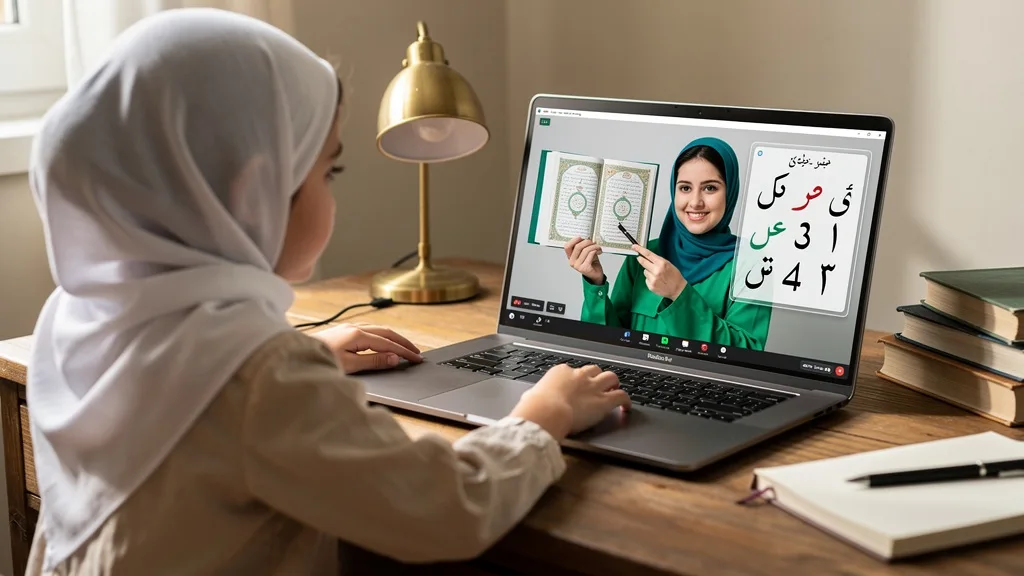
Have you ever held a physical Quran, wanting to find a specific surah, but felt unsure how to read the page or verse numbers? Learning to recognize and understand Arabic numerals is a foundational skill that transforms your relationship with the Holy Quran, making it more accessible and personal. It empowers you to navigate the sacred text with confidence and ease.
This guide provides a clear path for beginners to master Arabic numbers from one to one hundred. You will learn the symbols, names, pronunciation, and the simple rules for forming any number in between. This knowledge is essential for identifying surah and verse numbers, deepening your study, and feeling more connected to the words of Allah.
Why Learning Arabic Numbers Is Essential for Quran Study
Learning Arabic numbers is far more than an academic exercise, it is a practical tool that directly enhances your Quranic studies. The most immediate benefit is the ability to navigate a physical copy of the Quran, or Mushaf, with confidence. Most Qurans printed in the Middle East and used globally utilize Eastern Arabic numerals for numbering surahs (chapters), ayahs (verses), and pages, so recognizing them is crucial for locating specific passages for recitation, memorization, or study.
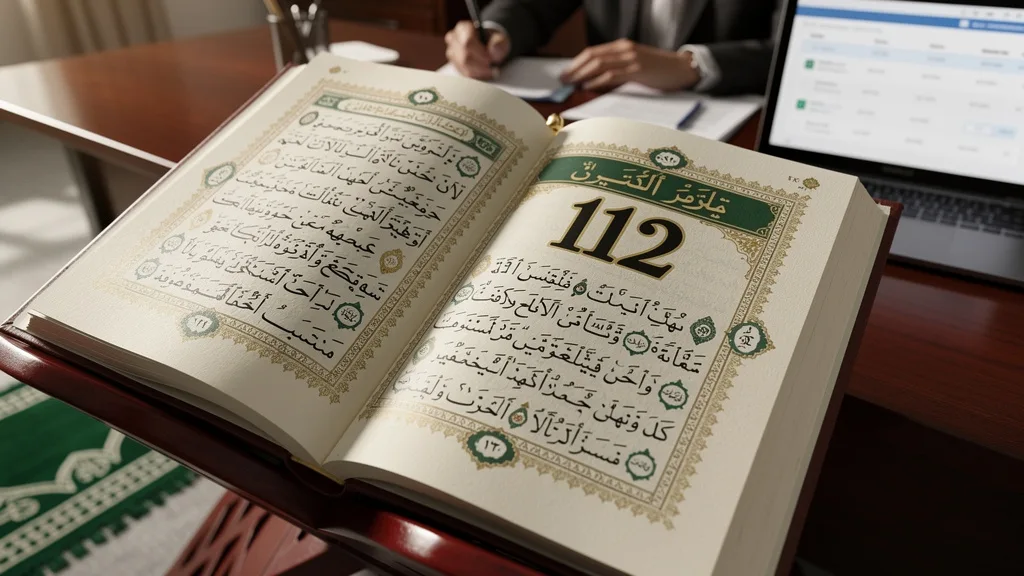
Beyond simple navigation, understanding the numbering system fosters a deeper and more intimate connection with the text. When you can instantly recognize verse numbers and chapter headings, the structure of the Quran becomes clearer, and the text feels less intimidating. This skill removes a significant barrier for many beginners, allowing you to focus on the meaning and beauty of the verses rather than the struggle of finding your place. It is a fundamental building block for any serious student of the Quran.
This knowledge also serves as a gateway to more advanced learning. As you become comfortable with the numbers, you will find it easier to grasp other quantitative aspects of Quranic studies, such as the number of verses in a surah or the historical timeline of revelations. It complements your efforts to learn the Arabic alphabet and its sounds, creating a more holistic understanding of the language of the Quran.
Understanding Eastern vs. Western Arabic Numerals
One of the first points of confusion for many learners is the difference in the appearance of the numbers. The numerals commonly used in English and other Western languages (1, 2, 3, 4) are known as Western Arabic numerals. Ironically, the numerals used throughout the Arab world and in most copies of the Quran (١, ٢, ٣, ٤) are called Eastern Arabic numerals. Though they look different, they represent the same values and function within the same base-10 decimal system.

The key is to treat them as a new set of symbols for concepts you already understand. Just as you learned that the symbol 'A' makes a certain sound, you will learn that the symbol '١' represents the value of one. This guide will help you quickly associate these new symbols with their names and values, making them feel familiar in no time. The goal is to recognize them instantly when you see them in the Quran.
The Foundation: Counting from 1 to 10 in Arabic
The first ten numbers are the most important building blocks for learning to count to 100 and beyond. Once you have mastered these, you will find that the patterns for forming larger numbers are quite logical and easy to follow. Take your time to memorize their symbols, names, and pronunciation, as you will use them constantly.
Numeral, Name, and Pronunciation Guide
To begin, focus on associating each numeral with its corresponding Arabic name. Practice saying them aloud to get comfortable with the sounds. The table below provides everything you need to learn the numbers from one to ten, which is a core part of any effort to learn Arabic numbers for Quranic study.
| Numeral | Arabic Name | Transliteration | English |
|---|---|---|---|
| ١ | واحد | Wahid | One |
| ٢ | اثنان | Ithnan | Two |
| ٣ | ثلاثة | Thalatha | Three |
| ٤ | أربعة | Arba'a | Four |
| ٥ | خمسة | Khamsa | Five |
| ٦ | ستة | Sitta | Six |
| ٧ | سبعة | Sab'a | Seven |
| ٨ | ثمانية | Thamaniya | Eight |
| ٩ | تسعة | Tis'a | Nine |
| ١٠ | عشرة | 'Ashara | Ten |
Try writing each numeral and its name several times. This physical act helps reinforce memory. You can also count objects around your home in Arabic to make the practice more interactive and engaging. Consistent practice is the key to making these numbers second nature.
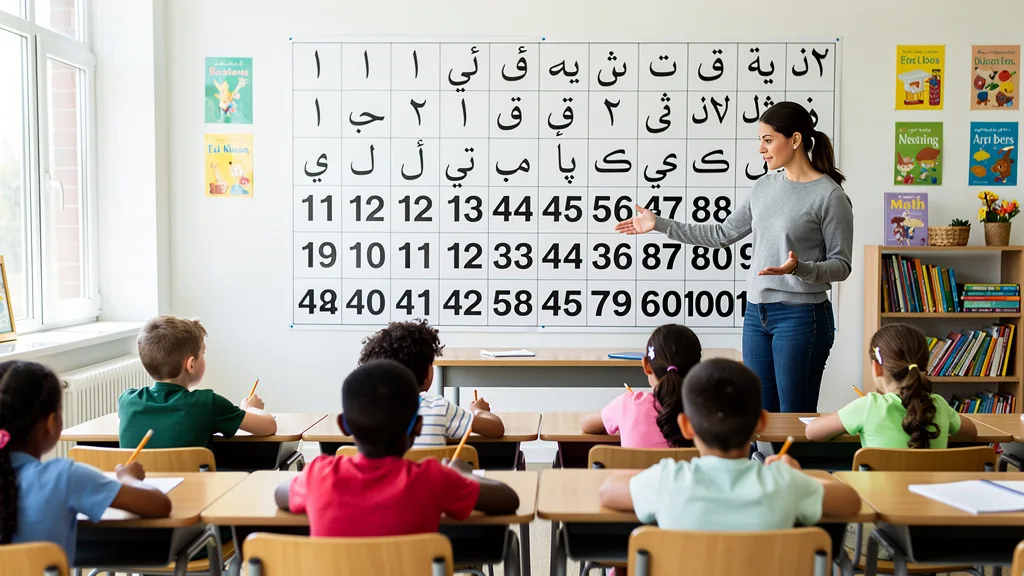
Building on the Basics: Numbers 11 to 19
Once you are confident with the numbers 1 through 10, moving on to the teens is straightforward. The numbers from 11 to 19 in Arabic are formed by combining the unit number (1-9) with the word for ten, which is 'ashar. This creates a consistent pattern that is relatively easy to memorize.

There are slight variations for eleven and twelve, but from thirteen to nineteen, the structure is very predictable. You simply take the name of the unit and add 'ashar to the end. For example, three is 'thalatha', so thirteen becomes 'thalathata 'ashar'. Recognizing this pattern will significantly speed up your learning process.
- 11: Ahad 'ashar (أحد عشر)
- 12: Ithna 'ashar (اثنا عشر)
- 13: Thalathata 'ashar (ثلاثة عشر)
- 14: Arba'ata 'ashar (أربعة عشر)
- 15: Khamsata 'ashar (خمسة عشر)
- 16: Sittata 'ashar (ستة عشر)
- 17: Sab'ata 'ashar (سبعة عشر)
- 18: Thamaniyata 'ashar (ثمانية عشر)
- 19: Tis'ata 'ashar (تسعة عشر)
Counting by Tens: 20, 30, Through 90
The next logical step is to learn the multiples of ten. Just like the teens, these numbers also follow a very clear and simple pattern. They are formed by taking the root of the numbers 2 through 9 and adding the suffix '-oon'. For example, 'ithnan' (two) becomes 'ishrun' (twenty), and 'thalatha' (three) becomes 'thalathun' (thirty).
Mastering these tens is a huge leap forward, as they form the second half of every compound number up to 99. Once you know the units (1-9) and the tens, you have all the components needed to say almost any two-digit number. Here is a list of the tens from twenty to ninety.
- 20: 'Ishrun (عشرون)
- 30: Thalathun (ثلاثون)
- 40: Arba'un (أربعون)
- 50: Khamsun (خمسون)
- 60: Sittun (ستون)
- 70: Sab'un (سبعون)
- 80: Thamanun (ثمانون)
- 90: Tis'un (تسعون)
"Mastering the tens is a major milestone. Once you know 1-9 and the tens, you can form almost any number up to 99. It's the moment when everything starts to click for students." - Hidayah Quran Academy Instructor
How to Form Compound Numbers from 21 to 99
With the units (1-9) and the tens (20, 30, etc.) under your belt, you are ready to form compound numbers. The Arabic system for this is consistent and logical, though it may feel a little backward compared to English at first. The simplicity of the rule makes it easy to apply once you get the hang of it.
The Simple Rule for Combining Tens and Units
The rule for forming numbers from 21 to 99 is to state the unit first, followed by the word 'wa' (meaning 'and'), and then the ten. So, instead of saying "twenty-one" as in English, you say "one and twenty." This structure applies to all numbers in this range.
For example, to say 25, you take the word for five ('khamsa'), add 'wa', and then add the word for twenty ('ishrun'). This gives you 'khamsa wa 'ishrun'. This 'unit-and-ten' formula is the only rule you need to remember for all compound numbers up to 99.
Practical Examples of Writing and Saying Numbers
Let's look at a few more examples to solidify the concept. Notice how the pattern remains the same regardless of the numbers involved. This consistency makes the arabic counting system quite efficient once you internalize the rule.
- 23: Three and twenty = Thalatha wa 'ishrun (ثلاثة وعشرون)
- 45: Five and forty = Khamsa wa arba'un (خمسة وأربعون)
- 78: Eight and seventy = Thamaniya wa sab'un (ثمانية وسبعون)
- 99: Nine and ninety = Tis'a wa tis'un (تسعة وتسعون)
Practice by choosing random two-digit numbers and trying to construct their Arabic names using this rule. This active recall is one of the most effective ways to commit the structure to memory. This skill is a great foundation for those exploring affordable online Arabic courses to further their language journey.
Reaching the Milestone: The Number 100 (Mi'ah)
After mastering the numbers from 1 to 99, reaching one hundred is a significant milestone. The Arabic word for one hundred is 'mi'ah' (مائة). This number serves as a new base from which larger numbers are constructed, but for the purpose of navigating the Quran, understanding up to 100 (and a little beyond) is often sufficient, as the longest surah has 286 verses.
Knowing 'mi'ah' allows you to identify surahs with verse counts over one hundred, such as Surah Al-Baqarah or Surah Aal-E-Imran. Numbers just above 100 follow a similar pattern: for 101, you would say 'mi'ah wa wahid' (one hundred and one). Celebrating this milestone is important, as it marks your ability to read and understand a wide range of numbers within the Quran.
Practical Application: Finding Surahs and Verses in the Quran
Now it's time to put your new knowledge into practice. Take a physical copy of the Quran and use your understanding of Eastern Arabic numerals to navigate it. The true value of this skill comes alive when you can confidently flip to a specific chapter and verse requested by a teacher or that you wish to study.
For example, try to find Surah Yusuf, which is chapter 12. You'll look for the number ١٢ at the beginning of the surah. Then, try finding verse 87 within that surah, looking for the small numeral ٨٧ at the end of the verse. Or locate the famous Ayat al-Kursi, which is verse 255 of Surah Al-Baqarah (Chapter 2). You would find the surah marked with ٢ and then search for the verse marked ٢٥٥. This hands-on practice is the best way to make your learning permanent and meaningful. It connects your study of numbers directly to your spiritual goals, and a female Tajweed teacher online can help perfect your recitation of the verses you find.
Key Takeaways
As you complete this guide, remember these key points to help you retain what you've learned about Arabic numbers for Quran study. Focusing on these core concepts will ensure your success.
- Master the Basics First: The numbers 1-10 are the absolute foundation. Solidify your knowledge of them before moving on.
- Recognize the Patterns: The teens (11-19) and the tens (20, 30, etc.) follow predictable patterns that make them easier to learn than memorizing each one individually.
- Remember the 'And' Rule: For compound numbers like 21-99, the structure is always 'unit + and + ten' (e.g., 'one and twenty').
- Know Your Numerals: Be able to distinguish between Western Arabic numerals (1, 2, 3) and the Eastern Arabic numerals (١, ٢, ٣) used in the Quran.
- Apply Your Knowledge: The fastest way to memorize is to use what you've learned. Regularly open your Quran and practice finding different surahs and verses.
Frequently Asked Questions
Here are answers to some common questions that learners have when starting their journey with Arabic numbers.
What is the difference between the numbers I see and standard Arabic numerals?
The numbers you typically use (1, 2, 3) are called Western Arabic numerals, while the numbers you often see in a Quran (١, ٢, ٣) are called Eastern Arabic numerals. Both systems originated from the Indian numeral system and were transmitted and developed by Arab mathematicians.
While their shapes are different, they function in the exact same way within a base-10 system. It's simply a matter of learning a new set of symbols for the same values. Most modern Arabic-speaking countries use the Eastern Arabic numerals in daily life.
Do Arabic numbers have gender distinctions?
Yes, the words for numbers in Arabic do have grammatical gender. The numbers from one to ten have distinct masculine and feminine forms, which must agree with the gender of the noun they are describing. For example, the word for 'three books' would use a different form of 'three' than 'three cars'.
However, for the purpose of simply counting or reading verse and page numbers, you do not need to master this complex grammatical rule at the beginner stage. The forms used in this guide are the most common ones used for general counting.
How do you form ordinal numbers like 'first' or 'second' in Arabic?
Ordinal numbers (first, second, third) are formed differently from cardinal numbers (one, two, three). They follow a specific morphological pattern, often on the scale of 'fa'il' (فاعل). For example, 'first' is 'al-awwal' (الأول), 'second' is 'ath-thani' (الثاني), and 'third' is 'ath-thalith' (الثالث).
These are important for understanding phrases like 'the first part' (al-juz' al-awwal) in Quranic studies. While this guide focuses on cardinal numbers for navigation, learning ordinal numbers is a great next step in your Arabic language journey.
What is the Arabic word and symbol for zero?
The Arabic word for zero is 'sifr' (صِفْر), which is the origin of the English word 'cipher' and, eventually, 'zero'. The symbol for zero in the Eastern Arabic numeral system is a dot: ٠. The concept of zero was a revolutionary mathematical idea that Arab scholars were instrumental in spreading throughout the world.
You will see the symbol ٠ used in larger numbers within the Quran, such as in the number ten (١٠) or one hundred (١٠٠). Its presence is crucial for the place-value system that makes our modern mathematics possible.
What are the best tips for memorizing Arabic numbers quickly?
The most effective method is consistent, active practice. Create flashcards with the numeral on one side and the name on the other. Write the numbers out by hand repeatedly to build muscle memory. Use them in your daily life by counting things around you in Arabic.
Most importantly, apply the knowledge directly to the Quran. Give yourself a 'quiz' by trying to find five different surahs and verses each day. You can also explore some of the best free apps to learn Quranic Arabic, as many include modules specifically for learning numbers in an interactive and engaging way.
Conclusion
Learning Arabic numbers 1 to 100: a simple guide for Quran learners is an empowering and achievable goal that unlocks a new level of confidence in your studies. By mastering the basic numbers, understanding the patterns for forming larger ones, and practicing with a real Mushaf, you remove a key barrier between you and the sacred text. This skill transforms the Quran from a book with unfamiliar symbols into a clearly structured guide you can navigate with ease and devotion.
Are you ready to deepen your connection to the Quran with personalized support? Hidayah Quran Academy offers private, one-on-one classes with qualified female teachers, creating a comfortable and encouraging environment for sisters, children, and beginners. Start with a no-obligation trial to see how our dedicated instructors can help you on your learning journey. Book Free Trial today and take the next step.