

Are you looking for a way to feel more connected to Allah throughout your day? Integrating supplications, or duas, into your daily routine is a beautiful and powerful way to build this relationship, seek guidance, and find peace. For a beginner, the thought of memorizing prayers in another language can seem challenging, but with the right approach, it is an achievable and deeply rewarding journey.
To learn Arabic duas, a beginner should start by memorizing a few essential daily supplications, such as those for waking, eating, and sleeping. Focus on understanding the meaning behind each dua first. Then, use transliteration to practice correct pronunciation while consistently reviewing them daily through flashcards, apps, or with a qualified teacher. This builds a strong foundation for a lifelong habit of remembrance.
Why Learning Daily Duas Is Important for Muslims
Learning and reciting daily duas is a fundamental practice in Islam that enriches a Muslim's spiritual life. Dua is a direct conversation with Allah, a way to express gratitude, seek forgiveness, and ask for guidance in every aspect of life. This constant remembrance fosters a sense of mindfulness and dependence on the Creator, turning mundane actions like eating or leaving the house into acts of worship. It reinforces the belief that we are never alone and that Allah's help and protection are always near.

Beyond the spiritual connection, daily supplications serve as a shield for a believer. The Prophet Muhammad (peace be upon him) taught specific duas for protection from harm, anxiety, and negative influences. By reciting these, you actively seek Allah's refuge, creating a fortress of faith around yourself and your family. This practice instills tranquility and confidence, helping you navigate the challenges of daily life with a heart full of trust in Allah's plan.
Essential Daily Duas for a Beginner to Memorize
Starting your journey with a few core duas can make the process feel manageable and rewarding. Focus on incorporating these essential supplications into your routine. As you become comfortable with them, you can gradually expand your knowledge. The key is consistency, not volume, especially when you are just beginning.
Dua for Waking Up and Starting Your Day
Beginning your day with remembrance sets a positive and spiritual tone. The moment you wake up, before your mind gets busy with worldly concerns, turning to Allah is a beautiful practice. This simple act of gratitude acknowledges that He is the one who gave you life after sleep and to Him is the final return.

The dua is: Alhamdu lillahil-ladhi ahyana ba'da ma amatana wa ilayhin-nushur. This translates to, "All praise is for Allah who gave us life after having taken it from us and unto Him is the resurrection." Reciting this helps you start the day with a renewed sense of purpose and thankfulness for the gift of another day.
Supplications Before and After Meals
Expressing gratitude for our provisions is a vital part of faith. Before eating, reciting a short dua acknowledges that the food is a blessing from Allah. It transforms the act of eating from a simple necessity into an act of worship and gratitude. This practice encourages mindfulness about the source of our sustenance.
Before a meal, say: Bismillah. ("In the name of Allah.") If you forget, you can say: Bismillahi awwalahu wa akhirahu. ("In the name of Allah at the beginning and at the end.") After finishing your meal, the dua is: Alhamdulillahil-ladhi at'amani hadha wa razaqanihi min ghayri hawlin minni wa la quwwah. ("Praise is to Allah Who has fed me this and provided it for me without any strength or power on my part.")
Dua for Entering and Leaving the Home
Your home should be a place of peace and sanctuary, and these duas ask Allah to bless it as such. When you leave your home, you place your trust in Allah to protect you from the harms of the outside world. When you return, you seek His blessings for peace and safety within your home.
Upon leaving, recite: Bismillahi, tawakkaltu 'alallahi, wa la hawla wa la quwwata illa billah. ("In the name of Allah, I have placed my trust in Allah, there is no might and no power except with Allah.") When entering the home, say: Bismillahi walajna, wa bismillahi kharajna, wa 'ala rabbina tawakkalna. ("In the name of Allah we enter, and in the name of Allah we leave, and upon our Lord we place our trust.")
Dua Before Going to Sleep
Ending your day with the remembrance of Allah brings peace to the heart and protection through the night. Sleep is considered a minor death, and this dua is a way of placing your soul in Allah's care until you wake. It is a powerful way to find comfort and security before resting.
A simple dua to recite before sleeping is: Bismika Allahumma amutu wa ahya. ("In Your name, O Allah, I die and I live.") This practice helps clear your mind of the day's worries and reinforces your trust in Allah's protection over you while you are vulnerable in sleep.
A Step-by-Step Method to Learn and Retain Duas
Learning new information in a different language requires a structured approach. By following a clear, step-by-step method, you can effectively memorize duas, understand their profound meanings, and integrate them seamlessly into your daily life. This process is not about speed but about building a deep and lasting connection with the words you recite.
Start with Understanding the Meaning and Translation
Before you attempt to memorize the Arabic words, take the time to read and reflect on the translation. Understanding what you are asking for and why creates a much stronger connection to the dua. This context transforms recitation from a robotic exercise into a heartfelt conversation with Allah. When you know the meaning, the words carry more weight and are easier to remember.
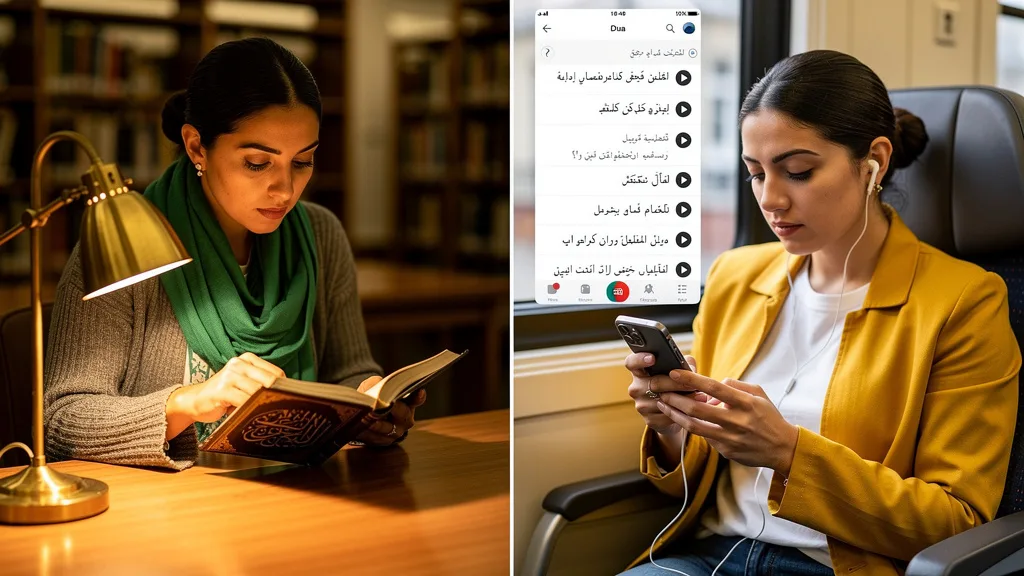
Focus on the core message of each supplication. What blessings or protection are you seeking? Who are you praising? Connecting with the purpose of the dua will motivate you to learn it and make its recitation a more meaningful experience. You can start by building a basic Quranic Arabic vocabulary to recognize common words that appear in many supplications.
Effectively Use Transliteration for Correct Pronunciation
For beginners who are not yet fluent in reading the Arabic script, transliteration is an invaluable tool. Transliteration uses the letters of your native language (like English) to represent the sounds of Arabic words. This helps you pronounce the duas correctly, which is important for maintaining their intended meaning.
While helpful, be mindful that transliteration is an approximation of Arabic sounds. Many online resources and apps provide audio recordings alongside the text. Listen to these recordings repeatedly to mimic the correct pronunciation and intonation. Eventually, learning the Arabic alphabet will provide the most accurate pronunciation, but transliteration is an excellent starting point.
Break Down Longer Duas into Manageable Parts
Trying to memorize a long dua all at once can feel overwhelming and lead to frustration. Instead, break it down into smaller, manageable phrases or sentences. Focus on mastering one part at a time before moving on to the next. Once you are comfortable with the first part, add the second, and practice them together.
This technique, known as chunking, is a proven memory aid. You can write each part on a separate flashcard or use a notes app on your phone. Reviewing these small chunks frequently is much more effective than trying to tackle the entire prayer in one sitting. Celebrate your progress as you master each section, which will keep you motivated.
Establish a Consistent Daily Practice Schedule
Consistency is the most critical element in memorization. Dedicate a specific time each day to review the duas you are learning. This could be for 10-15 minutes after your Fajr or Isha prayer, during your commute, or before you go to sleep. A regular schedule turns practice into a habit, making it a natural part of your day.
Repetition is key to moving information from your short-term to your long-term memory. Use the duas at their prescribed times, even if you need to read them from a book or your phone at first. The more you use them in context, the faster they will become second nature. This daily commitment is an investment in your spiritual growth.
Choosing Your Learning Tools: Books vs Apps
In 2026, learners have a wide array of tools at their disposal, from traditional prayer books to sophisticated mobile applications. Both methods offer unique advantages, and the best choice often depends on your personal learning style, lifestyle, and goals. Understanding the benefits of each can help you create a learning strategy that works for you.
Benefits of Learning with Traditional Books
Traditional books, such as the well-known "Fortress of the Muslim" (Hisnul Muslim), offer a focused, distraction-free learning experience. When you open a book, you are disconnected from the notifications and multitasking that come with a digital device. This can lead to deeper concentration and better retention of the material.
Many people also find a physical connection with a book to be more meaningful. The act of turning pages, highlighting passages, and seeing the collection of duas in a tangible format can feel more personal and reverent. Books are also reliable, requiring no batteries or internet connection, making them accessible anytime, anywhere.
Advantages of Using Modern Dua Learning Apps
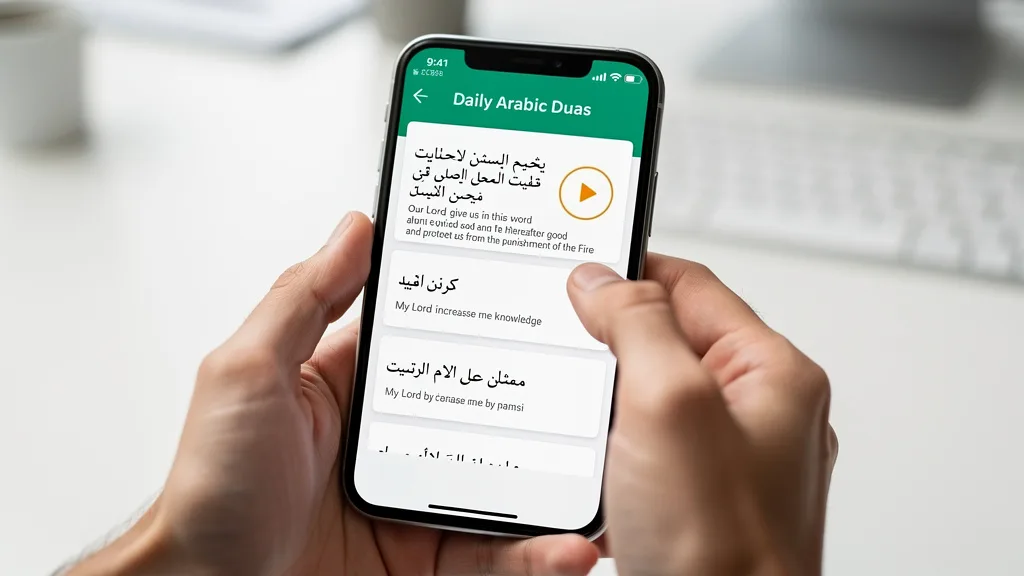
Modern apps bring a level of interactivity and convenience that books cannot match. Most dua apps include high-quality audio recordings from native speakers, which is crucial for mastering correct pronunciation. They often feature transliteration, translation, and explanations for each dua, all in one place.
Apps also offer features like customizable notifications to remind you to recite specific duas at the appropriate times, progress trackers, and flashcard or quiz functions to test your memory. This gamified approach can make learning more engaging and motivating. The ability to carry hundreds of duas in your pocket ensures you always have them available when you need them.
"In 2026, technology has made sacred knowledge more accessible than ever. Dua apps, when used with the right intention, can be powerful tools for a beginner to learn Arabic duas. They provide the audio and repetition necessary for correct pronunciation, which is a cornerstone of meaningful recitation."
Best Apps and Online Resources for Learning Duas in 2026
The digital landscape offers a wealth of resources for anyone eager to learn Islamic supplications. From dedicated mobile apps to comprehensive websites and structured online courses, there are tools available to suit every learning preference and budget. Navigating these options can help you find the perfect support for your memorization journey.
Top-Rated Mobile Apps for Arabic Supplications
Several mobile apps stand out for their user-friendly design, comprehensive content, and helpful features. Apps like Dua & Zikr (Hisnul Muslim) provide a digital version of the famous book, complete with audio and search functions. Others, such as Muslim Pro, integrate duas into a broader set of features like prayer times and a Qibla compass.
When choosing an app, look for one with clear audio, accurate transliteration and translation, and features that match your learning style, such as flashcards or progress tracking. Many of these applications are free or offer a premium version with additional features. Exploring the best free apps to learn Quranic Arabic can also provide tools that will aid in understanding the language of duas.
Free, Reliable Resources for Daily Dua Translations
For those seeking authentic sources online, several websites offer vast, free-to-access databases of hadith and Quranic verses, which are the sources of most duas. Websites like Sunnah.com provide an extensive collection of hadith from major books like Sahih al-Bukhari and Sahih Muslim, with translations and a powerful search engine.
These resources are invaluable for verifying the authenticity of a dua and understanding its context. They allow you to read the story or situation in which the Prophet Muhammad (peace be upon him) recited a particular supplication. Using these authoritative sites ensures you are learning from reliable and well-regarded sources in your quest for knowledge. seek forgiveness.
An Overview of Online Courses and Their Costs
For a more structured and personalized learning experience, online courses offer direct interaction with a qualified teacher. These courses can range from self-paced video lectures to live, one-on-one sessions. A personal tutor can provide immediate feedback on your pronunciation, explain the deeper meanings of the duas, and help you stay motivated.
The cost of online courses varies widely. Some platforms offer monthly subscriptions for access to a library of pre-recorded content, while private tutoring is typically charged by the hour. One-on-one sessions can range from $10 to $30 per hour, depending on the teacher's qualifications and location. While this is a greater investment than a free app, the personalized guidance can significantly accelerate your progress as you learn Quranic Arabic online and master your duas.
Key Takeaways
Embarking on the journey to learn and integrate daily duas is a transformative step in one's faith. By focusing on a few key principles, any beginner can find success and spiritual enrichment. Here is a summary of the most important points to remember as you begin:
- Start with Why: Understand that learning duas is about building a personal connection with Allah, seeking His guidance, and finding peace in daily remembrance.
- Memorize Essentials First: Begin with a few crucial duas for daily activities like waking up, eating, and sleeping to build a solid and manageable foundation.
- Follow a Proven Method: Learn effectively by first understanding the meaning, using transliteration and audio for pronunciation, breaking down long duas, and practicing consistently every day.
- Use the Right Tools: Choose the learning tools that fit your style, whether it's a distraction-free book or an interactive app with audio and reminders.
- Seek Knowledge: Utilize reliable online resources and consider a structured course or a private teacher to correct your pronunciation and deepen your understanding.
Frequently Asked Questions
How long does it take to memorize basic daily duas?
The time it takes to memorize basic daily duas varies from person to person, depending on factors like age, consistency of practice, and prior familiarity with Arabic. For a dedicated beginner practicing 15-20 minutes daily, it is realistic to memorize the most common short duas (for waking, sleeping, eating) within one to two weeks.
The key is not speed but retention and implementation. Focus on learning one or two duas at a time and using them in their proper context throughout the day. This practical application solidifies them in your memory far more effectively than simply repeating them from a list.
Is it necessary to learn the Arabic script to learn duas?
While it is not strictly necessary to read the Arabic script to begin learning duas, it is highly recommended for long-term accuracy. Beginners can effectively start with transliteration (Arabic words written in English letters) and audio guides to learn the pronunciation. This makes the process accessible to everyone.
However, the Arabic language has sounds that do not exist in English, and transliteration can be an imperfect guide. Learning the Arabic script will ensure you are pronouncing the words precisely as they should be, preserving the full meaning and blessing of the supplication. It opens the door to reading the Quran and other Islamic texts in their original form.
Can I make dua in my own language instead of Arabic?
Yes, absolutely. Allah understands all languages, and making personal, heartfelt dua in your own language is a beautiful and encouraged act of worship. This type of spontaneous supplication allows you to speak directly from your heart, expressing your specific needs, fears, and gratitude in the words that feel most natural to you.
However, there is a special merit in learning the specific duas taught by the Prophet Muhammad (peace be upon him) in Arabic. These are known as 'masnoon' duas, and their wording is divinely inspired and comprehensive. It is best to combine both: recite the masnoon duas in Arabic and also make your own personal duas in your native language.
What is the difference between dua and salah (prayer)?
Dua and Salah are both forms of worship but are distinct practices. Salah refers to the five obligatory daily prayers, which are performed at specific times with a set sequence of movements (standing, bowing, prostrating) and recitations in Arabic. It is a formal pillar of Islam.
Dua, on the other hand, is a more general term for supplication or invocation. It can be made at any time, in any language, and does not have a required physical form. While Salah itself contains moments of dua, dua is a broader concept of simply calling out to Allah for any need, at any moment.
Are there specific times when duas are more likely to be accepted?
Yes, Islamic teachings indicate several times when duas are especially potent and more likely to be accepted. These include the last third of the night, during prostration (sujood) in Salah, between the adhan and the iqamah, on the day of Arafah, and when it is raining.
Making dua during these blessed times is highly encouraged. However, this does not mean you should limit your supplications to only these moments. Allah is always listening, and you can and should call upon Him whenever you feel the need, day or night.
Conclusion
Learning how to integrate Arabic duas into your daily life is a journey of a thousand small steps, each one bringing you closer to Allah. By starting with essential supplications, understanding their meaning, and practicing consistently, you can build a beautiful habit that enriches your faith and brings immense peace. Whether you use books, apps, or the guidance of a teacher, the most important thing is your sincere intention to connect with your Creator in every moment of your day.
If you are a sister, mother, or beginner ready to take the next step with personalized guidance, Hidayah Quran Academy is here to help. We offer private, one-on-one classes with qualified female teachers to help you learn Quran, Tajweed, and essential duas in a comfortable environment. You can experience our teaching style with a complimentary 30-minute Book Free Trial session.