

Are you looking to deepen your connection with the Quran by understanding its original language? The journey into Quranic Arabic can feel daunting, but modern technology offers incredible tools to make it accessible and enjoyable. With the right app, you can start building your vocabulary and grasping grammatical concepts directly from your phone, often for free.
The best free apps to learn Quranic Arabic in 2026 are Quranic by Quran.com for vocabulary, Bayna for gamified grammar, Salaam for root word practice, and Quran Progress for tracking. These apps offer a structured yet flexible way to understand the language of the Quran, focusing on high-frequency words and interactive exercises that fit into a busy schedule. They are excellent starting points for any beginner.
Finding the right app is crucial for staying motivated on your learning journey. Our evaluation process in 2026 focused on several key criteria to identify the most effective and user-friendly options available. We prioritized apps that are genuinely free, without essential features hidden behind a paywall. The goal was to find tools that provide real, tangible value from the start.
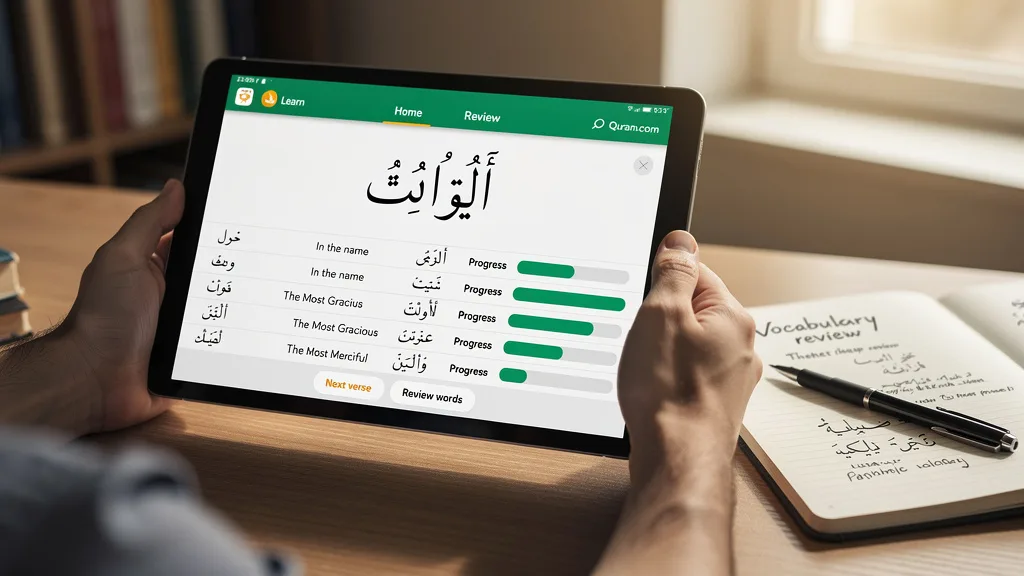
We assessed each app based on its educational approach, user interface, and content quality. An app's methodology is vital: does it focus on high-frequency words, root word analysis, or grammatical rules? We also looked for engaging features like gamification, progress tracking, and interactive exercises. Finally, we considered user reviews and app stability to ensure our recommendations are reliable and well-regarded within the community.
Our Top Picks: The Best Free Apps to Learn Quranic Arabic
After a thorough review, we've selected the top free apps that excel in different aspects of learning Quranic Arabic. Whether you're a complete beginner or looking to supplement your studies, these tools offer a fantastic starting point. Each app has a unique strength, from vocabulary building to grammar practice, allowing you to create a customized learning experience.
Quranic by Quran.com: For Vocabulary and Context
Quranic by Quran.com stands out as a premier choice for building vocabulary in a contextual manner. The app is designed to teach you the words of the Quran as they appear in the text. Instead of memorizing isolated words, you learn them through verses, helping you understand their meaning and usage immediately. This method makes the learning process more meaningful and directly applicable to your reading.

The app's curriculum is structured around the most common words in the Quran, claiming that learning just a fraction of these can lead to understanding a large percentage of the holy book. Its simple, clean interface and focus on repetition make it an excellent tool for beginners who want to see quick progress in their comprehension. The connection to the wider Quran.com ecosystem is also a significant plus.
Bayna: For Gamified Grammar and Sentence Structure
If you find grammar challenging, Bayna offers a fun and engaging solution. This app turns learning Quranic Arabic grammar into a game. Through a series of interactive, Duolingo-style exercises, you learn about sentence structure, verb conjugations, and grammatical cases in a way that doesn't feel like studying. The gamified approach helps build a consistent practice habit.
Bayna breaks down complex topics into bite-sized lessons, making them easier to digest. You earn points and unlock new levels as you progress, providing a sense of accomplishment that keeps you motivated. While it may not be as comprehensive as a formal textbook, it is an outstanding free resource for building a foundational understanding of the grammatical principles that govern the Quran's language.
Salaam: For Interactive Root Word Practice
Understanding the three-letter root system is a cornerstone of learning Arabic. The Salaam app, part of the Kalaam project, excels at teaching this concept through interactive exercises. It helps you recognize root words and understand how different words are derived from a single root, unlocking a deeper layer of meaning in the Quranic text. This is a powerful skill for any student of the language.
The app's design is intuitive, focusing on drills and quizzes that reinforce your knowledge of word families. By mastering root words, you can often deduce the meaning of unfamiliar words, which significantly accelerates your learning curve. This focus on etymology is a unique strength that complements vocabulary-focused apps perfectly, helping you understand why learning Quranic Arabic deepens your connection to the text.
Quran Progress: For Tracking Your Learning Journey
Motivation is key, and seeing your progress is one of the best ways to stay motivated. Quran Progress is a simple yet powerful app designed to help you track your learning. You can log the words you've learned, the verses you've studied, and the time you've spent practicing. This creates a visual record of your hard work and dedication.
The app allows you to set goals and monitor your consistency, which is essential for long-term success. While it's less of a direct teaching tool, it serves as an invaluable companion to your other learning resources. By using it to organize your studies and celebrate milestones, you can maintain momentum on your path to understanding the Quran's beautiful language. It transforms your study from a series of lessons into a documented learning journey.
Feature Comparison of Leading Quranic Arabic Apps
Choosing the right tool depends on your personal learning style and goals. To help you decide, here is a side-by-side comparison of the best free apps to learn Quranic Arabic in 2026. This table highlights the primary focus and key features of our top recommendations, allowing you to see at a glance which app best suits your needs.
| App | Primary Focus | Key Feature | Platform | Best For |
|---|---|---|---|---|
| Quranic by Quran.com | Vocabulary in Context | Verse-by-verse learning | iOS & Android | Beginners wanting to build vocabulary fast. |
| Bayna | Grammar & Syntax | Gamified, interactive exercises | iOS & Android | Learners who enjoy game-like lessons. |
| Salaam | Root Word Analysis | Interactive root recognition drills | iOS & Android | Students wanting to understand word origins. |
| Quran Progress | Tracking & Motivation | Goal setting and progress logging | iOS & Android | Organizing studies and staying motivated. |
What's the Best Way to Learn Quranic Arabic Effectively?
While apps are powerful tools, they are most effective when integrated into a broader learning strategy. Relying solely on an app can sometimes lead to gaps in your knowledge, especially with the nuances of grammar and pronunciation. To truly master Quranic Arabic, you should adopt a multi-faceted approach that combines technology with proven learning methods.
Combine App-Based Learning With Structured Guidance
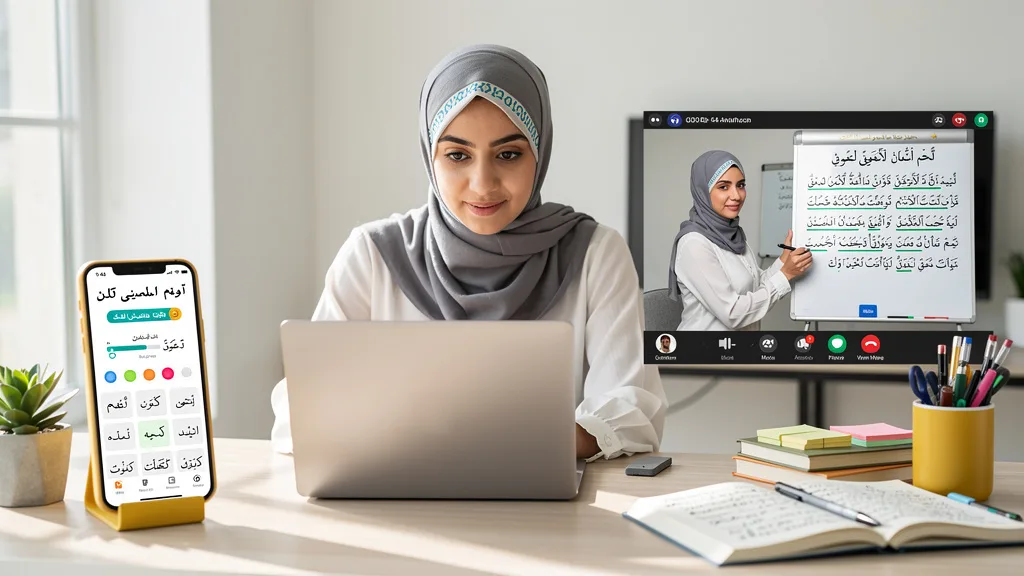
Apps are excellent for reinforcement and vocabulary building, but they cannot replace the personalized feedback of a qualified teacher. A teacher can correct your pronunciation, explain complex grammatical rules, and answer your specific questions in real-time. This combination of self-study and expert guidance creates a comprehensive and effective learning environment.
Consider supplementing your app usage with one-on-one lessons. A teacher can provide a structured curriculum tailored to your pace and goals, ensuring you build a solid foundation. This is especially important for mastering Tajweed and the proper articulation of Arabic sounds, something apps can't fully replicate. As noted by many educators, this blended approach accelerates progress significantly.
"Using apps to learn vocabulary and grammar is a fantastic start. But the real breakthrough happens when you combine that with live practice and feedback from a teacher who can guide your pronunciation and understanding of context. That's where the language truly comes alive."
Focus on High-Frequency Quranic Words First
One of the most efficient strategies for learning Quranic Arabic is to focus on the words that appear most frequently in the Quran. Studies have shown that a relatively small number of words make up a large percentage of the Quranic text. Many of the best apps, like Quranic by Quran.com, are built around this very principle.
By prioritizing these high-frequency words, you will quickly begin to recognize patterns and understand the gist of many verses. This provides early wins that boost your confidence and motivation to continue learning. Create flashcards or use your app's features to drill these words until they become second nature. This approach provides the highest return on your initial time investment.
Establish a Consistent Daily Practice Routine
Consistency is more important than intensity when it comes to language learning. It is far more effective to study for 15-20 minutes every day than to cram for several hours once a week. A consistent routine helps transfer knowledge from your short-term to your long-term memory, making your learning stick.
Use the features in apps like Quran Progress to set a daily goal and track your streak. Find a time of day that works for you, whether it's during your morning commute, on your lunch break, or before bed. Making Quranic Arabic study a small but non-negotiable part of your daily life is the surest path to making steady, lasting progress. This is especially effective when preparing for a free trial Quran class, as you will arrive with a foundation to build upon.
Key Takeaways
Navigating your path to understanding the Quran can be simplified with the right resources. As you embark on this rewarding journey in 2026, keep these key points in mind to maximize your success and stay motivated.
- Choose Apps Based on Your Goals: Select apps like Quranic for vocabulary, Bayna for grammar, and Salaam for root words to create a well-rounded, free learning toolkit.
- Combine Apps with Guidance: The best free apps to learn Quranic Arabic in 2026 are powerful supplements, but they are most effective when combined with structured lessons from a qualified teacher for personalized feedback.
- Prioritize High-Frequency Words: Focus your initial efforts on the most common words in the Quran to quickly build comprehension and confidence.
- Practice Consistently: Short, daily study sessions are more effective than infrequent, long ones. Make learning a consistent habit for long-term retention.
- Track Your Progress: Use an app like Quran Progress to monitor your learning journey, celebrate milestones, and stay motivated.
Frequently Asked Questions
What is the difference between a Quran app and a Quranic Arabic app?
A standard Quran app is primarily a digital Mushaf, designed for reading and listening to the Quran. It may include translations, tafsir (commentary), and audio recitations. Its main purpose is to facilitate the recitation and consumption of the Quranic text as is.
A Quranic Arabic app, on the other hand, is an educational tool specifically designed to teach you the language of the Quran. It focuses on vocabulary, grammar, syntax, and morphology unique to Quranic Arabic. While a Quran app helps you read, a Quranic Arabic app helps you understand what you are reading. You can learn about the differences between Quranic and Modern Standard Arabic to better understand this distinction.
How long does it take to learn basic Quranic Arabic with an app?
The time it takes to learn basic Quranic Arabic varies greatly depending on individual effort, consistency, and prior language experience. With consistent daily practice of about 20-30 minutes using a focused app, most learners can grasp several hundred high-frequency words and basic grammatical concepts within 3 to 6 months.
This level of knowledge can allow you to understand the general meaning of many verses you read or hear in prayer. However, achieving a deep understanding requires a longer and more dedicated study period. The key is consistency over a long period rather than short bursts of intense study.
Can you become fluent in Quranic Arabic using only free apps?
While free apps are an excellent resource for building a strong foundation, achieving true fluency in Quranic Arabic using only these tools is highly unlikely. Fluency requires comprehensive knowledge of complex grammar, a vast vocabulary, and, most importantly, the ability to produce the language and receive personalized feedback, especially on pronunciation and context.
Apps are best used as a starting point or a supplement to a more structured learning program, such as one-on-one classes with a qualified instructor. A teacher provides the interactive practice and nuanced correction that apps cannot. For instance, our free online Quran classes for sisters provide this essential interactive component.
Are these apps suitable for complete beginners?
Yes, absolutely. The apps recommended in this guide, such as Quranic by Quran.com and Bayna, are specifically designed with complete beginners in mind. They start with the most fundamental concepts and gradually build your knowledge in a structured, easy-to-follow manner.
These apps break down the daunting task of learning a new language into manageable, bite-sized lessons. Their interactive and often gamified nature makes the initial learning phase engaging and less intimidating. They provide a perfect entry point into the world of Quranic Arabic before you decide to commit to more formal studies.
What is the best free Quran app for reading and listening?
While this article focuses on learning the language, a great companion app for reading and listening is essential. As of 2026, Quran.com's main app (separate from their 'Quranic' learning app) and 'Al Quran (Tafsir & by Word)' are two of the best free options for a digital Mushaf.
They offer clean interfaces, high-quality audio from various reciters, multiple translations, and word-by-word analysis. These features allow you to read, listen, and cross-reference meanings as you learn, creating a synergistic effect with your language-learning apps. Many serious students use a combination of these tools for a complete study experience.
Conclusion
Embarking on the journey to understand the Quran in its original language is a deeply rewarding endeavor, and in 2026, free mobile apps have made the first steps more accessible than ever. By leveraging tools like Quranic, Bayna, and Salaam, you can build a solid foundation in vocabulary and grammar at your own pace. The key is to choose the right app for your learning style, practice consistently, and integrate these tools into a broader strategy that includes structured guidance for the best results.
Ready to take your learning beyond an app and get personalized feedback from an expert? Hidayah Quran Academy offers private, one-on-one classes with qualified female teachers for sisters and children. We can create a personalized learning plan that complements your app-based studies. Start your journey with a no-obligation, 30-minute session to see how our teachers can help you. Book Free Trial today and bring the language of the Quran to life.