

Are you ready to begin your journey with the Quran but unsure where to start? A trial class is the perfect first step, but knowing how to approach it can make all the difference between a fruitful experience and a missed opportunity. Proper preparation ensures you can accurately assess the teacher, the platform, and whether the academy is the right fit for your spiritual and educational goals.
To prepare for your free trial Quran class, you should first define your learning goals, such as mastering Tajweed or starting Hifz. Next, set up a quiet, distraction-free space with a reliable internet connection and the necessary software like Zoom. Finally, prepare a list of questions to ask the tutor about their teaching style, curriculum, and scheduling to evaluate if they meet your needs. This preparation helps you make the most of your session and choose the best path for your Quranic education.
What to Expect in Your Free Trial Quran Class
A free trial Quran class is your no-obligation opportunity to experience an online learning environment firsthand. Typically lasting around 30 minutes, this introductory session allows you to meet your potential female tutor, understand her teaching methodology, and get a feel for the virtual classroom. It is a crucial step before committing to a paid plan, offering you a glimpse into the quality of instruction and the student-tutor dynamic.
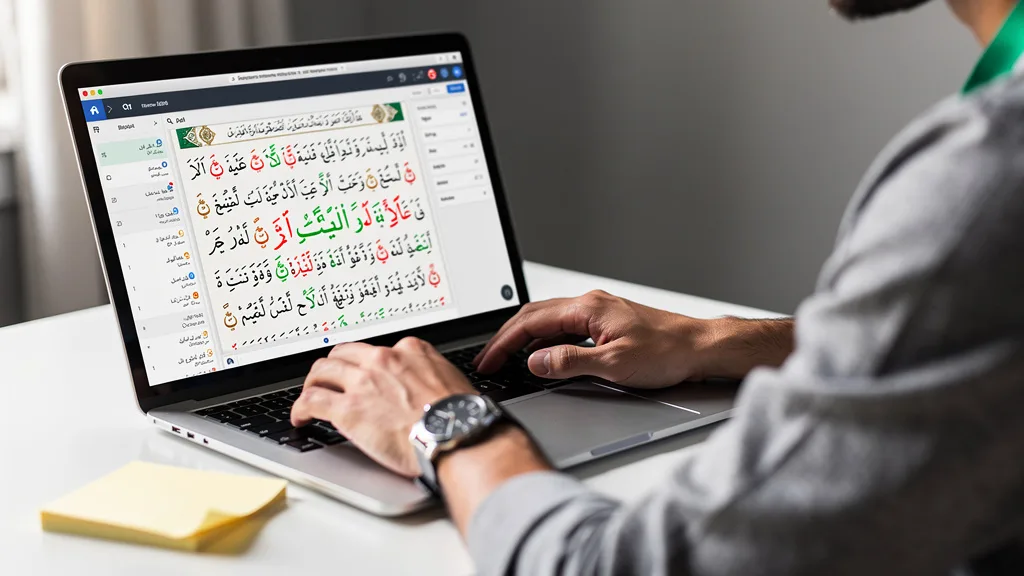
During the trial, the tutor will likely begin with a brief introduction and then assess your current level of Quranic knowledge. This is not a test, but a way for the teacher to understand your starting point, whether you are a complete beginner learning the Noorani Qaida or an advanced student looking to perfect your Tajweed. Based on this assessment, the tutor will conduct a short, sample lesson tailored to your needs, giving you a real taste of what future classes will be like.

The session also serves as a two-way interview. It is your chance to observe the tutor's patience, clarity, and professionalism. At the end of the class, there will usually be time for you to ask questions about the curriculum, scheduling, and payment plans. The goal is for you to leave the session with a clear understanding of the service and the confidence to decide if it aligns with your learning aspirations.
Before Your Session: A Preparation Checklist
Coming prepared for your trial class demonstrates your seriousness and helps you maximize the limited time you have. A few simple steps beforehand can transform your session from a passive viewing into an active evaluation. This preparation ensures you gather all the information needed to make a confident and informed choice about your Quranic education.

Define Your Personal Learning Objectives
Before you even log in, take a moment to reflect on what you hope to achieve. Are you looking to learn how to read the Quran from scratch? Do you want to improve your pronunciation and master the rules of Tajweed? Perhaps your goal is to begin a Hifz (memorization) program or understand the meaning of the verses through translation. Having clear goals helps the tutor tailor the trial session to your specific needs and demonstrates your commitment to learning.

Communicating your objectives at the beginning of the class allows the tutor to provide a more relevant and effective sample lesson. It also helps you evaluate whether the teacher's expertise aligns with your goals. For instance, if your focus is on advanced Tajweed, you can better assess if the tutor has the depth of knowledge required to guide you. This clarity is the foundation of a successful student-teacher relationship.
Create a Quiet and Respectful Learning Space
The environment you learn in significantly impacts your focus and retention. Choose a quiet room where you will not be disturbed for the duration of the class. Inform your family members that you need uninterrupted time to ensure you can concentrate fully on the lesson. This is not just for your benefit; it also shows respect for the teacher and the sacred knowledge being shared.
Ensure your space is clean, comfortable, and conducive to learning. Sit at a desk or table rather than lounging on a bed or sofa to maintain a posture of alertness and respect. Minimizing distractions, such as turning off your phone notifications and closing unnecessary browser tabs, will help you absorb the information more effectively and engage fully with your tutor.
Prepare a List of Questions for the Tutor
Your trial session is the perfect time to get answers to all your questions. Preparing them in advance ensures you do not forget anything important. These questions should cover the tutor's qualifications, teaching methodology, and the logistics of the classes. A good tutor will welcome your questions as it shows you are an engaged and proactive student.
Here are some essential questions to consider asking:
- What is your educational background and certification in Quranic studies?
- What curriculum or books do you use for teaching (e.g., Noorani Qaida, specific Tajweed texts)?
- How do you track student progress and provide feedback?
- What is your policy for missed classes or rescheduling?
- Can you accommodate my time zone and preferred schedule?
- Do you have experience teaching students at my level (beginner, intermediate, adult, child)?
- What teaching methods do you use to keep students engaged, especially children?
Technical Requirements for a Smooth Online Experience
A seamless technical setup is the backbone of any successful online class. Technical glitches can disrupt the flow of the lesson, cause frustration, and detract from the learning experience. Ensuring your hardware and software are ready before the class begins allows you to focus solely on the content of the lesson and your interaction with the tutor.
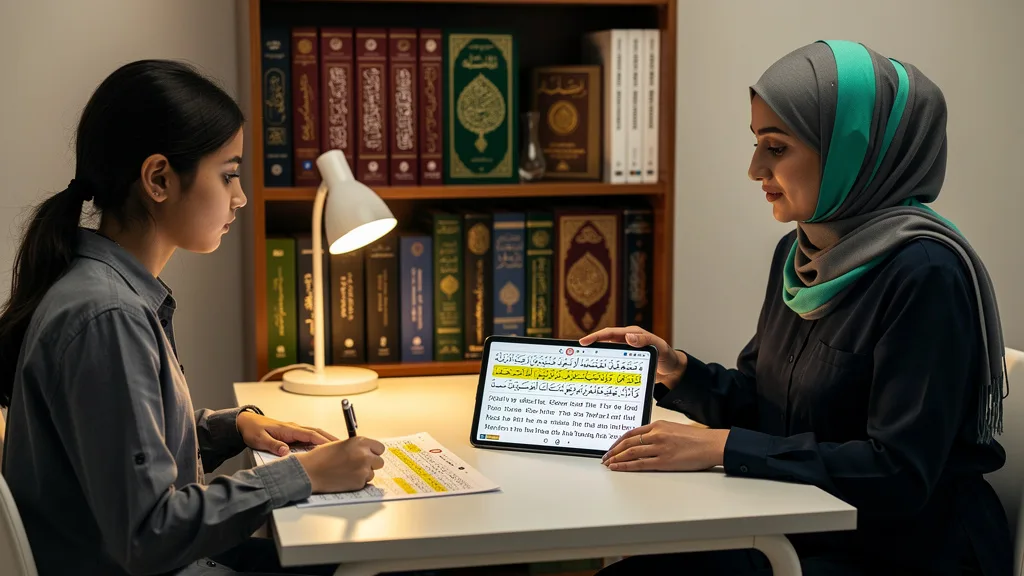
Essential Hardware and Software for Your Lesson
You don't need a high-end studio, but a few basics are essential for a smooth online Quran class. First, you will need a reliable device, such as a laptop, desktop computer, or tablet with a webcam. While a smartphone can work, a larger screen is generally better for viewing shared materials. A stable, high-speed internet connection is arguably the most critical component to prevent lagging or dropped calls.

For audio, a headset with a built-in microphone is highly recommended. This helps you hear the tutor's pronunciation clearly and ensures they can hear you without background noise or echo, which is vital for correcting Tajweed. Finally, make sure you have the required software, like Zoom or Skype, downloaded and tested before your session. Log in a few minutes early to ensure your camera and microphone are working correctly.
Skype vs Zoom: Which Platform Is Better for Quran Classes?
Both Skype and Zoom are popular choices for online tutoring, but they have slight differences that might make one a better fit for your Quran classes. Many academies have a preference, but understanding the features can be helpful. Zoom is often favored for its stability, superior screen-sharing capabilities, and features like virtual whiteboards, which are excellent for illustrating concepts.
Skype is a solid, free option that is widely accessible. However, some users find Zoom's video and audio quality to be more consistent, especially on lower-bandwidth connections. The choice often comes down to the tutor's preference and the specific tools they use for teaching. Ultimately, the best platform is the one that provides a stable, clear, and interactive connection for your lesson. We recommend testing your connection on the chosen platform before the trial begins.
| Feature | Zoom | Skype |
|---|---|---|
| Screen Sharing | Advanced, allows sharing of a portion of the screen and annotation tools. | Basic screen sharing is available. |
| Video/Audio Quality | Generally considered very stable and high-quality, even with weaker internet. | Good quality, but can sometimes be less stable than Zoom. |
| Interactive Tools | Includes virtual whiteboards, polls, and non-verbal feedback icons. | Fewer built-in interactive tools compared to Zoom. |
| Accessibility | Easy to join meetings via a link without an account. | Generally requires both parties to have a Skype account. |
| Recording | Simple one-click recording to the cloud or local computer. | Offers call recording that is available for 30 days. |
During the Trial: How to Evaluate Your Tutor
The trial class is your primary opportunity to assess whether the tutor is the right guide for your Quranic journey. Beyond their qualifications on paper, their personality, teaching style, and professionalism in a live setting are what will truly shape your learning experience. Pay close attention not just to what is being taught, but how it is being delivered.
Assess Teaching Style and Communication
A great tutor can adapt their teaching style to the student's needs. During the trial, observe how the tutor explains concepts. Are they clear, patient, and encouraging? Do they create a comfortable atmosphere where you feel confident to ask questions and make mistakes? For children, a good teacher will be engaging and use creative methods to hold their attention. For adults, the approach might be more structured and in-depth.
"The best online tutors do more than just teach; they inspire. During your free trial Quran class, look for a teacher who is not only knowledgeable but also patient and passionate. Their ability to connect with you and make learning feel personal is the key to long-term success."
Communication is key. The tutor should be fluent in a language you are comfortable with and able to explain complex rules simply. Finding the right female Quran teacher online involves finding someone whose communication style resonates with you. This connection is vital for building the trust and rapport necessary for a productive learning relationship.
Observe Professionalism and Punctuality
Professionalism is a strong indicator of a reliable and serious educational service. Your tutor should be on time for the trial class, well-prepared, and dressed modestly and appropriately. Their teaching environment should also be quiet and professional, free from personal distractions. These details reflect the tutor's and the academy's commitment to providing a high-quality service.
Punctuality and preparation show respect for your time and commitment. A tutor who is late or seems unprepared for a trial session may exhibit similar disorganization in regular classes. A professional demeanor helps create a formal and respectful learning environment, which is especially important when studying the Holy Quran. Trust your instincts; you should feel that you are in capable and respectful hands.
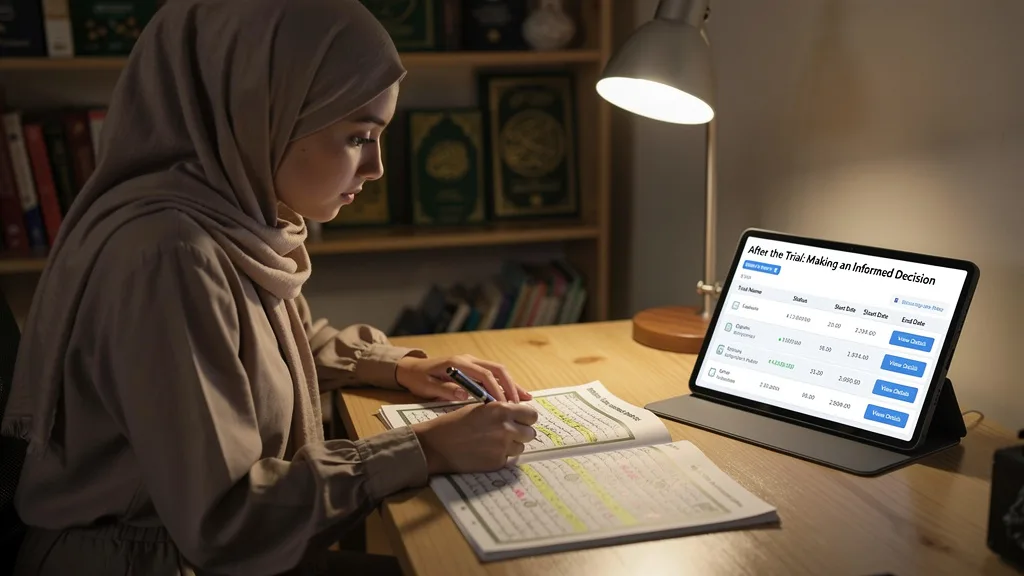
After the Trial: Making an Informed Decision
Once the trial class is over, the evaluation process continues. Now is the time to reflect on your experience, review the practical details, and compare your options to make a final decision. Taking a structured approach to this final step ensures you choose a program that will support your Quranic journey for the long term.

Understanding Monthly Costs and Packages in 2026
After a positive trial experience, the next logical step is to understand the financial commitment. As of 2026, online Quran academies typically offer a variety of packages based on the number of classes per week. Costs can vary depending on the length of the sessions (e.g., 30, 45, or 60 minutes) and the tutor's qualifications. Look for transparent pricing with no hidden fees.
Ask for a clear breakdown of the different plans available. Many institutions offer discounts for siblings or for paying for several months in advance. Be sure to clarify the payment methods accepted and the billing cycle. For a detailed overview of what to expect, you can review typical Quran class fees to compare them with the quote you receive.
Where to Find Reviews for Online Quran Services
Independent reviews and testimonials can provide valuable insights into an academy's reputation and the experiences of other students. Look for reviews on third-party platforms like Trustpilot or Google Reviews, as these are often more candid than testimonials posted on the service's own website. Pay attention to comments about tutor quality, customer service, and reliability.
You can also ask the academy if they can connect you with current students or their parents for a reference. A reputable institution with a history of satisfied students should be happy to oblige. Reading about the experiences of others, particularly those with similar learning goals to your own, can help solidify your decision and give you peace of mind.
Comparing Your Options to Find the Best Fit
It is wise to take trial classes from two or three different academies before making a final decision. This allows you to compare teaching styles, platforms, and overall experiences. While one academy like IQRA Network might excel in its structured curriculum, another like Studio Arabiya might offer more flexible scheduling. Your goal is to find the service that best aligns with your specific needs.
Create a simple comparison chart to weigh the pros and cons of each option. Consider factors like tutor compatibility, curriculum, scheduling flexibility, and cost. Ultimately, the best online Quran tutor for you is the one with whom you feel the most comfortable and confident. Trust your judgment after a thorough evaluation; the right choice is the one that feels right for you or your child's unique learning journey.
Key Takeaways
To ensure you make the most of your trial lesson and choose the right path for your Quranic education, keep these key points in mind:
- Preparation is Crucial: Define your learning goals, prepare a quiet space, and have your technical setup ready before the class starts.
- Ask Questions: Use the trial to interview the tutor. Ask about their qualifications, teaching methods, and curriculum to ensure they align with your needs.
- Evaluate the Tutor: Assess the teacher's communication style, professionalism, and ability to connect with you or your child. A good rapport is essential for effective learning.
- Check Technicals: A stable internet connection, a good headset, and a reliable platform like Zoom or Skype are non-negotiable for a smooth online experience.
- Review and Compare: After the trial, carefully review the pricing packages, read independent reviews, and compare your options before committing to a plan.
Frequently Asked Questions
How do trial classes for adults differ from those for children?
Trial classes for adults are typically more goal-oriented and discussion-based. The tutor will focus on understanding the adult learner's specific objectives, whether it's advanced Tajweed or understanding the Quran's meaning. The teaching style is often more direct and analytical.
For children, the trial class focuses on building rapport and making learning fun. The tutor will use more engaging and interactive methods, like stories and positive reinforcement, to assess the child's attention span and current knowledge in a gentle, encouraging manner. The primary goal is to make the child feel comfortable and excited about learning.
What are some alternatives to a live trial class for learning Quran?
While a live trial is ideal for assessing a tutor, there are alternatives. Some academies offer pre-recorded video lessons or access to a resource library so you can see their teaching materials. Mobile apps for Quran learning can also be a good starting point for self-study and learning the basics of Arabic script.
However, these alternatives lack the personalized feedback and interactive correction that are crucial for proper pronunciation and Tajweed. A live, one-on-one session provides real-time guidance that pre-recorded content cannot match, which is why we highly recommend taking advantage of a free online Quran class for sisters or children.
How can I find top-rated female Quran tutors offering trial sessions?
The best way is to search for reputable online Quran academies that specialize in providing female tutors, like Hidayah Quran Academy. Check their websites for information on their tutors' qualifications and their trial class offerings. You can also look for reviews on independent platforms and join social media groups for Muslim parents or sisters, where members often share recommendations.
When searching, use specific terms like "female Quran teacher for kids" or "online Tajweed teacher for sisters." Many dedicated platforms vet their tutors, ensuring they are qualified and experienced. Always opt for an academy that offers a free trial so you can verify the tutor's compatibility yourself before making a commitment.
How long is a typical free trial Quran class?
A typical free trial Quran class is usually between 20 and 30 minutes long. This duration is sufficient for a brief introduction, an assessment of the student's current level, a short sample lesson, and a question-and-answer session at the end.
This timeframe allows both the student and the tutor to get a good sense of each other without a significant time commitment. It provides a valuable snapshot of the teaching style and classroom dynamic, helping you decide whether to proceed with regular paid lessons.
Do I need to know any Arabic before my trial class?
No, you absolutely do not need any prior knowledge of Arabic. Trial classes are designed for students of all levels, including complete beginners who have never read the Arabic alphabet. The purpose of the trial is for the tutor to assess your starting point and tailor the lesson accordingly.
Be honest with the tutor about your level. If you are a beginner, they will start with the very basics, such as the letters of the Noorani Qaida. A good academy welcomes students at every stage of their learning journey and provides a supportive environment to help them grow.
Conclusion
Preparing for your free trial Quran class is the first and most important step toward a rewarding educational journey. By defining your goals, setting up a conducive learning environment, and knowing what to look for in a tutor, you empower yourself to make a confident and well-informed decision. This single session is more than just a demo; it is your chance to find a guide who can connect with you and lead you in your study of the Holy Quran with patience and expertise.
The key takeaways are to be proactive, observant, and thorough. Assess the tutor's teaching style and professionalism, clarify all your questions about curriculum and costs, and ensure the technical setup is seamless. Remember that the right fit goes beyond qualifications; it is about finding a teacher who inspires and motivates you or your child.
Taking the time to properly evaluate your options ensures you invest your time and resources in a program that truly meets your needs. This thoughtful approach will help you build a strong foundation for a successful and spiritually fulfilling learning experience that can last a lifetime.
At Hidayah Quran Academy, we are confident in our qualified female tutors and our personalized approach to Quranic education for sisters and children. We invite you to experience it for yourself. Book Free Trial