

Have you ever wished you could understand the Quran directly in its original language, feeling the full impact of every word without relying on a translation? For many adult beginners, this goal can feel distant and overwhelming. The good news is that with a structured approach, it is an achievable and deeply rewarding journey.
A successful Quranic Arabic learning path for adult beginners involves three main phases: mastering the alphabet and core vocabulary, building a foundation in grammar (Nahw) and morphology (Sarf), and finally, engaging directly with the Quranic text. This structured progression, supported by a qualified teacher and effective resources, makes the language accessible and ensures you build a lasting connection with the words of Allah.
Understanding the Goal: What Is Quranic Arabic?
Before embarking on your learning journey, it is crucial to understand what Quranic Arabic is. Quranic Arabic, also known as Classical Arabic, is the form of the Arabic language used in the Quran and in classical Islamic literature from the 7th to the 9th centuries. It is the foundation from which other forms of Arabic have evolved, but it has its own unique grammar, style, and vocabulary that are essential for deep comprehension of the divine text.
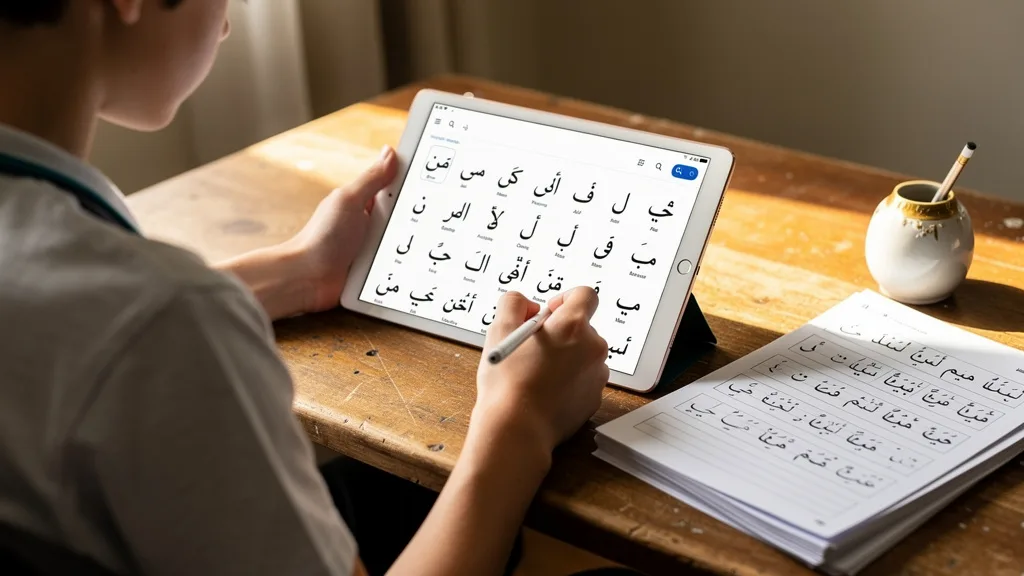
This is distinct from Modern Standard Arabic (MSA), which is used in books, news broadcasts, and formal speeches across the Arab world today. It is also different from colloquial dialects, which are the everyday spoken languages of different Arab countries. While learning MSA can be beneficial, focusing directly on Quranic Arabic is the most efficient path if your primary goal is to understand the Quran. This specialized focus allows you to dedicate your time to the specific vocabulary and grammatical structures that unlock the meaning of the scripture.
Your 2026 Quranic Arabic Learning Path for Beginners
A well-defined path can turn a daunting challenge into a series of manageable steps. For an adult beginner in 2026, the journey to understanding Quranic Arabic can be broken down into three logical phases. This methodical approach ensures you build a strong foundation before moving on to more complex concepts, preventing frustration and burnout. Remember that consistency is more important than speed; small, regular efforts will yield significant results over time.
Phase 1: Mastering the Alphabet and Foundational Vocabulary
The very first step is to master the Arabic script. This involves not just recognizing the 28 letters but also learning their correct pronunciation (Makharij al-Huruf). A solid grasp of phonetics is non-negotiable, as a small change in sound can alter the meaning of a word entirely. We offer a comprehensive guide to help you learn the Arabic alphabet and its pronunciation correctly from the start.
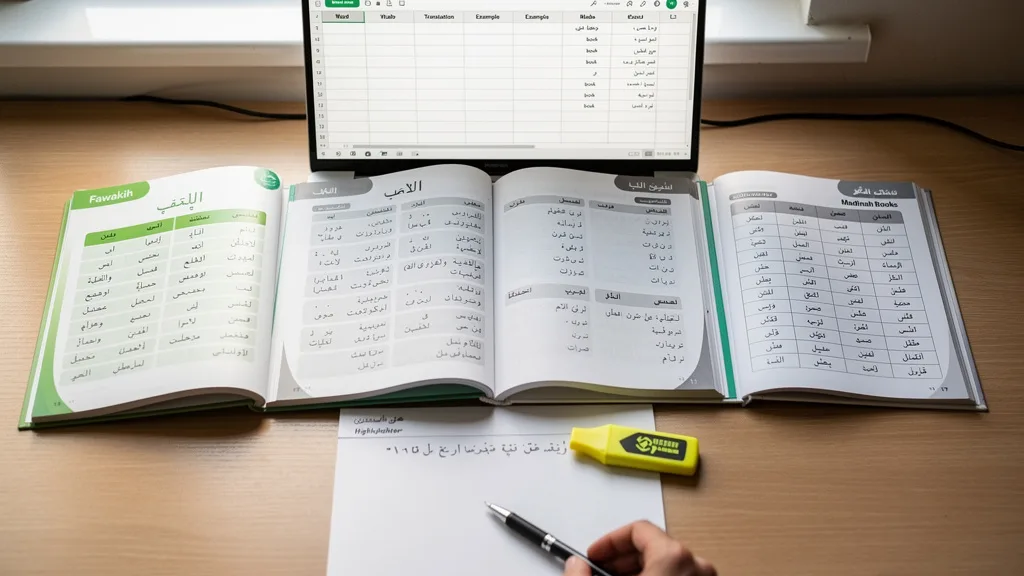
Alongside the alphabet, you should begin building a foundational vocabulary. Instead of learning random words, focus on high-frequency words that appear most often in the Quran. It is estimated that around 300 words make up over 70% of the Quranic text. Learning these key nouns, verbs, and particles first provides a massive return on your effort, allowing you to start recognizing words in verses much sooner. Use flashcard apps and create word lists to aid your memorization during this critical phase.
Phase 2: Building Core Grammar (Nahw) and Morphology (Sarf)
Once you are comfortable with the script and have a basic vocabulary, the next phase is to dive into the building blocks of the language: grammar (Nahw) and morphology (Sarf). Nahw is the study of how words function in a sentence and their grammatical states. It helps you understand the relationships between words, answering questions like "Who is doing the action?" and "What is being acted upon?" This is what allows you to make sense of the overall sentence structure.
Sarf, on the other hand, is the study of word patterns and how they are formed from a root. Arabic is a root-based language, where a three-letter root can be transformed into dozens of related words (nouns, verbs, adjectives) by applying specific patterns. Understanding Sarf is like having a superpower; it enables you to guess the meaning of unfamiliar words just by recognizing their pattern and root. Starting with the most common verb forms and noun patterns will give you the tools to deconstruct and understand new words you encounter.
Phase 3: Engaging Directly With the Quranic Text
This is the phase where all your hard work begins to pay off. With a foundation in the alphabet, vocabulary, and basic grammar, you can start engaging directly with the Quran. Begin with the shorter Surahs at the end of the Juz Amma, as they are often simpler in structure and contain many of the high-frequency words you have already learned. Read a verse, try to identify the words you know, and analyze its grammatical structure based on the Nahw and Sarf rules you've studied.
In this phase, having a teacher is invaluable. A qualified instructor can guide you through complex verses, correct your understanding, and provide the context that you might miss on your own. They can help you appreciate the subtleties and eloquence of the language, transforming your study from a purely academic exercise into a spiritual reflection. This guided practice builds confidence and deepens your connection to the text, motivating you to continue your learning journey. You can explore some beautiful Quranic verses as you build your skills.
Comparing Curriculums: Fawakih vs Bayna Yadayk vs Madinah Books
Choosing the right curriculum is one of the most important decisions you will make. Different programs cater to different learning styles and goals. Three of the most popular curriculums for learning Arabic are Fawakih, Al-Arabiyyah Bayna Yadayk, and the Madinah Books series. Understanding their core methodologies will help you select the one that best aligns with your needs as a beginner focused on the Quran.
Fawakih: A Structured, Institute-Based Approach
Fawakih is an online institute specifically designed to teach Quranic Arabic. Its curriculum is highly structured, breaking down the language into manageable levels. The program is known for its focus on the 5,000 most common words in the Quran and for integrating grammar and vocabulary in a systematic way. This approach is ideal for students who thrive in a formal, classroom-like environment with clear milestones and assessments.

The main advantage of Fawakih is its singular focus on Quranic Arabic, which makes it very efficient for students with this specific goal. However, because it operates like an institute, it may have set schedules and a faster pace that might not suit everyone. It is a great choice for disciplined learners who want a comprehensive, all-in-one program dedicated solely to accessing the Quranic text.
Bayna Yadayk: An Immersive, Communicative Method
The Al-Arabiyyah Bayna Yadayk series is one of the most popular curriculums for learning Modern Standard Arabic (MSA). Its primary focus is on communication and immersion, using dialogues, real-world scenarios, and extensive audio components to build all four language skills: reading, writing, listening, and speaking. The books are entirely in Arabic, which forces the student to start thinking in the language from day one.
While its main goal is MSA proficiency, its comprehensive grammatical foundation is also beneficial for Quranic Arabic students. Many teachers adapt this curriculum for Quranic studies by supplementing it with classical texts. It is best for learners who also have an interest in modern Arabic or who prefer an immersive, communicative learning style over a purely grammar-translation method.
Madinah Books: A Classic, Grammar-Focused Series
The Madinah Books series, authored by Dr. V. Abdur Rahim, is a world-renowned curriculum originally designed for non-Arabic speakers at the Islamic University of Madinah. Its methodology is heavily focused on grammar, introducing rules gradually and reinforcing them through exercises drawn directly from the Quran and Hadith. This makes it exceptionally relevant for students of Quranic Arabic.
The series is celebrated for its logical progression and its ability to build a very strong grammatical foundation. Because it is so grammar-heavy, it is best suited for analytical learners who enjoy understanding the mechanics of a language. The main challenge can be its dry, academic nature, which might require extra motivation or the guidance of a good teacher to stay engaged. Many successful students of Quranic Arabic have built their foundation upon this classic series.
| Curriculum | Primary Focus | Best For | Format |
|---|---|---|---|
| Fawakih | Quranic Arabic Vocabulary & Grammar | Learners wanting a structured, online institute experience focused only on the Quran. | Online portal, live classes, video lessons |
| Bayna Yadayk | Modern Standard Arabic (MSA) & Communication | Learners who prefer an immersive method and may also want to learn modern Arabic. | Textbooks, audio CDs, teacher-led instruction |
| Madinah Books | Classical Arabic Grammar (Nahw & Sarf) | Analytical learners who want a deep, grammar-first foundation using Quranic examples. | Textbooks, free online videos, self-study |
The Best Online Courses for Quranic Arabic in 2026
The digital landscape of 2026 offers an abundance of online courses for learning Quranic Arabic, catering to every schedule and budget. The best courses are those that provide a combination of a structured curriculum, qualified teachers, and personalized feedback. When evaluating options, look for programs that offer live, one-on-one sessions, as this is the most effective way to get your questions answered and your pronunciation corrected in real time.

Many platforms now offer specialized adult Quran classes online that are designed with the schedules and learning styles of busy adults in mind. These courses often use one of the well-known curriculums mentioned above but adapt it to a virtual environment. A key feature to look for is the availability of female teachers, which is a crucial requirement for many sisters seeking a comfortable and private learning space. A great course will not just teach you rules; it will inspire you and connect you with a mentor who can guide you on your spiritual journey.
"A systematic approach is non-negotiable for adults learning Quranic Arabic. Without a clear path, learners often get lost in grammar rules without ever tasting the sweetness of the text itself. The right teacher turns that path into a guided journey."
Essential Tools and Supplementary Resources
While a core curriculum and a good teacher are the pillars of your learning path, supplementary tools and resources can significantly accelerate your progress. These resources can help you review concepts, build vocabulary, and get exposure to the language outside of your formal lessons. Integrating a mix of apps, websites, and media into your routine will keep your learning dynamic and engaging.
What Are the Most Effective Apps for Learning Quranic Vocabulary?
Mobile apps are fantastic for learning on the go. For Quranic vocabulary, the most effective apps use spaced repetition systems (SRS) to help you memorize words efficiently. Apps like Quranic (by the makers of Fawakih), Anki (with pre-made Quranic Arabic decks), and Bayan Quran are excellent choices. They allow you to build flashcard decks of high-frequency words, test yourself regularly, and see words used in the context of actual verses. These tools are perfect for turning small pockets of free time, like a commute or a lunch break, into productive study sessions. For more options, you can review our list of the top apps to learn Quranic Arabic in 2026.
Are There Good Free YouTube Channels for Learning Quranic Grammar?
Yes, YouTube is a goldmine of free educational content for Quranic Arabic, but it's important to choose channels that are accurate and systematic. Channels like Free Quran Education offer beautifully animated videos that simplify complex grammar concepts. Others, like Arabic with Husna, provide detailed breakdowns of grammar and morphology. While these channels are excellent supplementary resources for reviewing a topic or hearing another explanation, they generally lack the interactive feedback and structured progression of a formal course. Use them to support your primary learning, not replace it. Always verify the information with your teacher to ensure it aligns with your curriculum.
How Much Does It Cost to Learn Quranic Arabic Online?
The cost of learning Quranic Arabic online can vary widely depending on the format and provider. As of 2026, you can find everything from free, self-paced resources to premium one-on-one tutoring that can cost upwards of $25 to $50 per hour. Group classes typically offer a more affordable option, ranging from $50 to $150 per month, depending on the frequency and class size.
Private, one-on-one lessons are the most effective format but also represent a higher investment. Prices for private tutoring generally range from $15 to $40 per hour, influenced by the teacher's qualifications, experience, and location. Many academies, including Hidayah Quran, offer package deals that reduce the hourly rate. The most important factor is value, not just price. A qualified teacher who can accelerate your learning is a worthwhile investment. Always take advantage of free trial classes to assess the teaching style and quality before making a financial commitment. For a detailed breakdown, see our guide on Arabic course costs.
Key Takeaways
Navigating the path to understanding Quranic Arabic can be simplified by keeping these key points in mind. Here is a summary of the most important takeaways from this guide:
- Define Your Goal: Focus on Quranic (Classical) Arabic, not Modern Standard Arabic, if your primary objective is to understand the Quran.
- Follow a Phased Approach: Master the alphabet and basic vocabulary first, then move to grammar (Nahw and Sarf), and finally apply your knowledge to the Quranic text.
- Choose the Right Curriculum: Select a curriculum like Madinah Books, Fawakih, or Bayna Yadayk based on your learning style, whether you prefer grammar-focus, institute structure, or immersion.
- A Teacher is Key: Self-study is possible but challenging. A qualified teacher provides essential guidance, correction, and motivation, especially for adult female beginners seeking a comfortable environment.
- Use Supplementary Tools: Accelerate your learning with vocabulary apps, YouTube channels, and other resources, but use them to support, not replace, a structured course.
- Value Over Price: When considering costs, prioritize the quality of teaching and the value of personalized feedback. A free trial is the best way to assess a course's fit for you.
Frequently Asked Questions
How long does it typically take an adult to learn Quranic Arabic?
The timeline for learning Quranic Arabic varies greatly depending on the student's background, time commitment, and learning methods. With consistent effort (e.g., 3-5 hours of study per week), an adult beginner can typically start understanding simple verses and core grammatical concepts within 6-12 months. Achieving a comfortable level of proficiency, where you can read and comprehend large portions of the Quran with some aid, may take 2-3 years of dedicated study.
Can I learn Quranic Arabic on my own without a teacher?
While it is technically possible to learn on your own using books and online resources, it is extremely challenging and not recommended for beginners. A teacher provides invaluable, real-time feedback on pronunciation and grammar, which you cannot get from a book. They also offer motivation, accountability, and the ability to answer nuanced questions, helping you avoid common mistakes when learning the Quran and ensuring you build a correct and solid foundation from the start.
What is the main difference between Nahw and Sarf?
Nahw (grammar/syntax) and Sarf (morphology) are the two core components of Arabic grammar. The simplest way to understand the difference is that Sarf deals with the form of a single word and how it is derived from a root, while Nahw deals with the function of that word within a sentence and how it interacts with other words. Sarf is about word construction, and Nahw is about sentence construction.
Should I learn Modern Standard Arabic before Quranic Arabic?
This depends on your goals. If your sole purpose is to understand the Quran, it is more efficient to study Quranic (Classical) Arabic directly. While MSA provides a good foundation, there are significant differences in vocabulary and style. Studying MSA first means you will spend time on modern vocabulary and expressions that are not present in the Quran. You can read more about the differences between Quranic Arabic and MSA to make an informed decision.
How do I find opportunities to practice what I learn?
Practice is crucial for retention. The best way to practice is to build a habit of reading a small portion of the Quran every day, trying to apply what you have learned. Use vocabulary apps to review words daily. You can also join online study groups or forums to discuss concepts with fellow students. Ultimately, the most effective practice comes from working directly with a teacher who can assign relevant exercises and correct your work.
Conclusion
Embarking on the Quranic Arabic learning path for adult beginners is a commitment to a transformative journey. It is a path that takes you beyond mere translation to a direct, personal, and profound connection with the divine message. As we've explored, this journey is not a random walk but a structured climb, built on the phases of mastering the script, understanding grammar, and engaging with the text. With the right map, the summit is within your reach.
The key takeaways are clear: consistency, a structured curriculum, and expert guidance are your three most powerful allies. Choosing the right resources, whether it's the grammar-heavy Madinah Books or a modern online course, sets the foundation. However, the element that truly accelerates progress and prevents discouragement is a teacher who can illuminate complex topics and tailor the path to your pace. This support is especially vital for adults juggling other responsibilities.
If you are ready to stop dreaming about understanding the Quran and start taking concrete steps, we are here to help. Our qualified female teachers specialize in guiding sisters and adult beginners through a clear and supportive learning process. In a private, one-on-one setting, you receive the personalized attention needed to build confidence and make real progress. Start your journey today with a no-obligation trial to experience our teaching style firsthand. Book Free Trial.