

Are you looking for a more effective way to understand the language of the Quran? While traditional study methods are invaluable, modern technology offers powerful tools to accelerate your learning. Using a dedicated vocabulary trainer can transform your ability to memorize and recall Quranic Arabic words, deepening your connection with the holy text.
The most effective way to use vocabulary trainers to learn Quranic words is by combining proven learning techniques like spaced repetition and active recall with a consistent study schedule. Start by focusing on high-frequency words that appear most often in the Quran, and choose an application that matches your learning style, whether it's structured, customizable, or gamified. This targeted approach ensures you build a strong foundation for comprehension efficiently.
A vocabulary trainer is a specialized app or software designed to help you learn and memorize words and phrases efficiently. For students of the Quran, these tools offer a significant advantage over passive reading or traditional flashcards. They bring structure, science-backed methods, and interactivity to your study sessions, making the process of learning Quranic Arabic more engaging and effective.
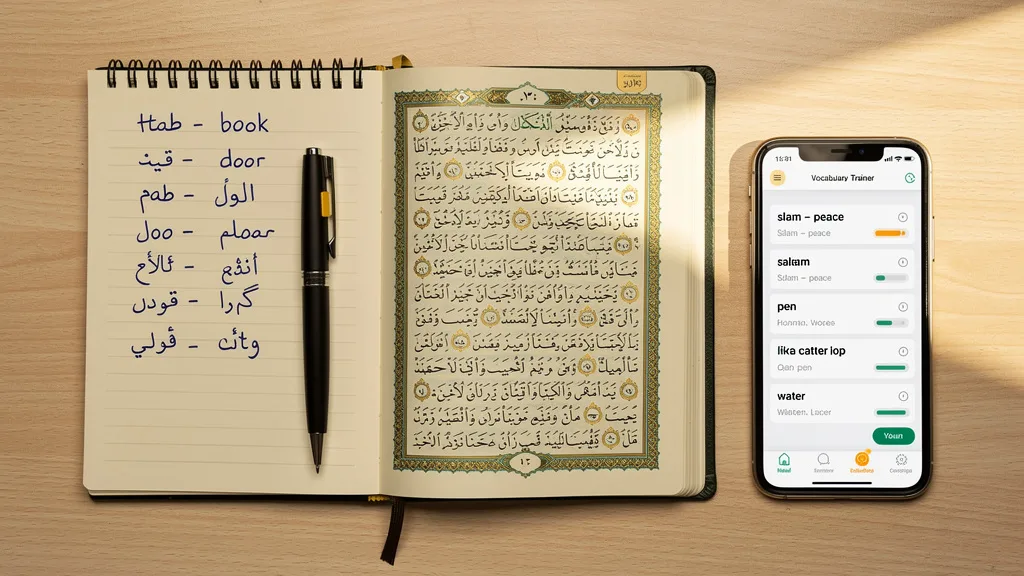
The primary benefit lies in their use of algorithms that optimize learning. Instead of reviewing words at random, these trainers present you with vocabulary at the precise moment you are about to forget it, reinforcing the memory pathway. This method, known as spaced repetition, dramatically improves long-term retention. Furthermore, many apps incorporate audio pronunciations, root word analysis, and contextual examples from Quranic verses, providing a much richer learning experience than a simple word list.
Ultimately, using a vocabulary trainer helps you build a strong and lasting foundation in the language of the Quran. This allows you to move beyond simple translation and begin to appreciate the nuances and beauty of the divine text directly. It empowers you to connect with the message of the Quran on a deeper, more personal level, which is the ultimate goal for every student.
Simply downloading an app is not enough. To truly benefit from a Quranic vocabulary trainer, you need a strategic approach. By integrating proven learning techniques into your routine, you can maximize your retention and make steady, noticeable progress in your understanding of the Quran's language.
Start With High-Frequency Words
One of the most effective strategies for any language is to focus on the most common words first. In Quranic Arabic, a surprisingly small number of words make up a large percentage of the text. Experts estimate that learning just a few hundred of the most frequent words can unlock comprehension of over 70% of the Quran. This is a powerful motivator for beginners.
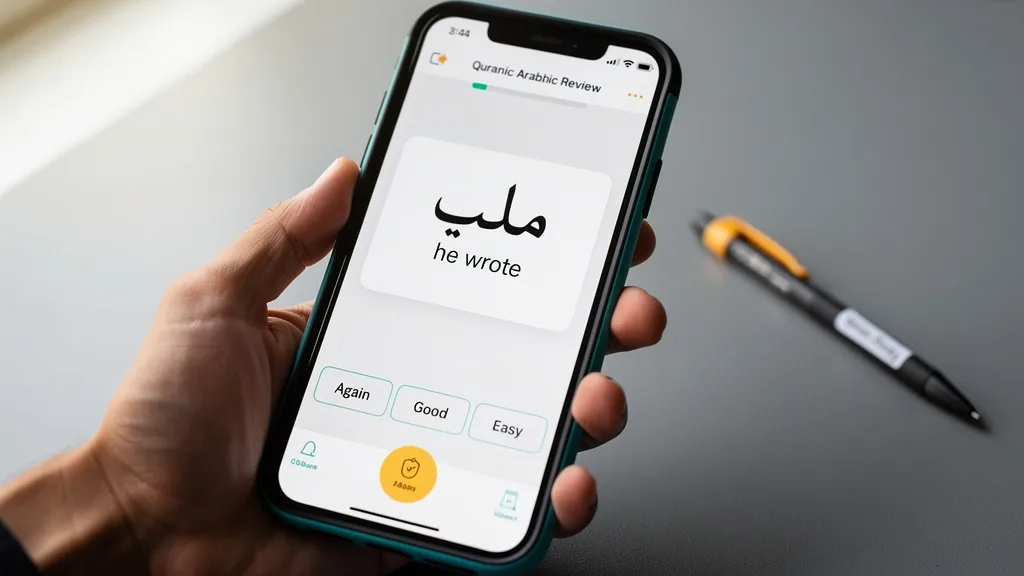
Many vocabulary trainers and apps come with pre-built decks focusing on these high-frequency words. Prioritizing these allows you to see tangible progress quickly, as you will start recognizing words in your daily Quran reading almost immediately. Building this core foundation first makes it much easier to learn less common words later, as you will have the contextual framework to understand them. You can begin by exploring a Quranic Arabic vocabulary list for beginners to familiarize yourself with these essential terms.
Leverage Spaced Repetition for Long-Term Memory
Spaced Repetition System (SRS) is a learning technique that is built into most modern vocabulary trainers. It works by presenting you with information at increasing intervals of time. When you first learn a word, the app will show it to you again soon. As you correctly recall it, the time until the next review gets longer, from minutes to hours, days, and eventually weeks or months.
This method is scientifically proven to move information from your short-term to your long-term memory by interrupting the natural process of forgetting. Instead of cramming hundreds of words only to forget them a week later, SRS ensures that your vocabulary knowledge becomes permanent. To make the most of it, be honest with your self-assessments in the app. If you struggle to recall a word, mark it as difficult so the algorithm can show it to you more frequently.
Practice Active Recall Techniques
Active recall is the process of actively retrieving information from your memory, rather than passively reviewing it. Reading a list of words and their translations is passive. Being shown a word and having to produce the translation from memory is active recall. Vocabulary trainers are built around this principle, typically using a flashcard or quiz format.
This act of retrieval strengthens the neural pathways associated with that memory, making it easier to recall in the future. To enhance this, try to recall the meaning before you flip the digital card. You can even take it a step further by saying the word and its meaning out loud or trying to use it in a short phrase. The more effort your brain has to put into remembering, the stronger the memory will become.
Set a Consistent Daily Study Schedule
Consistency is more important than intensity when it comes to language learning. A short, focused session every day is far more effective than a long, infrequent one. Aim for 15-20 minutes of dedicated practice with your vocabulary trainer daily. This consistency is key to making spaced repetition work effectively and helps build a strong learning habit.
Integrate your study time into your existing routine. You could practice during your morning commute, on your lunch break, or before bed. Many apps allow you to set daily goals and reminders to help you stay on track. A consistent schedule ensures you are constantly reinforcing what you've learned and steadily introducing new vocabulary without feeling overwhelmed.
The Top Quranic Vocabulary Trainers for 2026
The market for Islamic educational apps has grown significantly, offering a wide range of tools for students. The best app for you will depend on your learning style, goals, and budget. As of 2026, the leading tools can be categorized by their primary approach to learning, from structured paths to creative, gamified experiences.
For Guided, Structured Learning Paths
If you prefer a curriculum-based approach that guides you from beginner to advanced levels, certain platforms excel. Apps like Arabic Unlocked and programs based on the Bayna Yadayk series offer comprehensive courses that integrate vocabulary with grammar, morphology, and reading comprehension. These are ideal for serious students who want an all-in-one solution that feels like a formal course.

These platforms often include video lessons, interactive exercises, and progress tracking to ensure you are building a solid understanding of what Quranic Arabic is and why it matters. While they may require a subscription, the structured content provides a clear roadmap for your learning journey, removing the guesswork of what to study next.
For learners who want complete control over their studies, customizable flashcard apps are the best choice. Anki and Quizlet are two of the most popular platforms in this category. They allow you to create your own digital flashcard decks from scratch or download pre-made decks created by other users in the community.
This level of personalization is perfect for supplementing a formal course or for focusing on specific vocabulary from a surah you are studying. You can add your own notes, images, audio clips, and mnemonics to each card, tailoring the content to your unique memory triggers. Anki, in particular, is renowned for its powerful and highly effective spaced repetition algorithm.
For Gamified and Interactive Practice
If you find traditional study methods dry, a gamified app can make learning feel like playing. Apps like Quranic (formerly Quranic: Learn Quran and Arabic) use game mechanics such as points, leaderboards, and daily challenges to keep you motivated. These apps break down vocabulary and concepts into bite-sized, interactive lessons.
This approach is excellent for building a consistent daily habit and is particularly engaging for younger learners or those who thrive on competition. The interactive exercises, such as matching games, fill-in-the-blanks, and listening quizzes, reinforce learning in a dynamic and enjoyable way. Many of these top apps to learn Quranic Arabic offer a fun alternative to more academic platforms.
Quranic App vs Bayna Yadayk vs Arabic Unlocked
Choosing between structured learning platforms can be challenging. Quranic, programs based on Bayna Yadayk, and Arabic Unlocked are three popular choices, but they cater to slightly different needs. Understanding their core differences in scope, methodology, and accessibility is key to selecting the right one for your journey.
Vocabulary Scope and Depth
Quranic focuses heavily on the most common words in the Quran, aiming to get you to a state of basic comprehension quickly through a gamified approach. Its vocabulary is extensive but curated for this purpose. Arabic Unlocked provides a more comprehensive curriculum, covering a wider range of vocabulary and delving deeper into grammar and sentence structure from the start.
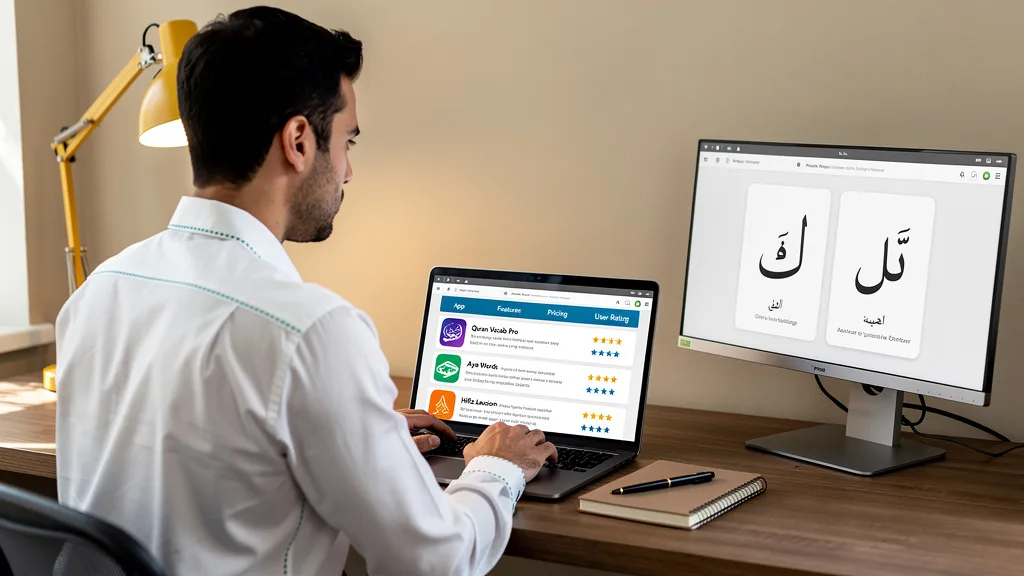
The Bayna Yadayk series, often delivered through various online platforms, is a university-level curriculum. Its vocabulary scope is perhaps the broadest, designed to bring students to a high level of proficiency in Classical Arabic, which includes but extends beyond the Quran. It is ideal for those aiming for academic mastery.
Learning Methodology and Features
The Quranic app's methodology is centered on short, interactive, game-like lessons and stories that make learning engaging. Arabic Unlocked uses a blend of video lessons, detailed notes, and interactive drills, offering a classroom-like experience. It also places a strong emphasis on understanding the root word system.
Bayna Yadayk is a more traditional, textbook-based approach that has been adapted for online learning. It relies on structured lessons that build upon each other, covering all four language skills: reading, writing, listening, and speaking. Its strength lies in its academic rigor and systematic progression.
Platform Availability and Pricing
All three options generally require a subscription. Quranic and Arabic Unlocked are primarily app-based (iOS and Android) with web access, offering monthly or annual subscription plans. The pricing is typically mid-range for educational apps. Bayna Yadayk is not a single app but a curriculum offered by various institutes, so its cost and platform can vary widely, from online portals to one-on-one tutoring sessions.
| Feature | Quranic App | Arabic Unlocked | Bayna Yadayk Programs |
|---|---|---|---|
| Primary Focus | Gamified Quranic Vocabulary | Structured Quranic Arabic Course | Comprehensive Classical Arabic |
| Methodology | Interactive games, stories | Video lessons, drills, root analysis | Academic, textbook-style progression |
| Ideal For | Beginners, casual learners | Serious, self-paced students | Academic learners, future teachers |
| Platform | iOS, Android, Web | iOS, Android, Web | Varies by provider (Web, Tutors) |
| Pricing Model | Subscription (Monthly/Annual) | Subscription (Monthly/Annual) | Varies (Course fees, subscriptions) |
Anki vs Quizlet: Building Custom Quranic Decks
For learners who want to create their own study materials, Anki and Quizlet are the two dominant forces. While both are digital flashcard platforms, their philosophies and feature sets are quite different. Choosing between them depends on how much control you want versus how much simplicity you need.
Customization and Control
Anki is the undisputed champion of customization. It is an open-source platform that allows for immense control over your flashcards (called "notes") and review process. You can create complex card types with multiple fields (e.g., word, root, translation, example verse, audio) and use HTML/CSS to style them. This power is ideal for advanced students who want to create detailed, interconnected study materials.
Quizlet, on the other hand, prioritizes simplicity. It offers a straightforward interface for creating simple, two-sided flashcards. While you can add images, the customization options are limited compared to Anki. Its strength lies in making the creation process fast and easy for everyone.
Ease of Use and Community Resources
Quizlet is far more user-friendly and intuitive for beginners. Its clean, modern interface and simple features mean you can start creating and studying decks in minutes. It also has a massive, easily searchable library of user-created decks on virtually any subject, including Quranic Arabic.
Anki has a steeper learning curve. Its interface can feel dated and clunky to new users, and understanding its concepts of note types and card templates takes some effort. However, it has a dedicated community that shares powerful add-ons and high-quality, pre-made decks (often called "shared decks") that can save you hundreds of hours of creation time.
Spaced Repetition Algorithm Effectiveness
This is where Anki truly shines. Its spaced repetition algorithm (based on the SM-2 algorithm) is highly sophisticated and widely considered the gold standard for long-term memory retention. It is finely tuned to optimize your review schedule based on your feedback for each card ("Again," "Hard," "Good," "Easy").
Quizlet also has a spaced repetition feature, but its algorithm is simpler and less customizable. While it is still effective for learning, serious students dedicated to long-term memorization often find Anki's algorithm superior. For those committed to mastering a large volume of vocabulary over many years, Anki's more precise scheduling provides a distinct advantage.
Key Takeaways
Mastering Quranic vocabulary is a marathon, not a sprint. Using modern tools effectively can make the journey more efficient and rewarding. Here are the key points to remember:
- Start Smart: Focus on high-frequency words first to build momentum and quickly begin recognizing words in the Quran.
- Trust the Science: Leverage vocabulary trainers that use Spaced Repetition Systems (SRS) to move words into your long-term memory.
- Be Active, Not Passive: Engage in active recall by quizzing yourself with flashcards rather than just rereading lists. This strengthens memory recall.
- Find Your Fit: Choose an app that matches your learning style. Use structured apps like Arabic Unlocked for a guided path, customizable tools like Anki for control, or gamified apps like Quranic for motivation.
- Consistency is Key: A short, daily study session is far more effective than long, infrequent ones. Make it a habit.
- Combine Tools with Teaching: While apps are powerful, they cannot replace the guidance of a qualified instructor. Combining app-based learning with instruction from a female Tajweed teacher online can ensure your pronunciation and understanding are correct.
Frequently Asked Questions
Here are answers to some common questions about using apps and tools to learn the vocabulary of the Quran.
What are the best free apps for learning Quranic vocabulary?
Several excellent free options are available in 2026. Anki is a powerful, free, and open-source spaced repetition platform for desktop and Android (the iOS app has a one-time fee). Quizlet offers a robust free tier that allows you to create and study decks. Additionally, many other apps provide free introductory lessons or ad-supported versions that are great for starting your journey. You can explore a curated list of the best free apps to learn Quranic Arabic for more options.
How much do paid Quranic vocabulary apps typically cost?
Paid apps with structured content and premium features typically operate on a subscription model. As of 2026, you can expect to pay anywhere from $10 to $20 per month for most platforms. Many offer a discount for an annual subscription, which can bring the effective monthly cost down significantly. Some comprehensive programs or courses may have higher one-time or annual fees. Always look for a free trial to ensure the app is a good fit before committing.
Which apps are best for understanding Quranic root words?
For a deep dive into the triliteral root system of Arabic, apps like Arabic Unlocked are excellent, as their curriculum is built around this concept. Hans Wehr (a dictionary app) is an indispensable tool for looking up roots and their derivatives. Additionally, some advanced Anki decks created by the community are specifically designed to help you master Quranic roots and their various forms, providing a powerful tool for morphological analysis.
Are there vocabulary tools for advanced Quranic grammar students?
Yes, advanced students have several powerful tools at their disposal. Anki remains a top choice due to its extreme customizability, allowing you to create detailed cards for complex grammar rules (Nahw) and morphology (Sarf). E-dictionaries like Hans Wehr and Lane's Lexicon are essential for in-depth word analysis. Furthermore, Quranic analysis apps that provide word-by-word grammatical breakdowns are invaluable for applying your knowledge directly to the text.
How long does it take to learn Quranic vocabulary with an app?
The time it takes varies greatly depending on your consistency, prior language experience, and goals. By focusing on high-frequency words, you can start recognizing a majority of Quranic vocabulary within a few months of consistent daily practice (15-20 minutes). Achieving a deeper, more comprehensive vocabulary will take years of dedicated study. The key is to remain consistent and view it as a lifelong journey of connection with the Quran.
Conclusion
Incorporating a vocabulary trainer into your study routine is a highly effective method for learning Quranic words and deepening your connection with the divine text. By choosing the right tool for your learning style and applying proven techniques like spaced repetition and active recall, you can build a strong and lasting vocabulary foundation. Remember that consistency is your greatest asset. A small amount of focused effort each day will lead to significant progress over time, allowing you to understand the Quran's timeless message more directly.
While apps provide an excellent supplement, the guidance of a qualified teacher is invaluable for mastering pronunciation, context, and the spiritual dimensions of the Quran. If you are a sister, child, or beginner looking for personalized, one-on-one instruction in a comfortable environment, we are here to help. Hidayah Quran Academy offers private classes with experienced female teachers to guide you on your learning journey. You can start with a complimentary 30-minute trial session to experience our teaching approach. Book Free Trial.