

Are you ready to transform your Quran memorization from a simple recitation into a profound, lifelong connection? For many female students, moving beyond basic memorization requires a specialized approach, one that fosters deep understanding and unshakable recall. This is where advanced Hifz techniques, especially when guided by a qualified female mentor, can unlock a new level of spiritual and intellectual engagement with the Quran.
Mastering advanced Hifz techniques taught by a female Hafiza involves moving past rote learning to integrate meaning, context, and flawless Tajweed. This approach uses strategies like thematic chunking, spaced repetition, and reverse memorization to build a durable and meaningful connection with the verses. A female teacher provides a uniquely supportive environment, offering personalized feedback and mentorship tailored to the needs of female students on their journey to becoming a Hafiza.
Why Learn Advanced Hifz from a Female Hafiza?
Choosing to learn advanced Hifz from a female Hafiza offers a distinct and empowering educational experience for female students. The shared gender creates an immediate sense of comfort and relatability, making it easier to ask questions, express vulnerabilities in learning, and discuss challenges openly. This supportive atmosphere is crucial when tackling the complexities of advanced memorization, which goes far beyond simple repetition and requires deep concentration and personal guidance.
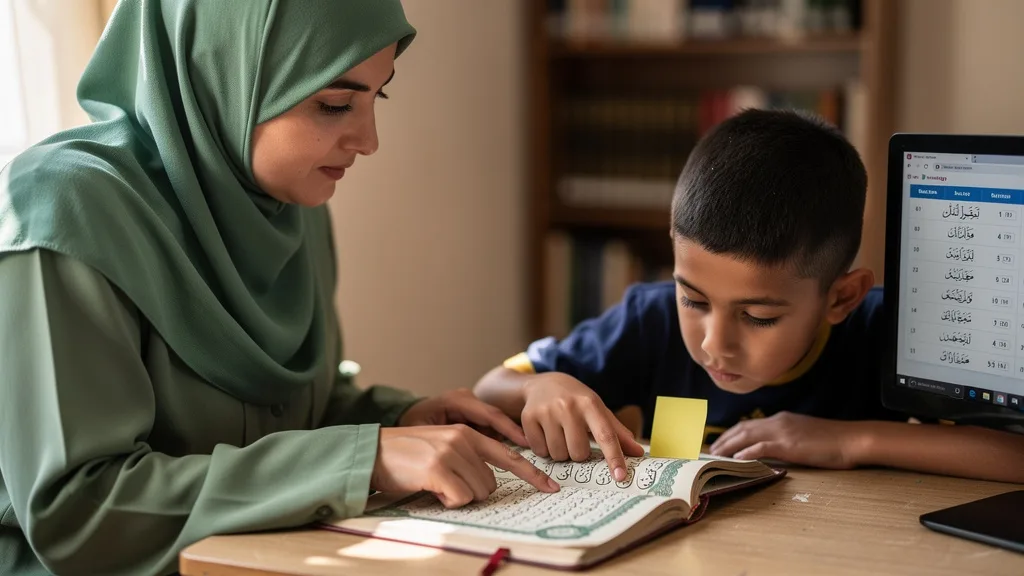
A female Hafiza can serve as a powerful role model, demonstrating that mastery of the Quran is an attainable goal. She understands the unique life circumstances and learning rhythms that female students may have, whether they are balancing studies, family, or professional life. This empathy allows for more flexible and realistic study plans, ensuring that the student remains motivated and consistent on their path. The mentorship extends beyond academics, offering spiritual encouragement and practical advice rooted in shared experience. You can explore more about the dynamics of learning with different instructors to find what suits you best by considering a female Quran teacher vs a male one.
Defining Advanced Hifz Techniques Beyond Rote Memorization
Advanced Hifz is the critical evolution from simply memorizing words to internalizing the Quran's message, structure, and spirit. While rote memorization is the foundational first step, advanced techniques focus on creating a multi-layered understanding that makes the verses a permanent part of your long-term memory. This means connecting with the text on an intellectual, spiritual, and emotional level, ensuring that what you memorize stays with you for life and enriches your understanding of Islam.

This higher level of memorization involves analyzing the linguistic patterns, understanding the historical context (Asbab al-Nuzul), and linking verses thematically across different surahs. It's the difference between knowing a path by a list of turns and knowing the entire landscape. Advanced Hifz aims for the latter, where you can not only recite a passage perfectly but also explain its meaning, connect it to other parts of the Quran, and apply its wisdom. It transforms the memorizer from a passive container into an active, engaged carrier of the divine message.
Core Advanced Memorization Strategies for 2026
To achieve this deeper level of retention, successful students and their teachers employ specific strategies that engage different parts of the brain. As of 2026, the focus is on holistic methods that blend traditional practices with cognitive science principles. These techniques are designed to build strong, lasting neural pathways, making recall more intuitive and less strenuous over time.
Thematic Chunking and Contextual Linking
Thematic chunking is a powerful technique that involves grouping verses based on their subject matter rather than their order on the page. For example, you might study all the verses in a surah related to the story of Prophet Musa (AS) at once, even if they are separated by other topics. This method builds a coherent narrative in your mind, making the verses easier to remember as part of a larger story.

Contextual linking takes this a step further by connecting these themes to other parts of the Quran. As you memorize a passage about patience, your teacher might guide you to recall and link other verses about patience from different surahs you have already learned. This creates a web of knowledge, where each verse reinforces the others, strengthening your overall recall and deepening your comprehension of the Quran's interconnected message.
Auditory Pattern Recognition and Tajweed Integration
The Quran has a unique and divine rhythm. Advanced Hifz leverages this by focusing on auditory pattern recognition. This means paying close attention to the flow, melody, and phonetic structure of the verses when recited with correct Tajweed. When you master the sound patterns, your brain begins to anticipate the next word or phrase, much like remembering the lyrics to a song you have heard many times.
Integrating Tajweed perfectly is not just about avoiding errors; it is a core memorization tool. A skilled female Hafiza will help you perfect your pronunciation and flow, turning each passage into a distinct auditory signature. This makes memorization less of a visual task (reading words on a page) and more of an auditory one, which is often more effective for long-term retention. For students looking to refine this skill, focusing on advanced Tajweed tips is a crucial step.
Utilizing Mnemonics and Storytelling for Retention
Mnemonics are memory aids that help you link new information to something you already know. For Hifz, this can involve creating acronyms for lists of divine attributes, visualizing a story to remember a sequence of events in a surah, or associating a difficult verse with a specific image or feeling. A creative teacher can help you develop personalized mnemonics that resonate with your way of thinking.
Storytelling is another effective tool. By transforming the content of a surah into a vivid narrative in your mind, you engage your imagination and emotions. This makes the information more memorable than a dry list of facts or verses. For instance, when memorizing Surah Yusuf, visualizing each stage of the Prophet's journey in detail can anchor the verses firmly in your memory, making the sequence logical and easy to recall.
Advanced Revision and Long-Term Consolidation Methods
Memorizing new verses is only half the battle; the true challenge of Hifz lies in retaining what you have learned for years to come. Advanced consolidation methods are systematic and proactive, designed to combat the natural process of forgetting. These techniques ensure that your hard work translates into lifelong mastery of the Quran.
Implementing a Spaced Repetition System
A Spaced Repetition System (SRS) is a scientifically-backed method that schedules reviews at increasing intervals. The principle is simple: you review a verse just as you are about to forget it. This process interrupts the forgetting curve and strengthens the memory trace in your brain. Initially, you might review a new page daily, then every three days, then weekly, monthly, and so on.

You can use digital SRS apps or a manual system with flashcards. A teacher can help you set up a personalized schedule that aligns with your learning pace and the difficulty of the material. This systematic approach is far more efficient than randomly reviewing old lessons and is a cornerstone of modern, effective Hifz programs. Many online Quran programs, including those designed for busy women like Quran classes for housewives, incorporate this flexible and effective method.
| Review Interval | Action | Purpose |
|---|---|---|
| Day 1 | Recite the new page 5-7 times throughout the day. | Initial Memorization |
| Day 2 | Recite from memory 3 times. Check for errors. | First Recall Test |
| Day 4 | Recite from memory 2 times. | Strengthen Memory Trace |
| Day 7 (1 Week) | Recite from memory as part of weekly revision. | Short-Term Consolidation |
| Day 30 (1 Month) | Recite from memory as part of monthly revision. | Long-Term Consolidation |
The Reverse Memorization Technique for Stronger Recall
The reverse memorization technique is a clever trick to strengthen the connections between verses, especially at the end of pages or sections where memory often falters. Instead of starting with the first verse of a page and moving to the last, you begin by memorizing the very last verse. Once that is solid, you memorize the second-to-last verse and recite it together with the last one. You continue this process, working your way backward to the top of the page.
This method forces your brain to build strong forward and backward links between verses. It ensures that the end of each page is just as strong as the beginning, preventing that common issue where recitation weakens as you approach a page break. It is an excellent tool for breaking through plateaus and solidifying challenging sections of the Quran.
Teaching and Explaining Verses to Solidify Knowledge
One of the most effective ways to truly master a subject is to teach it to someone else. This principle, often called the Feynman Technique, is incredibly powerful for Hifz consolidation. The act of explaining a verse's meaning, its context, and its linguistic nuances forces you to organize your thoughts and identify any gaps in your own understanding.
You can practice this by explaining a passage to a family member, a study partner, or even just to yourself. Your Hafiza can facilitate this by asking you to teach back a lesson to her. This active recall and articulation process moves the knowledge from passive memory to active, usable understanding, cementing it for the long term. This is a practice many students in online Hifz classes for sisters find particularly beneficial for building confidence.
"Advanced Hifz is not about how fast you can memorize, but how deeply you can connect. When you teach a verse, you are not just reciting it; you are breathing life into it, and in that moment, it becomes a part of you. This is the goal of our advanced Hifz techniques taught by a female Hafiza."
The Unique Role of a Female Hafiza in Mentorship
The journey of Hifz is as much about spiritual and personal development as it is about memorization. A female Hafiza provides a unique form of mentorship that addresses the holistic needs of her students. She is not just an instructor but a guide, a confidante, and a source of inspiration who understands the specific cultural and personal context of her students.
Creating a Supportive and Comfortable Learning Environment
For many women and girls, a female-only learning space is essential for focused study. It eliminates potential distractions or feelings of self-consciousness, allowing the student to be fully present. A female teacher can foster a nurturing environment where students feel safe to make mistakes, struggle with difficult verses, and grow at their own pace without judgment. This psychological safety is paramount for the intense mental work that advanced Hifz requires.
Furthermore, a teacher who understands the importance of holistic well-being can create a more balanced learning journey. Recognizing that a student's health and life circumstances impact their ability to learn is crucial. For example, awareness of broader women's health topics, such as those researched by organizations like FEMaLe, contributes to a more empathetic and comprehensive approach to teaching, ensuring students are supported in all aspects of their lives. A good teacher helps students navigate not just their studies but also the many distractions of modern life, from social pressures to popular culture exemplified by artists like Maroon 5, to maintain focus on their spiritual goals.
Personalized Feedback and Tailored Study Plans
There is no one-size-fits-all path to becoming a Hafiza. A key advantage of learning from an experienced female mentor is her ability to provide highly personalized feedback. She can pinpoint specific Tajweed errors, identify patterns in memory lapses, and suggest techniques that align with the student's individual learning style—be it visual, auditory, or kinesthetic.
This personalized approach extends to creating tailored study plans. A Hafiza can design a realistic revision schedule that fits around a student's other commitments, helping them make steady progress without feeling overwhelmed. This is especially valuable in a one-on-one female Quran tutor setting, where the entire curriculum can be adapted to the student's needs, goals, and timeline, ensuring the journey is both successful and sustainable.
How to Prepare for Your Advanced Hifz Journey
Embarking on the path of advanced Hifz requires intention and preparation. Before you begin, taking a few preparatory steps can set you up for success and make the journey smoother and more rewarding. A solid foundation is key to building a lasting relationship with the Quran.
- Solidify Your Foundation: Ensure your basic recitation (Nazira) is fluent and your fundamental Tajweed rules are strong. Advanced techniques build upon this base.
- Clarify Your Intention (Niyyah): Renew your intention to memorize the Quran for the sake of Allah (SWT). A pure intention is the most powerful motivator.
- Set Realistic Goals: Work with a prospective teacher to set achievable short-term and long-term memorization goals that fit your lifestyle.
- Find the Right Mentor: Research and find a qualified female Hafiza whose teaching style resonates with you. Look for someone with experience in teaching advanced techniques. Learning how to hire a female Quran teacher online can be a great first step.
- Create a Dedicated Study Space: Designate a quiet, clean, and comfortable area for your Hifz sessions to minimize distractions.
- Establish a Consistent Routine: Consistency is more important than intensity. A daily study habit, even if short, is crucial for making progress.
Key Takeaways
To succeed in your advanced Hifz journey in 2026, it is essential to move beyond basic memorization and embrace a more holistic and strategic approach. By integrating deeper understanding with effective retention techniques, you can build a lifelong connection with the Quran.
- Go Beyond Rote Learning: Advanced Hifz is about understanding context, themes, and meaning, not just reciting words from memory.
- Utilize Proven Strategies: Techniques like thematic chunking, spaced repetition, and reverse memorization are crucial for long-term consolidation.
- The Role of a Female Hafiza is Key: A female mentor provides a uniquely supportive, comfortable, and personalized learning environment that is vital for the success of female students.
- Revision is Non-Negotiable: Active and systematic revision, such as teaching others or using an SRS, is what transforms temporary memory into permanent knowledge.
- Preparation Sets the Stage: A strong foundation in Tajweed, clear intentions, and a consistent routine are prerequisites for tackling advanced memorization.
Frequently Asked Questions
How long does it take to master advanced Hifz techniques?
Mastering advanced Hifz techniques is a continuous journey rather than a destination with a fixed timeline. However, with consistent daily practice of about 1-2 hours under the guidance of a skilled teacher, a student can typically see significant improvement in their retention and understanding within one to two years. The ultimate goal is lifelong consolidation, which makes it an ongoing, rewarding practice.
Can these advanced techniques be used for self-study?
While some techniques like spaced repetition and thematic chunking can be implemented for self-study, the guidance of a qualified teacher is highly recommended. A teacher, especially a Hafiza, provides essential feedback on Tajweed, pronunciation, and understanding of the verses. This mentorship ensures you are not accidentally memorizing errors and provides the motivation needed to overcome challenges and stay consistent.
What is the main difference between basic and advanced Hifz?
The primary difference lies in the depth of learning. Basic Hifz focuses on accurately memorizing the text of the Quran. Advanced Hifz techniques taught by a female Hafiza integrate this memorization with a deep understanding of the verses' meanings, context (Tafsir), and linguistic patterns. The goal of advanced Hifz is not just recall but true internalization, enabling long-term retention and a spiritual connection.
Are online Hifz classes with a female teacher effective?
Yes, online Hifz classes with a female teacher are highly effective and offer several advantages. They provide access to qualified teachers from anywhere in the world, offer flexible scheduling to fit busy lives, and create a comfortable one-on-one learning environment. Modern technology allows for clear communication and personalized instruction, making it an excellent option for female students seeking dedicated guidance. You can learn more about online Quran classes for females to see if it's the right fit.
What qualities are most important in a female Hafiza?
The most important qualities in a female Hafiza are deep knowledge of the Quran and Tajweed, patience, and empathy. She should be an excellent communicator who can simplify complex concepts and create a supportive, non-judgmental atmosphere. A great Hafiza is also a mentor who provides personalized feedback, tailors study plans to her student's needs, and inspires them spiritually throughout their Hifz journey.
Conclusion
Embracing advanced Hifz techniques under the guidance of a female Hafiza is a transformative step in your relationship with the Quran. By moving beyond rote learning and adopting strategies that foster deep understanding and long-term retention, you are not just memorizing words but internalizing a divine message. This journey, supported by a mentor who provides a comfortable and personalized environment, ensures that your efforts result in a lasting and meaningful connection to the holy text.
Are you ready to elevate your memorization and build a profound, lifelong bond with the Quran? Take the next step on your advanced Hifz journey with a teacher who understands your goals. Book Free Trial.