
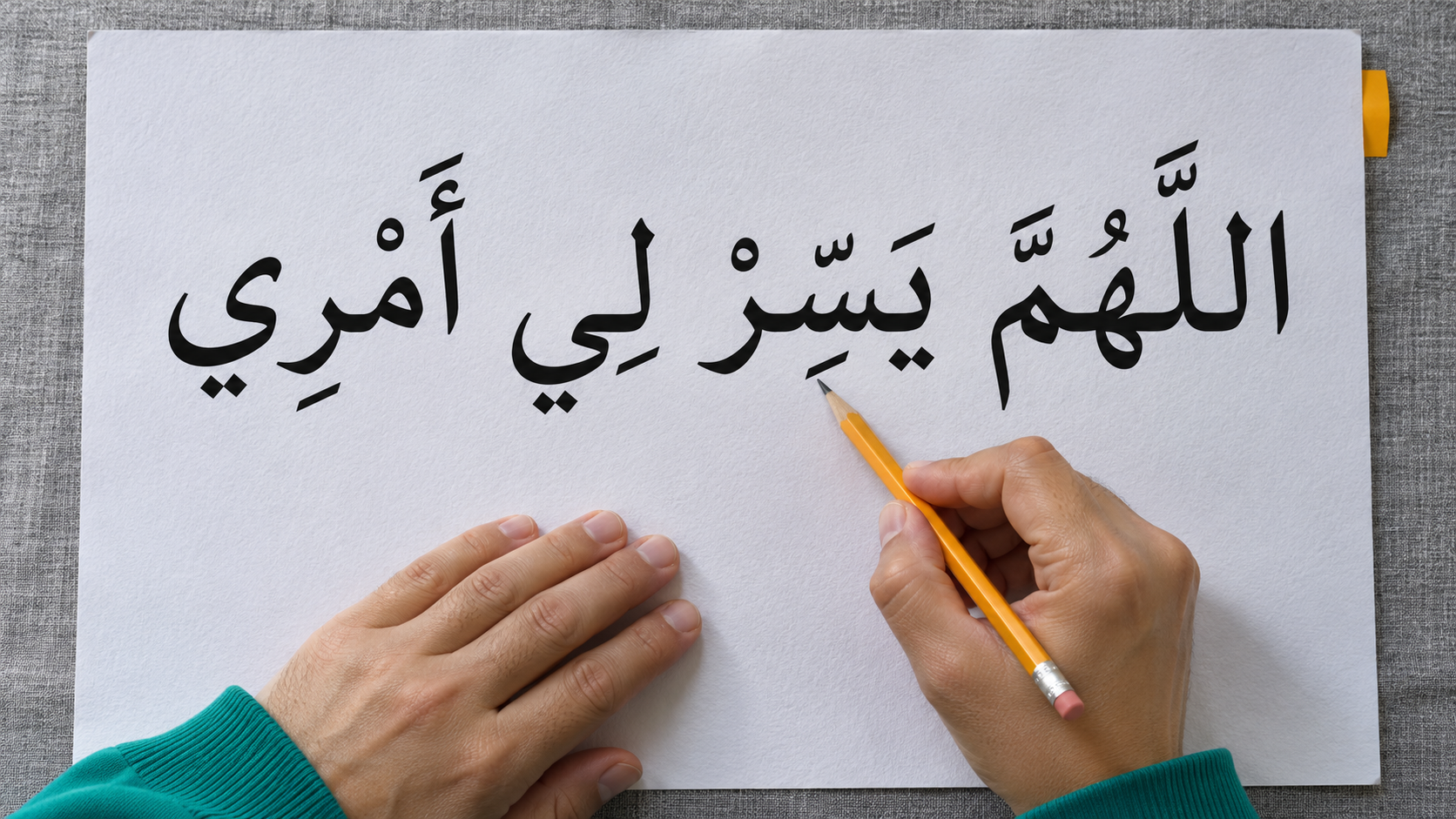
When you feel overwhelmed by a task, it can be hard to find the words to ask Allah for help. The Allahumma Yassirli Amri Dua for Ease gives you a short supplication to say: اللَّهُمَّ يَسِّرْ لِي أَمْرِي, meaning “O Allah, make my matter easy for me.” You can say it before you begin or while you are working through a difficulty.
To say this dua for ease, read Allāhumma yassir lī amrī and think of the matter in which you are asking Allah for help. Learn the words in four short parts, then practise saying them together. If you need ease in speaking, you can also learn the longer Quranic supplication of Prophet Musa, peace be upon him.
Arabic Wording Dua for Ease
The Arabic wording is اللَّهُمَّ يَسِّرْ لِي أَمْرِي, read from right to left. You may also see it written without vowel marks as اللهم يسر لي أمري. Both spellings give you the same words. If you are new to Arabic, start with the marked version because it shows the short vowels and the doubled consonants.
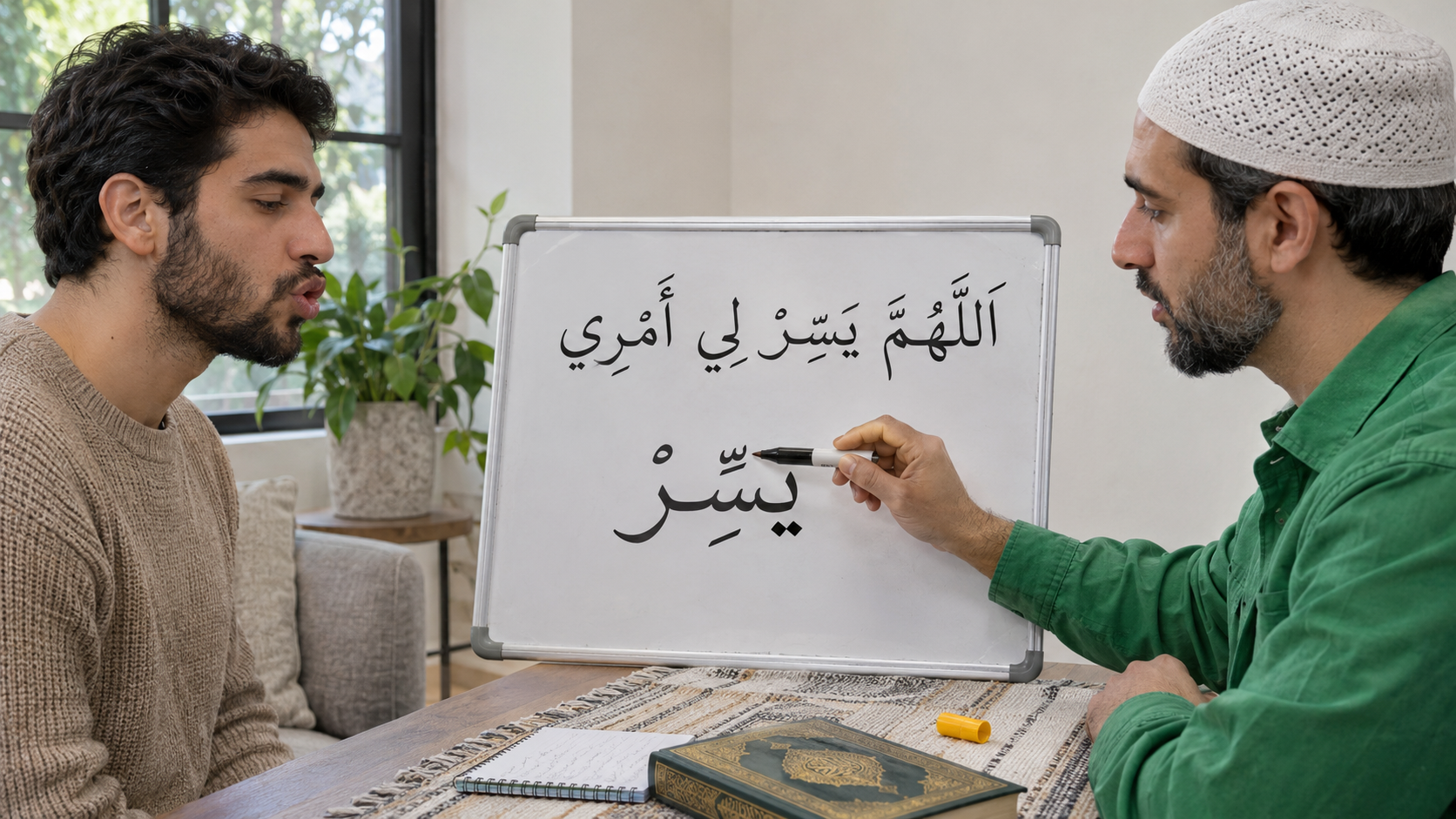
There are four written words in the supplication. Although the search spelling joins yassirli, the Arabic writes yassir and lī separately. Learn the two words together once you can recognise each one on its own. You can explore the phrase further in our dua meaning and benefits article.
English Meaning of the Dua
The meaning of Allahumma yassir li amri is “O Allah, make my matter easy for me.” You may also see “O Allah, make my affair easy for me,” since amrī means “my matter” or “my affair.” In everyday English, “my matter” can refer to whatever you are dealing with at the time, such as a decision, a conversation or a responsibility.
Allāhumma is how you address Allah directly in this supplication. Yassir lī carries the request to make something easy for you, and amrī identifies what you need help with. When learning the entire phrase, pair each part with its meaning so you can recall what you are asking for as you say it.
Transliteration and Pronunciation of the Dua
The transliteration is Allāhumma yassir lī amrī, which you can approximate in English as al laa hum ma, yas sir, lee, am ree. Hold the ss in yassir briefly and keep the i in sir short. The line over ī marks the longer “ee” sound you hear in lī and at the end of amrī.

Practise one word at a time, then join the words at a pace that lets you hear each sound. Pay particular attention to the mm in Allāhumma and the ss in yassir, which both represent doubled consonants. Once the separate words feel familiar, say the whole phrase and check whether you can still hear the difference between the short i and the long ī.
| Arabic | Transliteration | Meaning |
|---|---|---|
| اللَّهُمَّ | Allāhumma | O Allah |
| يَسِّرْ | yassir | make easy |
| لِي | lī | for me |
| أَمْرِي | amrī | my matter |
When You Can Recite the Dua
You can recite this supplication whenever you want to ask Allah to make a matter easier for you. That might be when you first see a challenge coming, when you have to make a choice or when progress feels slow. You can use the same brief wording for everyday responsibilities and for matters that weigh heavily on you.
As a personal supplication, this wording can fit into your day without a fixed number of repetitions. You might say it quietly when you realise you need help or return to it when the next step feels difficult. If the difficulty is choosing between options, you may also want to learn how to pray Istikhara when asking Allah for guidance about a decision.
Before a Difficult Task
Say the dua before a difficult task, such as an exam, an interview or a conversation you have been putting off. Name the task in your mind and take a moment to remember the words you are saying. Then begin with a step you can manage, such as reading the first exam question or reviewing the opening of your presentation.
If the difficulty is speaking clearly, Prophet Musa’s supplication asks for ease in his task and for his speech to be understood. You can study that fuller prayer and practise saying it before you have to speak. The passage begins with a request for an expanded breast and continues with requests for ease and clear speech. Surah Taha verses 25–28
While Facing an Ongoing Difficulty
You can return to the supplication during an ongoing difficulty, even if you have already asked for ease earlier in the day. If you are caring for someone, managing a backlog or adjusting to a major change, focus on the part of the situation that needs your attention now. The words are short enough to recall when you have only a moment to pause.
Think about the help you need for the next step. You might ask Allah for patience before a follow up call, clarity while reading a letter or ease as you ask a family member for support. You can follow the Arabic supplication with a personal request in English that names what would help you today.
Key Takeaways
The most practical way to learn this dua is to connect the four Arabic words with their meaning, then practise saying them together. You can use the marked Arabic text to check where the consonants double. If you recognise the words but hesitate when speaking, alternate between reading them aloud and saying them from memory.
Choose a moment when the supplication would be easy to remember, such as before you sit down to tackle a demanding task. If you are learning with your child, take turns saying the Arabic and explaining its meaning in your own words. Once you both remember it, invite your child to name a real situation in which they might ask Allah for ease.
- Read Allāhumma, yassir, lī and amrī separately before joining them.
- Keep the meaning in mind as you ask Allah to make your matter easy.
- Choose one task today and say the supplication before you begin.
Frequently Asked Questions
You can choose different words for different needs, such as asking Allah to lead you towards good, seeking rescue from distress or praying for ease for someone else. Arabic wording can change depending on who you are addressing or praying for. Knowing what the words mean helps you choose a phrase you can say with understanding.
If you are learning several supplications together, write each Arabic phrase beside its English meaning and keep any Quranic reference on the same card. Read the phrase in its setting at least once so you can remember what the speaker was asking for. For an example of how to learn the meaning alongside the words, see our dua for forgiveness article.
What is another good dua to pray for ease?
You can say Rabbi yassir wa lā tuʿassir, meaning “My Lord, make it easy and do not make it difficult.” It is a short personal supplication. The repeated sound in yassir and tuʿassir may help you remember both parts.
You can also ask for good alongside ease. For example, you might ask Allah to make a meeting easy and guide you towards a fair decision. The added words can reflect your particular need.
What are the benefits of saying Rabbi Yassir Wala Tu Assir?
Saying Rabbi Yassir Wala Tu Assir gives you a brief, memorable way to turn to Allah when you feel unsure. As you say it, you can focus your attention on what you are asking for. Its value is in making that request sincerely.
You can pair it with a practical step, such as preparing for a difficult conversation. Treat the outcome as something you ask Allah for. The words carry no guarantee of a particular result.
What dua can you say when you need immediate help from Allah?
In distress, you can say Prophet Yunus’s supplication. Its transliteration is Lā ilāha illā anta subḥānaka innī kuntu mina al-ẓālimīn. In it, you affirm that Allah alone is worthy of worship, glorify Him and acknowledge wrongdoing.
The Quran records this call and describes Allah rescuing Yunus from distress in the following verse. You can recite it as soon as you feel the need. Ask Allah for whatever help you need in that moment. Surah Al Anbiya verses
How do you say “May Allah make it easy for you” in Arabic?
To a man, you can say Yassara Allāhu laka, يَسَّرَ اللَّهُ لَكَ. To a woman, say Yassara Allāhu laki, يَسَّرَ اللَّهُ لَكِ. Both mean “May Allah make it easy for you.”
Listen for the change in the final vowel when you say it aloud. Laka ends in an a sound and laki ends in an i sound. You can say it to encourage someone before an exam, an interview or another difficult task.
Conclusion
The Allahumma Yassirli Amri Dua for Ease gives you simple words to ask Allah to make a matter easier for you. Learn the four words with their meanings, give the doubled consonants time when you practise and say the phrase with your own situation in mind. This week, pick one task you have been putting off and recite the dua before you take the first step.
At Hidayah Quran Academy, you or your child can practise Quran reading and everyday duas in private lessons with a qualified female teacher. The free 30 minute trial gives you time to read aloud, ask questions and discuss a starting point for lessons. Book Free Trial to arrange your introductory lesson.