

Are you finding your journey to read the Quran in its original Arabic more challenging than you expected? You are not alone. Many learners encounter similar hurdles that can slow their progress and lead to frustration. Understanding these common pitfalls is the first step toward overcoming them and achieving a beautiful, accurate recitation.
The most common mistakes when learning Arabic script for Quran involve pronunciation, grammar, and study habits. Beginners often struggle with unique Arabic sounds, confuse similarly shaped letters, ignore critical vowel marks, and apply English grammar rules. Ineffective strategies, like memorizing vocabulary out of context or neglecting to listen to native reciters, further hinder progress. By identifying these errors, you can adopt effective strategies to learn Arabic correctly.
Why Learning Quranic Arabic Is Challenging for English Speakers
For native English speakers, learning Quranic Arabic presents a unique set of challenges that go beyond typical language acquisition. The Arabic script is written from right to left, a fundamental shift that requires retraining your brain's reading patterns. The alphabet consists of 28 letters, most of which have no direct equivalent in the English alphabet, requiring you to learn new shapes, sounds, and connection rules from scratch.

Furthermore, Arabic phonetics include several guttural and emphatic sounds produced deep in the throat, which are entirely foreign to English pronunciation. This phonetic gap is a primary reason why many learners struggle with accurate recitation. The grammatical structure is also vastly different, with a root system forming the basis of vocabulary and sentence structures that often place the verb before the subject. These fundamental differences mean that you cannot rely on your English language intuition, making a structured and guided approach essential for success.
Common Mistakes in Arabic Pronunciation and Alphabet Recognition
Mastering the sounds and symbols of Arabic is the foundation of reading the Quran. However, this is where many beginners make critical errors that can become ingrained habits. Paying close attention to pronunciation and letter recognition from day one is essential for building a strong foundation and avoiding the need to unlearn mistakes later.
Mispronouncing Guttural and Emphatic Letters
One of the most significant hurdles for English speakers is the correct pronunciation of guttural letters like 'Ayn (ع) and Ḥā' (ح), and emphatic letters such as Ṣād (ص) and Ṭā' (ط). These sounds do not exist in English and require new muscle movements in the throat and mouth. A common mistake is to substitute them with the closest English sound, for example, pronouncing 'Ayn as a simple 'A' or Ḥā' as an 'H'.
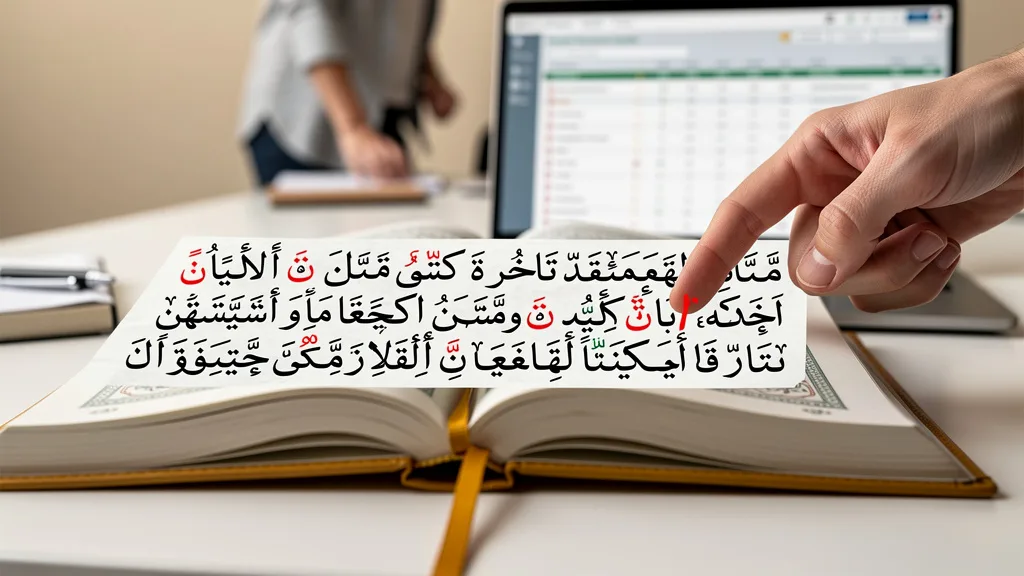
This mispronunciation is not just a matter of accent; it can completely alter the meaning of a word in the Quran. For instance, the word 'qalb' (قلب) with an emphatic 'Qaf' means heart, but if mispronounced as 'kalb' (كلب) with a 'Kaf', it means dog. Such errors can inadvertently change the meaning of a sacred verse, highlighting the importance of learning correct pronunciation from a qualified teacher who can provide real-time feedback.
Confusing Letters with Similar Shapes or Sounds
The Arabic script features several letters that share the same basic shape, differentiated only by the number and placement of dots (nuqat). For example, the letters Baa' (ب), Taa' (ت), and Thaa' (ث) have the same curve but are distinguished by one dot below, two dots above, and three dots above, respectively. Similarly, Jeem (ج), Ḥā' (ح), and Khā' (خ) share a form but differ in dot placement.
Beginners often mix up these letters, leading to incorrect reading and comprehension. This confusion can persist if not addressed early through focused practice and drills. Careful attention and consistent review are necessary for your brain to automatically distinguish these subtle but crucial differences. Taking the time for mastering the Arabic alphabet thoroughly before moving on to full words and sentences can prevent these issues from becoming fossilized errors.
Ignoring Short Vowel Marks (Tashkeel or Harakat)
In Quranic Arabic, the script is fully vocalized with short vowel marks known as tashkeel or harakat (e.g., fatḥah, kasrah, ḍammah). These small symbols above and below the letters indicate the correct vowel sounds and are absolutely essential for proper pronunciation and meaning. A common and detrimental mistake is to ignore these marks or try to guess the vowels based on familiarity with other languages.
Unlike many modern Arabic texts which omit them, the Quran always includes tashkeel because a single word's meaning can change dramatically depending on the vowels used. Ignoring them leads to incorrect recitation and a fundamental misunderstanding of the text. Learners must train themselves to see and process these marks as an integral part of each word, not as optional additions. This practice ensures an accurate and meaningful connection with the Quranic message.
Grammar and Vocabulary Pitfalls to Avoid
Once you move beyond individual letters and sounds, you will encounter the intricate world of Arabic grammar and vocabulary. This is another area ripe with potential mistakes for learners, especially those who try to apply the logic of their native language to Arabic. Understanding and avoiding these pitfalls is key to developing true comprehension.
Translating Words and Phrases Literally from English
A frequent error is attempting to translate Arabic phrases into English on a word-for-word basis. This approach fails because Arabic sentence structure (Nahw) is fundamentally different from English. Classical Arabic often follows a Verb-Subject-Object (VSO) structure, whereas English uses a Subject-Verb-Object (SVO) structure. A literal translation can result in nonsensical or grammatically incorrect English phrases, hindering your understanding.
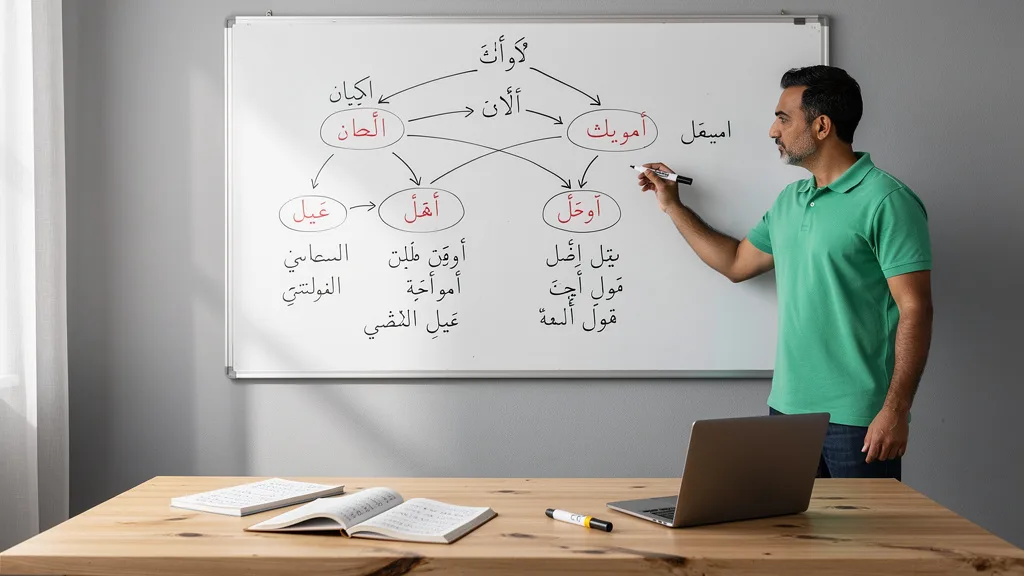
To truly comprehend the Quran, you must learn to appreciate Arabic grammar on its own terms rather than forcing it into an English framework. This involves understanding concepts like noun cases, verb conjugations, and the function of particles within the Arabic system. While studying some of the best Quran translations and tafsir can be a helpful aid, it is not a substitute for learning the grammatical principles of the original language.
Skipping Essential Grammar Rules like Nahw and Sarf
In the excitement to start reading, many learners skim over or entirely skip the foundational pillars of Arabic grammar: Nahw (syntax and sentence structure) and Sarf (morphology and word patterns). This is a critical mistake equivalent to trying to build a house without a foundation. Without a solid grasp of these rules, you will only be able to achieve a superficial understanding of the text.
Nahw teaches you how words function together in a sentence and how their endings change based on their grammatical role. Sarf, on the other hand, explains how words are formed from root letters, allowing you to understand the relationships between different words. Neglecting these sciences means you will be unable to appreciate the depth, precision, and eloquence of the Quranic language. A systematic study of these grammar rules is non-negotiable for any serious student.
Memorizing Vocabulary Without Context or Root Words
Rote memorization of long lists of isolated vocabulary words is an inefficient and ineffective learning strategy for Arabic. The beauty of the Arabic language lies in its system of root words, typically composed of three consonants. A single root can generate dozens of related words, including nouns, verbs, and adjectives, all revolving around a core concept.
Learning vocabulary through root words is a game-changer. It transforms a daunting task into a logical puzzle, allowing you to understand dozens of words from a single root.
For example, from the root K-T-B (related to writing), you get 'kataba' (he wrote), 'kitab' (book), 'maktab' (office/desk), and 'katib' (writer). By learning the root and its associated patterns (Sarf), you unlock a vast network of vocabulary. Memorizing words in isolation without understanding their root or seeing them in context makes them harder to retain and impossible to use flexibly.
Ineffective Study Habits That Slow Your Progress
Even with the right knowledge of letters and grammar, your progress can be severely hampered by poor study habits. The path to mastering Quranic Arabic requires discipline, consistency, and the right methodology. Falling into ineffective routines can lead to burnout and a feeling of being stuck, without making any real progress.
Focusing Only on Reading Without Listening to Native Recitation
Many students spend hours silently reading the text but neglect the crucial component of listening. Arabic is a highly phonetic language, and the rhythm, melody, and correct pronunciation of the Quran (Tajweed) can only be learned through auditory input. Relying solely on your own interpretation of the text will almost certainly lead to ingrained pronunciation errors.
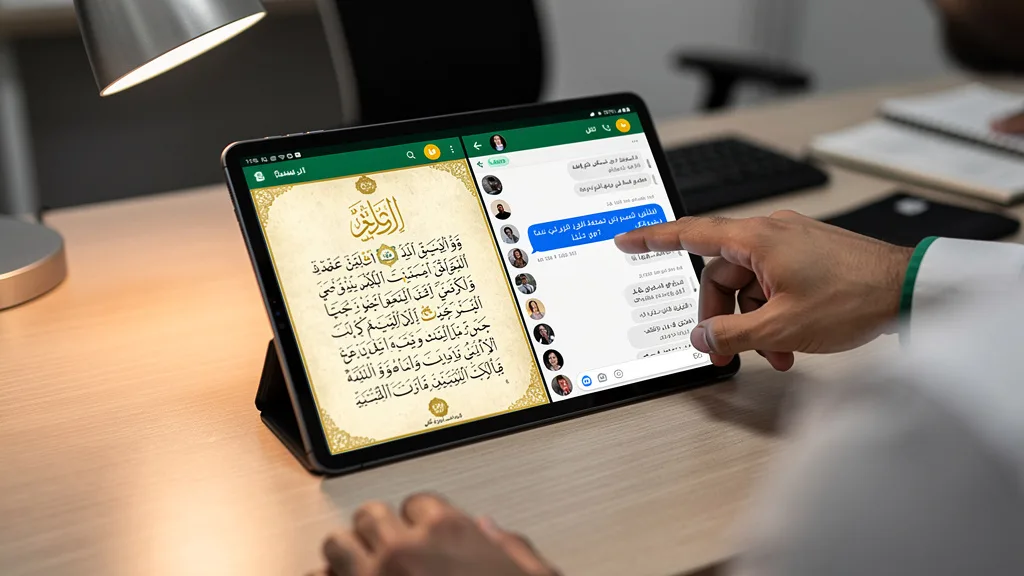
To avoid this, you must incorporate active listening into your study routine. Listen to recordings of renowned Quran reciters (Qaris) like Sheikh Al-Husary or Sheikh Mishary Rashid Alafasy. Follow along with the text, paying close attention to their pronunciation, pauses, and flow. This practice not only corrects your pronunciation but also helps you internalize the natural cadence of the language. It is essential to learn about and avoid the 8 Common Mistakes to Avoid in Quran Recitation to truly perfect your reading.
Mixing Classical Quranic Arabic with Modern Dialects
The Arabic language exists in several forms. There is Classical Arabic (the language of the Quran), Modern Standard Arabic (MSA, used in books and news), and numerous colloquial dialects (like Egyptian or Levantine, used in daily conversation). A common mistake for learners is using resources designed for modern dialects when their goal is to understand the Quran.
While related, these forms have significant differences in vocabulary, grammar, and pronunciation. Using a language app that teaches you how to order coffee in Cairo will not effectively prepare you to understand the divine scripture. It is vital to be intentional about your learning materials. Ensure that the courses, books, and apps you use are specifically designed for teaching Classical or Quranic Arabic to avoid confusion and wasted effort.
Lacking a Consistent and Structured Practice Routine
Perhaps the most common reason for failure in learning any language is a lack of consistency. Sporadic, intense study sessions are far less effective than shorter, regular periods of practice. Learning a language is a marathon, not a sprint, and building a consistent habit is the key to long-term retention and progress.
Without a structured plan, you may find yourself randomly jumping between topics without ever achieving mastery in any of them. A well-designed curriculum or the guidance of a tutor can provide this necessary structure. Committing to a daily or weekly schedule, even if it's just for 15-30 minutes, will yield far better results than cramming for hours once a month. Understanding the common mistakes to avoid in a trial Quran class can help you start a structured learning path on the right foot.
Expert Strategies to Learn Arabic Correctly for the Quran
Avoiding common mistakes is half the battle; the other half is actively implementing effective strategies. To learn Quranic Arabic correctly, you need a multi-faceted approach that combines expert guidance with smart, consistent personal effort. Below are proven strategies to set you on the right path.
- Find a Qualified Teacher: This is the single most important step. A good teacher provides immediate feedback on pronunciation, explains complex grammar rules, and keeps you motivated. Look for an online female Tajweed teacher or other qualified tutors who specialize in Quranic Arabic.
- Master the Alphabet and Vowels First: Do not rush this stage. Spend whatever time it takes to confidently recognize all letters in their different forms (initial, medial, final) and to understand the function of every vowel mark.
- Use Quran-Specific Learning Resources: Choose your tools wisely. Utilize books, websites, and mobile applications that are explicitly designed for learning the language of the Quran. Many great top apps to learn Quranic Arabic are now available.
- Listen and Mimic Daily: Make listening to Quranic recitation a part of your daily life. Choose a Qari whose recitation is clear and measured. Listen to a verse, pause the recording, and try to mimic the pronunciation and intonation exactly.
- Learn Grammar Systematically: Follow a structured curriculum for Nahw and Sarf. Start with the basics of sentence structure and gradually build up to more complex concepts. This systematic approach will pay huge dividends in your comprehension ability.
- Practice with the Quran Itself: Apply what you learn directly to the Quran. Start with shorter, more familiar Surahs. Try to identify the grammar rules you have learned and look up the roots of new words you encounter. This direct application makes learning more meaningful and effective.
To better understand how to structure your learning, consider the difference between ineffective and effective methods.
| Ineffective Method | Effective Strategy | Why It Works |
|---|---|---|
| Rote memorization of word lists | Learning vocabulary through root words | Builds a network of related words for exponential vocabulary growth. |
| Only reading the text silently | Combining reading with daily listening | Corrects pronunciation and teaches the natural rhythm of the language. |
| Studying sporadically or cramming | Maintaining a consistent, structured routine | Builds long-term memory and makes learning a sustainable habit. |
| Using apps for modern Arabic dialects | Using resources specific to Classical Arabic | Ensures the vocabulary and grammar you learn are relevant to the Quran. |
| Guessing pronunciation and vowels | Mastering the alphabet and all vowel marks | Creates a solid foundation for accurate reading from the very beginning. |
Key Takeaways
Navigating the journey of learning Quranic Arabic requires awareness and a strategic approach. By keeping these key points in mind, you can avoid common pitfalls and make your learning process more efficient and rewarding.
- Mastering guttural and emphatic letters is crucial to avoid changing the meaning of Quranic verses.
- Pay close attention to dots and vowel marks (tashkeel) to differentiate between similar-looking letters and ensure correct pronunciation.
- Avoid literal English translations and instead learn Arabic grammar (Nahw and Sarf) and sentence structure.
- Build vocabulary efficiently by learning Arabic root words rather than memorizing isolated terms.
- Combine reading with active listening to native reciters to perfect your pronunciation and rhythm.
- Maintain a consistent and structured study routine, focusing specifically on Classical Quranic Arabic, not modern dialects.
Frequently Asked Questions
Is the Arabic script hard to learn?
The Arabic script itself is not inherently difficult and can often be learned in a few weeks with consistent practice. The main initial challenges for English speakers are adjusting to the right-to-left direction and memorizing the 28 letters and their variations depending on their position in a word. Most learners find this part of the process manageable and rewarding.
The greater difficulty in learning Arabic for the Quran lies not in the script, but in mastering the new phonetic sounds and the complex, non-Indo-European grammar system. While the alphabet is the first step, true mastery requires dedication to pronunciation, vocabulary, and grammar rules over a longer period.
What are some common recitation errors to avoid?
Common recitation errors, often covered in the science of Tajweed, involve incorrect pronunciation and timing. These include not pronouncing the guttural letters from the correct point of articulation in the throat, failing to properly prolong vowels where required (Madd), or incorrectly merging or separating letters. Another frequent error is stopping (waqf) at a place in the verse that alters or breaks the intended meaning.
Many of these mistakes are subtle and difficult for a self-learner to identify. This is why learning with a qualified Tajweed teacher is so highly recommended. They can spot and correct these errors before they become habits. You can also learn from resources that highlight the Most Common Qur'an Mistakes to become more aware of potential issues.
What is the 3x3 method for memorizing the Quran?
The 3x3 method is a popular and effective technique for memorizing Quranic verses. It is based on structured repetition to build both short-term and long-term memory. The process involves reciting a new verse or portion of a verse three times while looking at the text, followed by reciting it three more times from memory.
After mastering the new portion, you connect it to the previously memorized verse and recite the combined section together three times. This systematic approach breaks the daunting task of memorization into small, achievable steps. It ensures that each new piece is firmly connected to what came before, creating a strong and lasting chain of memory.
Should I learn Modern Standard or Classical Arabic for the Quran?
For the specific purpose of understanding the Quran, you should focus exclusively on Classical Arabic. This is the form of the Arabic language in which the Quran was revealed and is preserved. All traditional Islamic scholarship and tafsir (exegesis) are also written in Classical Arabic.
Modern Standard Arabic (MSA) is the contemporary version used in news, politics, and modern literature. While it is derived from Classical Arabic, there are significant differences in vocabulary and some stylistic and grammatical structures. Learning MSA is useful for engaging with the modern Arab world, but it will not fully equip you to understand the nuances and profound depth of the Quranic text. Therefore, your learning resources should be tailored to Classical Arabic.
Conclusion
Successfully learning the Arabic script for the Quran is an achievable goal when you are aware of the common mistakes and actively work to avoid them. By focusing on correct pronunciation from the start, embracing the unique grammar of Arabic, and adopting consistent, effective study habits, you can overcome the initial challenges. The journey requires patience and dedication, but the reward of connecting with the Quran in its original language is immeasurable. Your next step is to move from awareness to action by finding a structured path that provides expert guidance.
Ready to overcome these challenges with expert guidance? Our qualified tutors provide personalized instruction to help you read the Quran correctly and confidently, ensuring you build a strong and accurate foundation from your very first lesson. Start your journey today. Book Free Trial.