
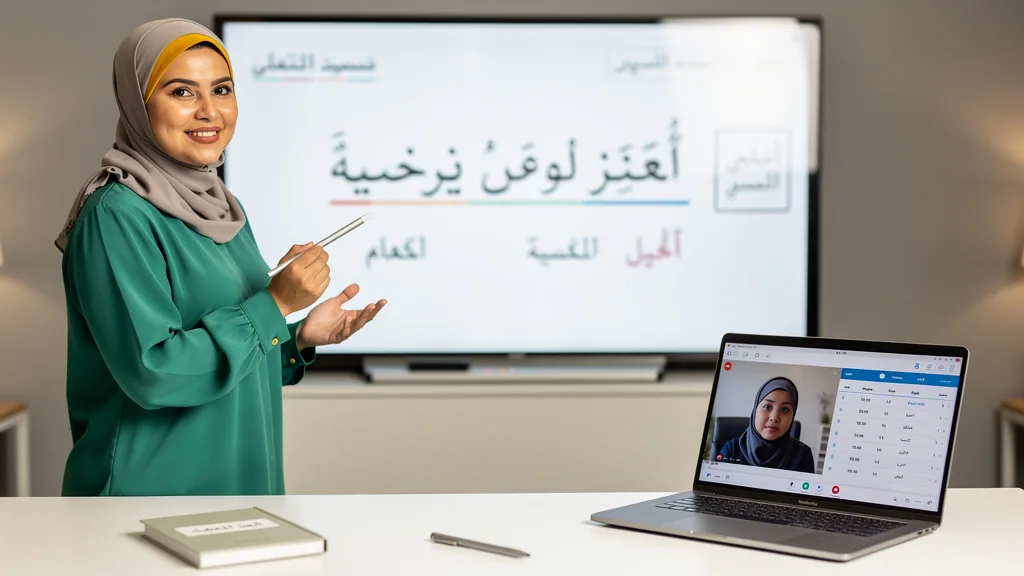
Have you ever wished you could understand the beautiful verses of the Quran directly, without relying on translations? The key to unlocking this deeper connection lies in understanding its language, and that journey begins with grammar. While it may seem daunting, learning the foundational rules can transform your relationship with Arabic texts.
Arabic Grammar Simplified: 5 Rules Every Beginner Must Know involves understanding sentence structures, noun properties like gender and definiteness, the three noun cases (I'rab), and basic verb conjugation. Mastering these five core concepts provides a solid framework that makes learning the Arabic language more manageable and allows you to start reading an Arabic book with understanding and confidence.
Why Understanding Basic Arabic Grammar Is Essential
Understanding basic Arabic grammar is not just an academic exercise; it is the key that unlocks the profound depth and meaning of the Quran. The structure of Arabic is precise and layered, and grammar allows you to appreciate the subtleties and eloquence that are often lost in translation. When you can identify the subject, verb, and object in a sentence, you move from passively reading words to actively comprehending the divine message as it was revealed.

This foundational knowledge helps you recognize patterns in the text, which accelerates your learning and builds confidence. It empowers you to analyze verses, understand the relationship between words, and grasp the intended meaning more accurately. For anyone serious about connecting with the Quran or Islamic studies, learning the inner core of Arabic grammar is an indispensable and rewarding step. This structural knowledge forms the backbone of the language, as detailed by linguistic authorities. For a broader academic perspective on the language's structure, you can explore resources like the Britannica entry on the Arabic language.
The 5 Core Arabic Grammar Rules for Beginners
To begin your journey, you don't need to memorize hundreds of rules. Instead, focusing on a few core principles will provide the biggest impact. These five rules form the foundation of most sentences you will encounter and will help you start making sense of simple texts almost immediately. Think of them as the essential building blocks upon which all other knowledge will be constructed.

By internalizing these concepts, you will develop an intuitive feel for the language. This initial framework simplifies what can otherwise feel like an overwhelming amount of information, making your learning process more structured and enjoyable. Below is a summary of the five essential rules we will explore in detail.
| Rule Number | Grammar Concept | Brief Description |
|---|---|---|
| 1 | Sentence Structure | Differentiating between nominal sentences (starting with a noun) and verbal sentences (starting with a verb). |
| 2 | Gender of Nouns | Identifying nouns as either masculine or feminine, which affects adjectives and pronouns. |
| 3 | Definite vs. Indefinite Nouns | Using the article 'Al-' (ال) for 'the' and recognizing indefinite nouns, often marked by tanween. |
| 4 | The Three Noun Cases (I'rab) | Understanding the nominative, accusative, and genitive cases, which indicate a noun's function in a sentence. |
| 5 | Basic Verb Conjugation | Learning how verbs change based on the subject, starting with the past tense. |
Rule 1: Sentence Structure (Nominal vs. Verbal)
In Arabic, there are two primary types of sentences: the nominal sentence (الجملة الاسمية) and the verbal sentence (الجملة الفعلية). A nominal sentence begins with a noun and typically describes a state of being, similar to using "is" or "are" in English. For example, الْكِتَابُ جَدِيدٌ (al-kitābu jadīd) translates to "The book is new." It consists of a subject (mubtada') and a predicate (khabar).
A verbal sentence, on the other hand, begins with a verb and describes an action. The standard structure is Verb-Subject-Object. For example, قَرَأَ الْوَلَدُ الْكِتَابَ (qara'a al-waladu al-kitāba) translates to "The boy read the book." Understanding which type of sentence you are reading is the first step to correctly interpreting its meaning. This distinction is a fundamental part of learning Arabic grammar and morphology.
Rule 2: Gender of Nouns (Masculine and Feminine)
Every noun in Arabic has a gender, either masculine (مُذَكَّر) or feminine (مُؤَنَّث). This is a critical concept because the gender of a noun affects the adjectives, pronouns, and verbs associated with it. While some nouns are inherently masculine or feminine (e.g., 'father' is masculine, 'mother' is feminine), there are grammatical markers to help you identify them.
The most common sign of a feminine noun is the ending letter called taa marbuta (ة). For example, سَيَّارَة (sayyārah, "car") is feminine, while كِتَاب (kitāb, "book") is masculine. There are exceptions, but recognizing the taa marbuta is a reliable starting point. As you build your Quranic Arabic vocabulary, pay close attention to the gender of each new word.
Rule 3: Definite vs. Indefinite Nouns (The Article 'Al-')
Similar to 'a/an' and 'the' in English, Arabic distinguishes between indefinite and definite nouns. A noun is made definite by adding the prefix 'Al-' (ال), which is equivalent to "the." For example, كِتَاب (kitāb) means "a book," while الْكِتَاب (al-kitāb) means "the book." This simple prefix is one of the most common components of the Arabic language.
Indefinite nouns are often indicated by a diacritical marking at the end of the word called tanween, which adds an '-n' sound (e.g., -un, -an, -in). When the definite article 'Al-' is added to a noun, the tanween is removed. Recognizing whether a noun is definite or indefinite is crucial for understanding the context of a sentence and is a favorite part of learning for many students as it clarifies meaning so effectively.
Rule 4: The Three Noun Cases (I'rab)
One of the more complex but essential aspects of Arabic grammar is I'rab, or the system of noun cases. There are three primary cases that indicate a noun's grammatical function in a sentence, shown by the vowel sound on the last letter. While this might seem advanced, understanding the basics is fundamental. The three cases are:
- Nominative (الرَّفْع): The subject of a sentence, typically ending in a dammah sound (-u). Example: جَاءَ الْمُعَلِّمُ (The teacher came).
- Accusative (النَّصْب): The object of a verb, typically ending in a fatha sound (-a). Example: رَأَيْتُ الْمُعَلِّمَ (I saw the teacher).
- Genitive (الْجَرّ): Indicates possession or follows a preposition, typically ending in a kasra sound (-i). Example: مَرَرْتُ بِـالْمُعَلِّمِ (I passed by the teacher).
Even if you don't master all the intricacies of I'rab at first, simply being aware that these cases exist will greatly improve your ability to start reading an arabic book with understanding. It explains why the ending of the same word can change from one sentence to another.
Rule 5: Basic Verb Conjugation for Past Tense
Arabic verbs are conjugated to agree with the subject in person (I, you, he/she), gender, and number. To keep things simple, a great place to start is with the past tense (الْفِعْل الْمَاضِي) of a regular verb. The root form of a verb is typically the third-person masculine singular form, such as كَتَبَ (kataba), which means "he wrote."
From this root, you can add suffixes to change the subject. For instance:
- كَتَبْتُ (katabtu) - I wrote
- كَتَبْتَ (katabta) - You (masculine) wrote
- كَتَبْتِ (katabti) - You (feminine) wrote
- كَتَبَتْ (katabat) - She wrote
How to Practice These Grammar Rules Effectively
Knowing the rules is one thing, but internalizing them requires consistent and effective practice. The goal is to move from consciously recalling a rule to applying it automatically. This transition happens through regular exposure and active use of the language in different contexts. The key is to find methods that are both engaging and sustainable for your learning style.

Combining different techniques will reinforce your understanding from multiple angles. For example, what you learn in a story can be solidified with flashcards, and any lingering questions can be clarified with a tutor. This multi-faceted approach ensures that the grammar concepts become a natural part of your linguistic toolkit.
Start With Simple Texts and Children's Stories
One of the best ways to see grammar in action is by reading simple, authentic texts. Children's stories in Arabic are perfect for this because they use straightforward sentence structures and foundational vocabulary. As you read, try to actively identify the concepts you've learned: Is this a nominal or verbal sentence? Is that noun definite or indefinite? What case is this noun in?
This active reading process transforms a passive activity into a powerful learning exercise. It helps you see the grammar rules in a natural context, which makes them easier to remember than just memorizing charts. Start with texts that have vowel markings (harakat) to make pronunciation and identifying cases easier.
Use Flashcards for Vocabulary and Grammar Concepts
Flashcards are a time-tested method for memorization, and they work exceptionally well for Arabic grammar. You can create physical or digital flashcards for key concepts. For example, one set could focus on verb conjugations, while another could be for prepositions and the case they require. This method allows for quick, repetitive practice, which is essential for building long-term memory.
In addition to rules, use flashcards to build your vocabulary, always noting the gender of nouns. Many excellent digital apps can help you create and review flashcards efficiently. Integrating tools like these can make your study sessions more dynamic and effective. For more suggestions, you can check out some of the best free apps to learn Quranic Arabic in 2026.
Find a Language Partner or Qualified Tutor
There is no substitute for real-world application and expert feedback. Practicing with a language partner or a qualified tutor allows you to use what you've learned in conversation and receive immediate corrections. A tutor can explain complex topics, answer your specific questions, and create a structured learning plan tailored to your needs.
This personalized guidance is invaluable for overcoming hurdles and staying motivated. A teacher can provide exercises that target your weak points and help you understand the nuances that books alone cannot convey. Investing in a qualified tutor can significantly accelerate your progress and ensure you are building a correct and solid foundation in Arabic grammar.
Common Pitfalls to Avoid in Arabic Grammar
As you embark on your journey to learn Arabic grammar, it's helpful to be aware of common challenges that can trip up beginners. One major pitfall is trying to learn too much, too fast. Arabic grammar is vast, and attempting to master everything at once leads to burnout and confusion. Instead, focus on one concept at a time until you feel comfortable before moving on to the next.

Another common mistake is ignoring the I'rab (noun cases) or thinking they are unimportant for beginners. While you don't need to be an expert from day one, completely ignoring the case endings will lead to misunderstandings later on. Try to at least passively recognize them when you read. Finally, avoid relying solely on transliteration. Learning the Arabic script from the beginning is crucial for understanding grammar, as many grammatical markers are part of the script itself.
Key Takeaways
Mastering Arabic grammar is a journey, but starting with a simplified framework makes it achievable. By focusing on these core principles, you build a strong foundation for a lifetime of learning and a deeper connection with the Quran. Here are the key points to remember:
- Grammar is Your Key: Understanding grammar is essential for moving beyond translation and truly comprehending the Arabic language, especially the Quran.
- Focus on the Core 5: Start by mastering the two sentence types, noun gender, definite/indefinite articles, the three noun cases, and basic past tense verb conjugation.
- Practice Actively: Reinforce your knowledge by reading simple texts, using flashcards for memorization, and seeking guidance from a tutor or language partner.
- Avoid Common Pitfalls: Learn at a steady pace, pay attention to noun cases from the beginning, and commit to learning the Arabic script to avoid future difficulties.
- Consistency Over Intensity: A little bit of consistent practice each day is far more effective than long, infrequent study sessions.
Frequently Asked Questions
How long does it take to learn basic Arabic grammar?
The time it takes to learn basic Arabic grammar varies greatly depending on the individual's background, study methods, and time commitment. With consistent effort, a dedicated student can grasp the five core rules and begin to understand simple sentences within a few months. Typically, reaching a comfortable level of understanding for basic texts might take anywhere from six months to a year of regular study.
The key is consistency rather than intensity. Studying for 30-60 minutes daily is more effective than cramming for several hours once a week. Structured learning with a qualified teacher can also significantly speed up this process by providing clear direction and personalized feedback.
Is Arabic grammar harder to learn than English grammar?
Arabic grammar is often perceived as more challenging for native English speakers because its structure is very different. Concepts like the root system for verbs, noun cases (I'rab), and grammatical gender for all nouns do not have direct equivalents in modern English, which can create a steep initial learning curve. The Semitic language family, to which Arabic belongs, has a unique morphological system.
However, many aspects of Arabic grammar are highly logical and consistent. Once you understand the root and pattern system, you can often predict the meaning of new words. While it may seem harder at first, its systematic nature can make it feel more predictable than English with its many irregularities and exceptions.
What is the difference between grammar and morphology in Arabic?
In Arabic linguistics, grammar is typically divided into two main branches: syntax (نَحْو - nahw) and morphology (صَرْف - sarf). Syntax deals with the function of words in a sentence and how they relate to each other. This includes topics like sentence structure, noun cases (I'rab), and word order. It is the study of how to form a grammatically correct sentence.
Morphology, on the other hand, deals with the structure of the words themselves. It focuses on how words are formed from a root and pattern system. For example, morphology explains how to derive nouns, adjectives, and different verb forms from a three-letter root like ك-ت-ب (k-t-b, related to writing). Both are essential components of Arabic grammar and morphology that work together to create meaning.
Can you speak Arabic without learning the grammar rules?
It is possible to learn to speak a colloquial or spoken dialect of Arabic for basic conversational purposes without formally studying grammar. Many people learn to communicate through immersion, memorizing phrases and vocabulary. This approach is sufficient for everyday interactions like shopping or asking for directions.
However, to understand the Quran, read literature, or speak Modern Standard Arabic (MSA) correctly, learning the grammar rules is non-negotiable. Without a grasp of grammar, your understanding will be superficial, and you will be unable to construct complex sentences or comprehend formal texts. For a deep and authentic connection to the language, especially Quranic Arabic, grammar is absolutely essential.
Conclusion
Embarking on the path to learn Arabic grammar is a rewarding endeavor that opens the door to a richer understanding of the Quran and Islamic heritage. By focusing on the five simplified rules—sentence structure, noun gender, definiteness, noun cases, and basic verb conjugation—you can build a solid and manageable foundation. Remember that the goal is not perfection from day one, but consistent progress. Each rule you master is another step toward reading and appreciating the elegance of the Arabic language on your own terms.
Are you ready to take the next step in your Arabic learning journey with personalized guidance? Hidayah Quran Academy offers one-on-one classes with qualified female teachers to help sisters and children build a strong foundation in a supportive environment. You can start with a complimentary 30-minute trial session to experience our teaching method. Book Free Trial today and begin your path to understanding the Quran's beautiful language.