
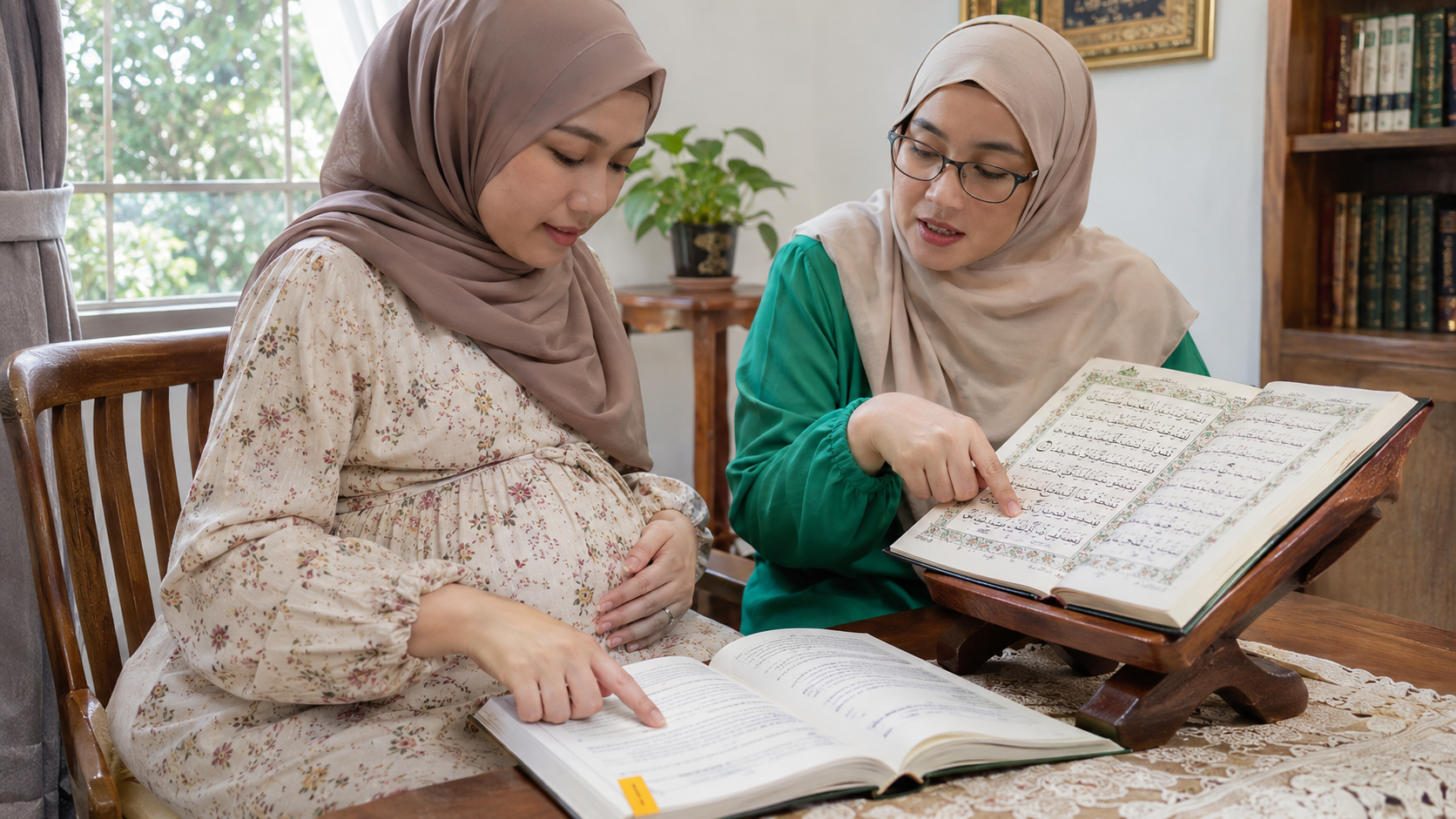
When you want to pray for your baby’s well-being, which words can you confidently trace to the Quran? If you’re looking for Duas for a Healthy Pregnancy in the Quran, start with Ali ‘Imran 3:38, As-Saffat 37:100, and Al-Furqan 25:74. These verses ask for good offspring, a righteous child, and joy in your family. You can also ask Allah for your health, your baby’s well-being, and ease in your own words.
Start with the verse whose meaning speaks most directly to you. Read its translation, listen to the Arabic one phrase at a time, and save the surah and verse number so you can find it again. The three passages are prayers for offspring and family, and their relevance extends beyond pregnancy.
Quranic Duas Scholars Recommend for Expectant Parents
Three Quranic duas you can turn to as an expectant parent are Zakariyya’s prayer for good offspring, Ibrahim’s prayer for a righteous child, and the prayer for joy in one’s family. Each asks Allah for a different kind of good. Reading the surrounding verses helps you understand the setting in which each prayer appears.
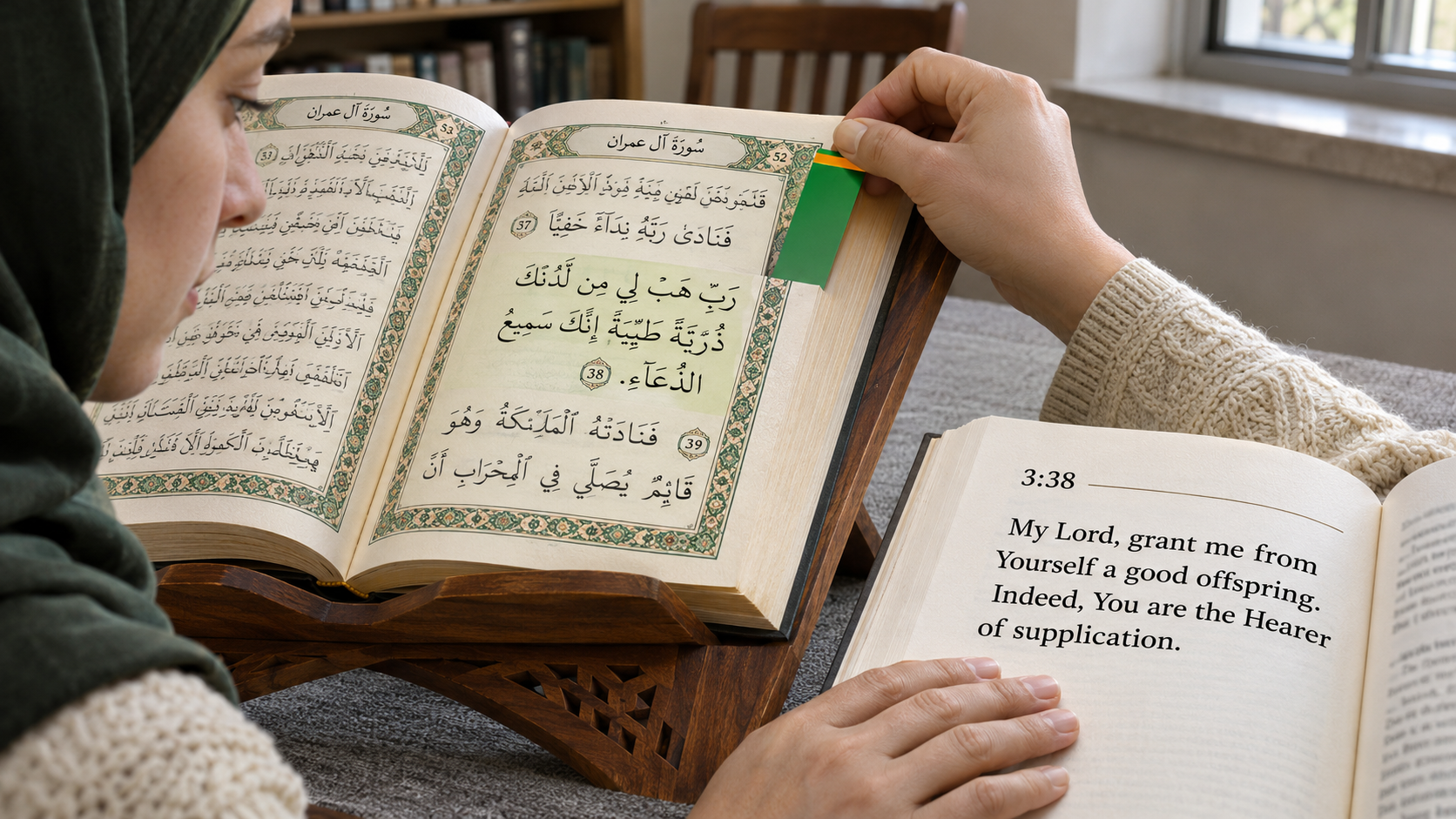
You might choose the shortest prayer first if you’re beginning to read Arabic, or start with the verse you most want to understand. Keep the reference next to the wording when you save it. If you want ideas for personal prayers about well-being and ease, our pregnancy dua collection offers a starting point.
Zakariyya’s Prayer for Good Offspring
In Surah Ali ‘Imran 3:38, Zakariyya asks Allah to grant him good offspring. The verses just before his prayer describe the provision he finds with Maryam. Reading that exchange alongside the prayer helps you see how Zakariyya turns to Allah with his own hope.
The supplication begins with Rabbi hab li min ladunka, which asks for a gift from Allah. Its closing words affirm that Allah hears supplication. If you’re learning the Arabic, practice the opening request and the closing affirmation separately, then join them once you can follow both meanings.
Ibrahim’s Prayer for a Righteous Child
In Surah As-Saffat 37:100, Ibrahim asks his Lord to grant him a child from among the righteous. The request is brief enough to learn as a single phrase. You can read the next verse as well to see the good news Ibrahim receives in the narrative.
“رَبِّ هَبْ لِي مِنَ الصَّالِحِينَ”
The English sense is “My Lord, grant me a child from among the righteous.” The Arabic ends with min as-salihin, meaning “from among the righteous.” Listen to the full line before repeating it so you can hear how those words sound when they are read together. Read Ibrahim’s prayer.
A Prayer for Joy in Your Family
In Surah Al-Furqan 25:74, the servants of the Most Merciful ask Allah to make their spouses and offspring a comfort to their eyes. They also ask to be an example for people who are mindful of Allah. The prayer includes both the joy you hope to find in your family and the kind of person you hope to become within it.
The Arabic begins with Rabbana, meaning “Our Lord.” That makes it a natural prayer to learn with your spouse or another family member. If you memorize it in parts, give the closing request as much attention as the opening so you learn the whole supplication.
How Scholars Verify Widely Shared Pregnancy Duas
Scholars verify a purported Quranic dua by checking its Arabic wording against the cited verse and reading it in context. A translation can help you understand a prayer, but the Arabic text determines whether the wording appears in the Quran. A source check also helps you distinguish the verse itself from any extra requests added by the person who shared it.
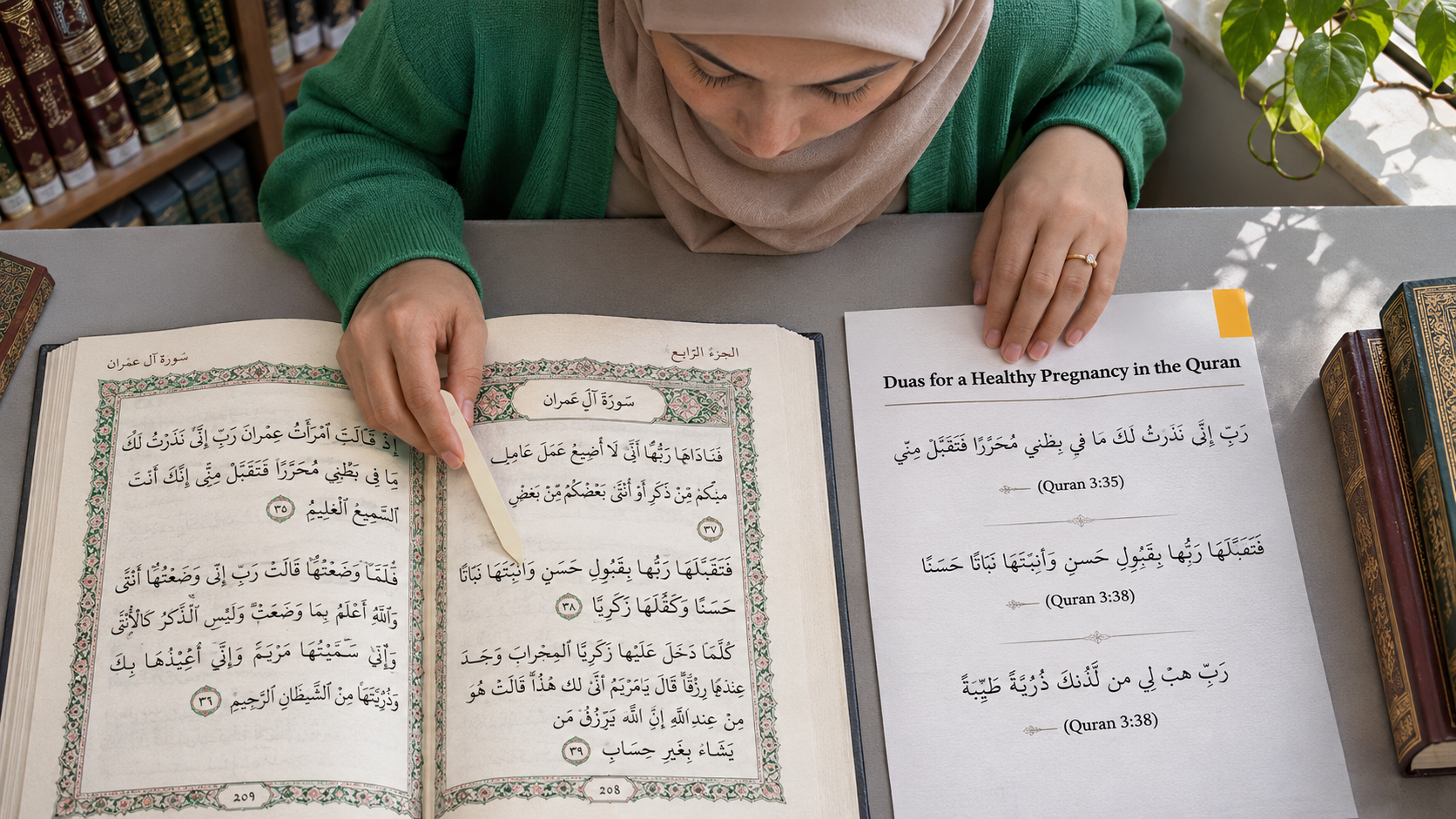
When you assess a claim about pregnancy duas, check the wording and the claimed use separately. A correctly quoted verse can appear on an image that also makes an unsupported claim about its benefits. If you share it with family, include the verified reference and keep your own explanation separate from the quotation.
Checking the Surah and Verse Reference
Enter the surah and verse number in a trusted Quran reader, then compare the quoted Arabic with the displayed verse. If a share card gives only the English, look for the verse it claims to translate before trying to match individual words. Translators can render the same Arabic phrase differently.
Read the surrounding verses to identify who is speaking and what they are asking for. If the meaning is still unclear, consult a tafsir, a scholarly explanation of the Quran. Our Quran translations and tafsir guide can help you choose a reference you’re comfortable reading.
Distinguishing Quranic Verses From Hadith and Personal Supplications
A Quranic dua has a surah and verse reference, while a dua attributed to the Prophet Muhammad needs a hadith source. For a hadith attribution, look for the named collection and report number when available. If the report’s authenticity or application is unclear, ask a qualified scholar to check it.
You can make a personal supplication in your own words, including in English or Urdu. If you combine a Quranic phrase with a personal request for your health or your child’s well-being, mark where the quotation ends when sharing it. That way, the next reader can find the original wording and still benefit from your example.
Quran.com vs QuranReflect: Studying Duas About Children
Choose Quran.com to find a verse, compare translations, or hear its recitation. Choose QuranReflect when you have read the verse and want to explore how people reflect on its meaning. You can use both in one session by opening a specific verse first, then reading a reflection tied to that passage.

For example, open Al-Furqan 25:74, read the full translation, and listen once while following the Arabic. A reflection can then help you consider what the verse asks of you as a family member. Quran.com’s app directory describes the reading, listening, and reflection tools available. Quran study app directory.
| Your goal | Where to start | What to do |
|---|---|---|
| Check the source | Quran.com | Open the exact verse and compare the Arabic |
| Practice recitation | Quran.com | Play the ayah and follow the text phrase by phrase |
| Reflect on family life | QuranReflect | Read a reflection tied to the verse and check any citations |
On Quran.com, search for 3:38, 37:100, or 25:74 to go directly to the relevant ayah. Read the Arabic alongside a translation and open the verse audio when you want to hear how the words connect. If two translations use different English words, consult the available commentary to understand the phrase in context.
Write down the reference and one sentence about what the verse asks. When you revisit the passage, try recalling that meaning before looking at the translation. If you’re choosing an interface for someone else in your family, compare the Quran translation app options with their preferred reading language in mind.
On QuranReflect, look up reflections linked to the ayah you’re studying and check who wrote them. A contributor might reflect on what it means to lead by example in your family. Follow any reference they give before relying on a claim about the verse.
If a post leaves you with a question, write it down alongside the verse number. For example, you might ask how the final request in Al-Furqan 25:74 relates to the description of the servants of the Most Merciful in the surrounding passage. Bring that question to a Quran teacher or explore it in a recognized tafsir.
Key Takeaways
Start with one Quranic prayer, learn what it asks for, and keep the verse reference where you can find it. As-Saffat 37:100 offers a short request for a righteous child. Ali ‘Imran 3:38 and Al-Furqan 25:74 give you two further prayers to learn at your own pace.
Keep a note you can easily share with your family. Include the Arabic, a translation you understand, and the surah and verse number. Place any personal request on a separate line so everyone can see which words come from the Quran.
- Choose the verse you want to learn first.
- Listen to its recitation while following the Arabic.
- Save the verse reference before forwarding the wording.
Frequently Asked Questions
You can choose a resource by deciding whether you want Urdu commentary, guidance on a devotional practice, or audio you can use away from WiFi. Each need points to a different kind of reference. Starting with the right source saves you from relying on a single app or forwarded message for every question.
When you share a resource with family, tell them what you used it for. You might send one person an Urdu explanation and another a recitation they can practice with. Keeping the verse number in the message gives both readers the same starting point.
Which reliable Urdu resources explain Quranic duas for expectant parents?
Try Dr. Israr Ahmad’s Bayan ul Quran for Urdu commentary. Start with Ali ‘Imran 3:38. The explanation connects Zakariyya’s request to the provision he saw with Maryam. Bayan ul Quran commentary.
Mufti Muhammad Shafi’s Ma’ariful Quran is another Urdu tafsir to consult. Look up the same ayah in a print or digital edition. Read the surrounding passage if you want a fuller account.
What do Islamic scholars say about repeating pregnancy duas a set number of times?
You can repeat a dua as often as you wish. If someone claims a specific count is required during pregnancy, ask for evidence for that claim. Dar al-Ifta discusses the general permissibility of abundant remembrance. Guidance on remembrance counts.
You can use a count to pace memorization. Treat it as a personal learning choice. Ask a qualified scholar about any claim that assigns a specific religious benefit to it.
Which free Quran apps are best for reading and listening to duas in 2026?
Quran for Android and Quran for iOS are good free choices for reading the Quran and listening to recitation. Use the version for your device. Open one of the three verses and try its audio while following the Arabic.
Start with the reciter whose pace is easiest for you to follow. If you get lost within a verse, replay it once while looking at the text. Then try reading the phrase yourself.
How much do Quran apps with offline dua audio cost in 2026?
You can pay $0 for offline Quran recitation with Quran Audio by Quran.com. Download the passages you want while connected. The developer lists offline playback as a free feature. Quran Audio app listing.
Turn on airplane mode and play one download before you leave home. Check the exact verses you saved. That tells you which recitations are available offline on your device.
Conclusion
Duas for a Healthy Pregnancy in the Quran can give you words to pray for good offspring, righteousness, and joy in your family. You can add a personal request for well-being and ease in the language you know best. This week, choose one ayah, read its meaning in context, and save its reference alongside the recitation you want to practice.
If you’d like help reading a verse aloud, Hidayah Quran Academy offers a free 30 minute private trial with a qualified female Quran teacher for sisters, children, and adult beginners. Bring the ayah you’ve chosen and practice it together on Zoom or WhatsApp. Book Free Trial.