

When you need to speak clearly under pressure, can you say the dua you have practiced without stumbling over its vowels? If you want to learn how to recite Allahumma Yassirli Amri correctly, say Allāhumma yassir lī amrī, giving the doubled s a brief hold and keeping the ī vowels long.
Say Al-lā-hum-ma yas-sir lī am-rī slowly, then join the words at a comfortable pace. Keep the final ī in lī and amrī longer than the short i in yassir. If you are reciting Prophet Musa’s words from the Quran, say wa yassir lī amrī, as it appears in Surah Taha 20:26.
Pronunciation of Allahumma Yassirli Amri
Start with Allāhumma, then say yassir, lī, and amrī as three distinct words. The familiar search spelling yassirli joins two words that are separate in Arabic. When you slow them down, you can hear the short vowel in the first word and the longer vowel in the second.
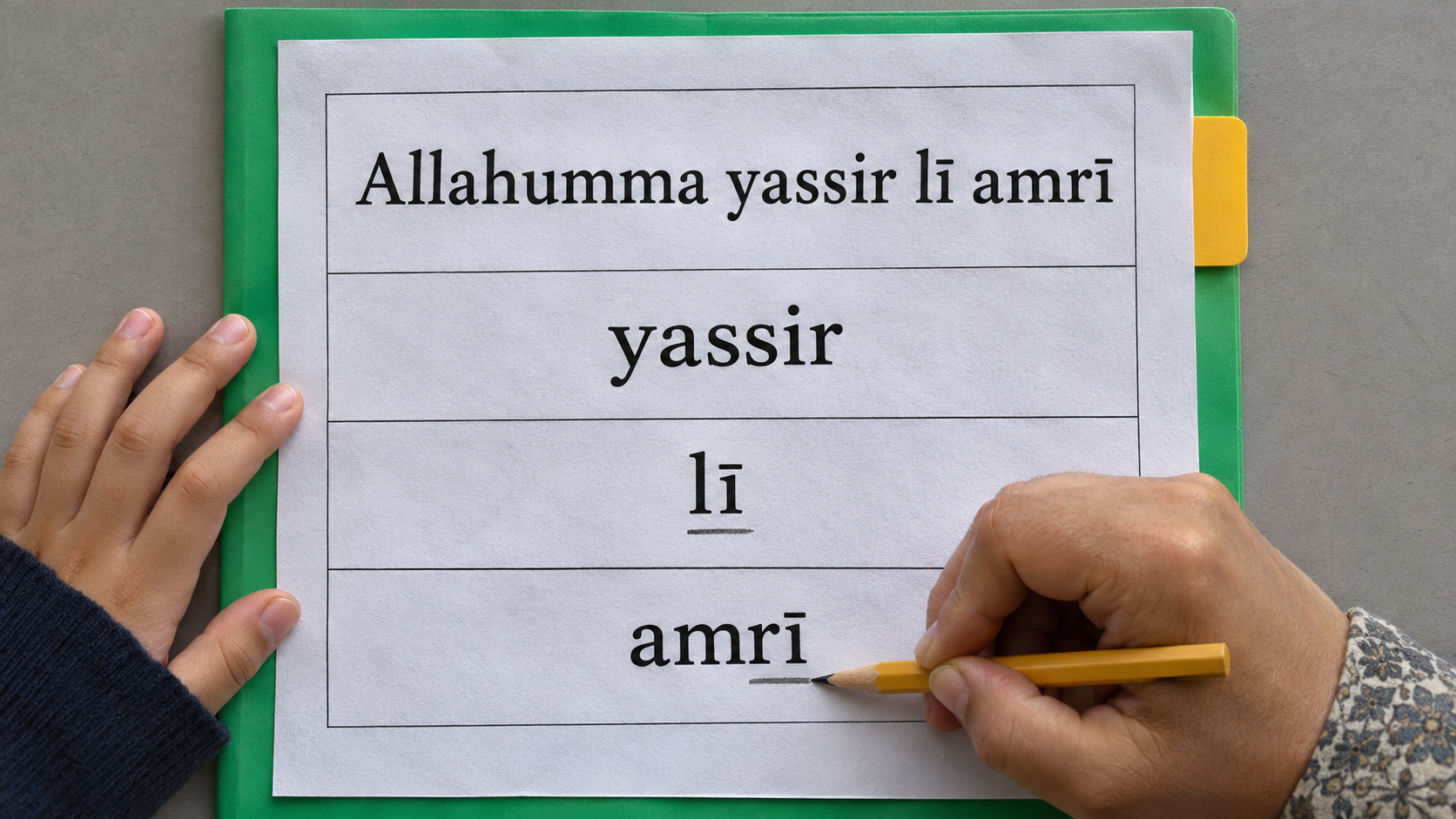
Practice the phrase in two groups, Allāhumma and yassir lī amrī, before putting them together. Let your voice stay relaxed as you move from one word to the next. If the ending gets rushed, begin the next attempt with lī amrī by itself.
Arabic Script and Roman Transliteration
The personal dua is اللَّهُمَّ يَسِّرْ لِي أَمْرِي, written in Roman letters as Allāhumma yassir lī amrī. Read the Arabic script from right to left and the transliteration from left to right. The marks over ā and ī show you which vowels to lengthen.
Look for lī in the Arabic, where it appears as لِي between the other words. Once you can identify it, trace each word in sequence while you say the phrase aloud. For a closer look at the wording, read our explanation of Allahumma Yassirli Amri meaning.
Syllable Breaks and Vowel Length
Break the phrase into Al-lā-hum-ma | yas-sir | lī | am-rī. The doubled s in yassir is one continuous consonant with a brief hold. Give the doubled m in Allāhumma a brief hold as well, then let the final short a follow it.
Use the long vowels as checkpoints on your second pass. Stretch the ā in Allāhumma and the ī in both lī and amrī. Then say sir again and hear how much shorter its vowel is.
| Word | Practice cue | Sound to check |
|---|---|---|
| Allāhumma | Al-lā-hum-ma | Long ā and doubled m |
| yassir | yas-sir | Doubled s and short i |
| lī | lee | Long ī |
| amrī | am-rī | Short initial a and long final ī |
The Phrase in Its Quranic Context
The words wa yassir lī amrī form part of Prophet Musa’s supplication in Surah Taha. Allah commands Musa to go to Pharaoh, and Musa asks for ease in carrying out the task and clarity so that people can understand his speech. That sequence helps explain why the passage resonates when you face a difficult conversation or responsibility. Arabic script from right to left.
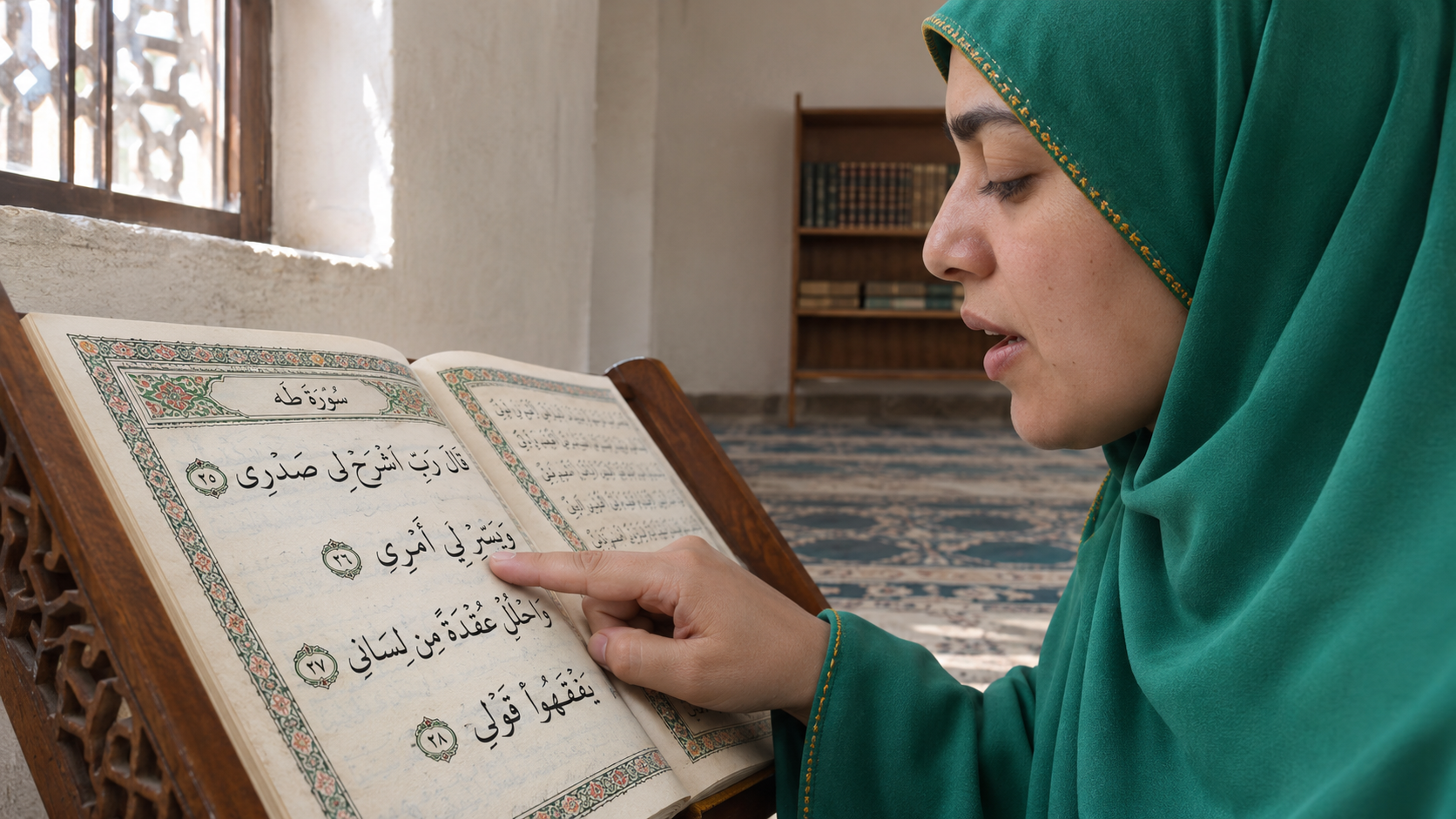
When you read the passage as Quran recitation, follow the wording and order in the mushaf. In a personal dua, Allāhumma addresses Allah directly. Reading the verses alongside the personal wording helps you remember which form you are using.
The Full Supplication of Prophet Musa
Musa’s request for ease and clear speech begins with Rabbi ishraḥ lī ṣadrī in verse 25 and continues through verse 28. In approximate English, he asks his Lord to expand his chest, ease his task, and untie a knot from his tongue so that people understand his words. His supplication continues from verse 29 with a request for support from his family.
Read the opening four verses as a connected passage. Notice how the request for ease leads into the request to be understood. You can read the Arabic beside a translation in Surah Taha verses 25–28.
رَبِّ اشْرَحْ لِي صَدْرِي
وَيَسِّرْ لِي أَمْرِي
وَاحْلُلْ عُقْدَةً مِنْ لِسَانِي
يَفْقَهُوا قَوْلِي
Where “Wa Yassir Li Amri” Appears
Wa yassir lī amrī appears in Surah Taha 20:26 as وَيَسِّرْ لِي أَمْرِي. The opening wa means “and,” giving the verse the sense of “And make my task easy for me.” It joins this request to the one in the preceding verse.
In a recording of the verse, listen for the short wa at the start. Then follow the same three words you practiced in the personal dua. Replay Surah Taha verse 26 on its own until you can locate the opening sound without looking at the transliteration.
How to Practice the Recitation
To practice the recitation, listen to one clear model, repeat a short segment, and compare it with your own voice. Decide what you want to hear before you start. On one pass, focus on the doubled s, then use the next pass to check the ending of amrī.
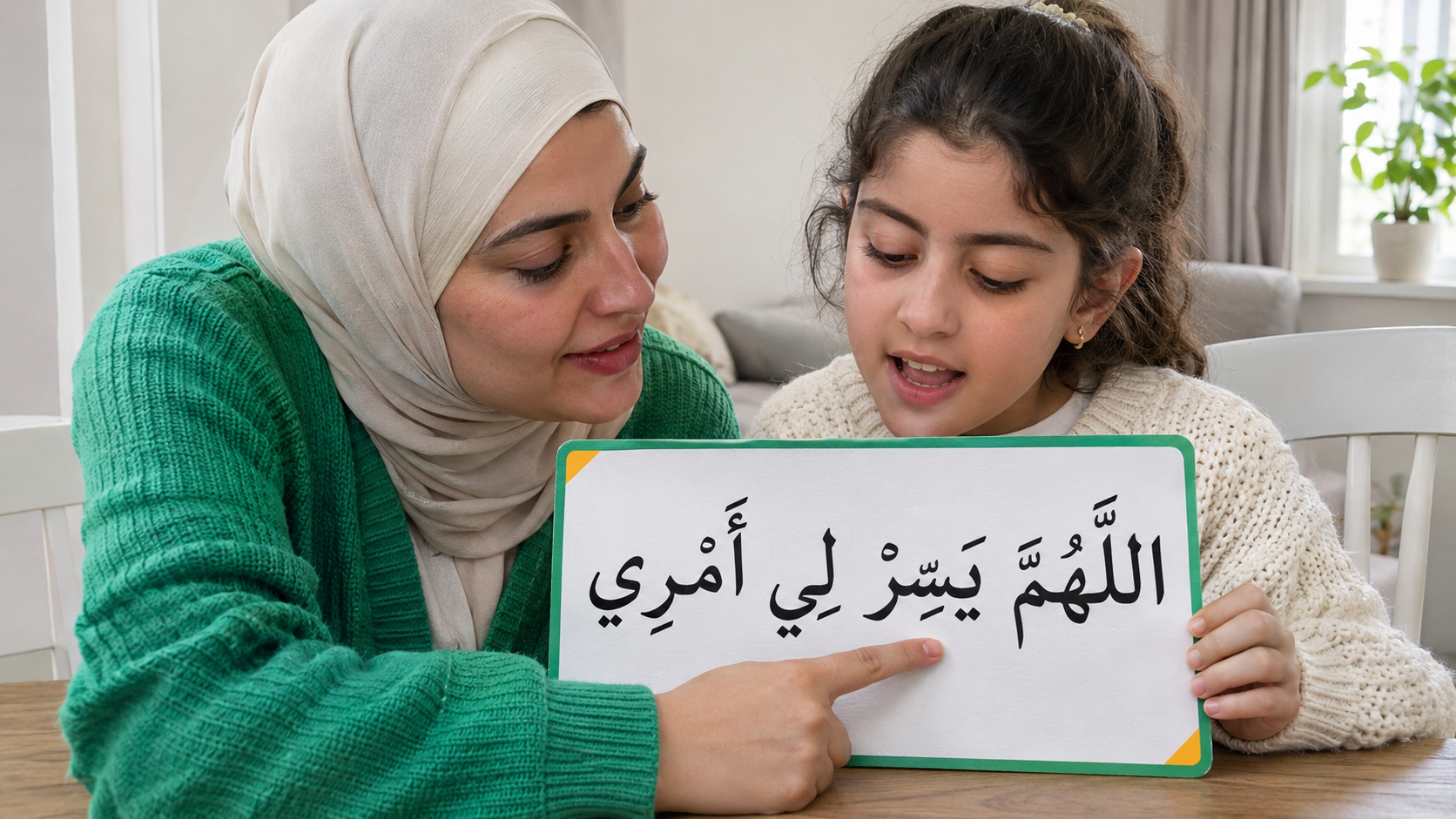
Set aside a few quiet minutes when you can speak aloud. If you are helping a child, take turns saying one word at a time before reciting the phrase together. Adult beginners can use the same method and spend extra time on whichever sound feels unfamiliar.
- Listen to the complete phrase once while following the text.
- Repeat yassir and lī amrī separately.
- Record one complete attempt and compare a single sound with the model.
Listen and Repeat at a Slow Pace
Pause the audio after the phrase ends and repeat it at your own pace. Read along on your first attempt, then look away and try again. Keep the rhythm natural enough that you can still hear where the words join.
Record yourself saying yassir lī amrī in one pass. On playback, check whether the last syllable of amrī stays long when you reach the end. If it sounds clipped, say that word alone and make a fresh recording of the complete phrase.
Check Your Pronunciation With a Teacher
A qualified teacher can listen for vowel lengths and doubled consonants while you say the phrase at your usual pace. Read it once so the teacher can hear where you naturally hesitate. Then ask her to model the word you find hardest and listen again while you repeat it.
At Hidayah Quran Academy, you can practice in private with a qualified female Quran teacher. A child can take the words one at a time, while an adult beginner or revert can ask how the Arabic letters connect to the sounds they hear. If you also want to recite the Quranic passage, bring verse 26 so you can practice its opening wa with your teacher.
Key Takeaways
Learning how to recite Allahumma Yassirli Amri correctly starts with three checks: the spacing between yassir and lī, the doubled consonants, and the long vowels. Learn both openings so you can move comfortably between personal dua and Quran recitation. Use the Arabic line to confirm which opening belongs to each.
Keep your practice cue short enough to remember while you speak. For example, you can focus first on holding the s, then check whether you carried the long vowel through the last word. Once both sounds feel steady, say the whole phrase at a natural pace.
“When you practice how to recite Allahumma Yassirli Amri correctly, let the long vowels stay clear as you bring the words together.”
Frequently Asked Questions
You can use the dua to ask Allah for ease when you face an everyday difficulty or a demanding responsibility. Its wording is broad enough for a conversation, an exam, or another task that concerns you. The surrounding verses add specific requests when speaking clearly matters to you.
If you are deciding what to say, start with the request that fits your situation. Asking for ease and asking for forgiveness serve different purposes, and you may want to do both. You can find examples of the latter in our guide to ways to say istighfar.
What does “Allahumma Yassirli Amri” mean?
It means “O Allah, make my task easy for me.” Allāhumma means “O Allah,” and yassir is the request to make something easy. The word lī means “for me.”
The last word, amrī, means “my task” or “my affair.” In English, the word you choose depends on the situation. You can have a specific responsibility in mind as you make the request.
Can you say this dua before giving a talk?
Yes, you can say it before giving a talk, answering questions in a meeting, or having a difficult conversation. The surrounding verses are especially relevant when you want your listeners to understand you. You can recite those verses together if you know them.
Take a quiet moment before you begin. Say the dua at a pace you can manage even when you feel nervous. Then take a breath and give your prepared opening.
Can you recite this dua before an exam?
Yes, you can say it quietly before an exam to ask Allah for ease. Use the wording you know and take a moment to think about what you are asking. Then read the instructions and begin with the work in front of you.
If you are teaching it to a child, practice it together before exam day. That gives your child time to learn the words without the pressure of a timed task. The dua asks for ease, and revision helps you recall what you studied.
Do you need to listen to this dua 100 times?
You can learn the pronunciation without listening 100 times. Use repetitions to check a sound you can hear, such as the doubled s or the last vowel. A handful of focused attempts can give you a clear idea of what to practice next.
Treat the count on a looped recording as a playback format. If you want to repeat the dua for practice, pause whenever you need to say the words yourself. Finish by reciting the phrase once from memory.
Conclusion
Recite the dua clearly by keeping yassir and lī distinct, giving the doubled consonants a brief hold, and letting the long vowels carry through to the final ī. Use Allāhumma when addressing Allah in your personal dua and wa when reading verse 26 from Surah Taha. This week, listen to the verse, record yourself saying the phrase once, and compare the final two words with the reciter. If one sound still feels uncertain, take that recording into your next lesson so you know what to ask about first.
Try a free 30 minute private lesson with a qualified female teacher at Hidayah Quran Academy. Sisters, children, and adult beginners can meet by Zoom or WhatsApp, practice the dua aloud, and get feedback on the sound they find hardest. Choose a time for your first lesson when you Book Free Trial.