
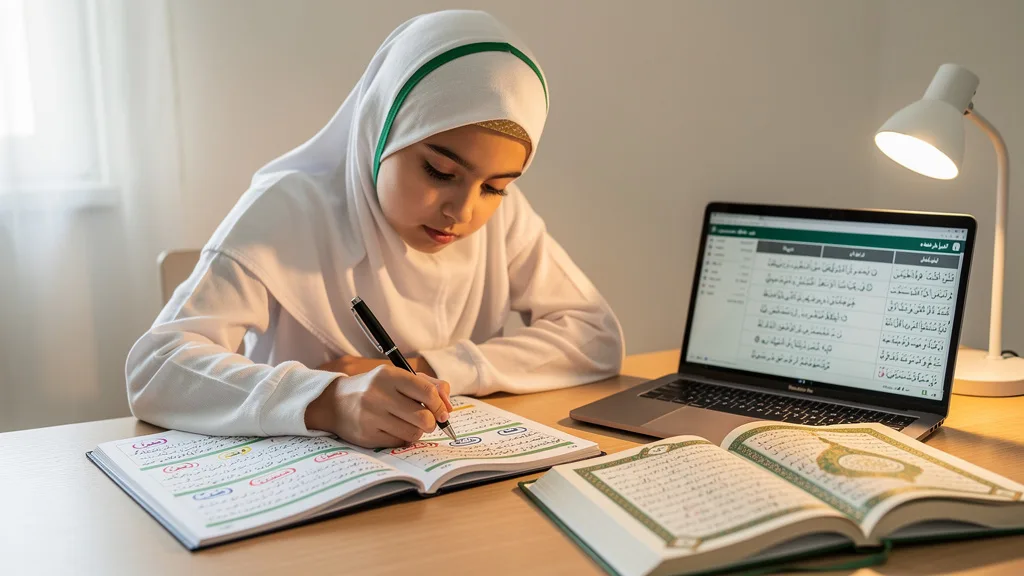
Are you ready to elevate your Quran recitation from simply correct to truly beautiful and profound? For many students of the Quran, mastering the basic rules of Tajweed is a significant achievement. Yet, there is a deeper level of precision and understanding that can only be unlocked through the study of the language's structure.
The most effective Advanced Arabic Grammar Tips for Tajweed Mastery involve integrating the principles of Arabic grammar (Nahw and Sarf) with the phonetic rules of recitation. This approach moves beyond rote memorization of rules, allowing you to understand the grammatical reasons behind why you pause, connect, or elongate certain sounds. This synthesis is the key to an accurate and spiritually resonant recitation in 2026.
Advanced Arabic grammar tips are for serious students who wish to move beyond the mechanical application of Tajweed rules. Instead of only knowing *what* to do, you begin to understand *why* you are doing it. This knowledge is rooted in the grammatical function of words within a sentence, which directly influences their correct pronunciation and the overall flow of the recitation.

A primary focus is on I'rab, the system of case endings in Arabic that determines a word's grammatical role. Understanding whether a word is in a nominative, accusative, or genitive case affects its final vowel, which is crucial for proper pronunciation, especially when connecting verses. This grammatical awareness prevents common errors that even intermediate reciters make, ensuring a truly accurate Quran recitation.
Furthermore, these tips delve into sentence structure (Jumla) and its relationship to the rules of stopping and starting (Waqf wal-Ibtida). Knowing where a clause begins and ends grammatically allows you to make intelligent pauses that preserve the intended meaning of the verse. It transforms your recitation from a series of correctly pronounced words into a coherent and impactful delivery of the divine message.
In 2026, the approach to learning the Quran is increasingly focused on deep, meaningful engagement rather than simple memorization. Integrating grammar with Tajweed is at the forefront of this movement. It allows for a more profound spiritual connection, or Tadabbur, because understanding the grammatical nuances reveals layers of meaning that are otherwise hidden. When you recognize the linguistic structure, the message of the Quran becomes clearer and more powerful.
"Understanding the grammar behind Tajweed transforms recitation from a mechanical exercise into a meaningful conversation with the text. It's the difference between reading the notes and truly playing the music." - Senior Quran Instructor
This advanced knowledge also serves as a critical tool for self-correction. When you understand the underlying grammatical principles, you can identify and fix your own mistakes more effectively, reducing reliance on a teacher for every minor error. This autonomy is essential for lifelong learning and continuous improvement in your recitation. For those looking to teach others, this foundation is non-negotiable, providing the ability to give clear explanations for complex rules.
How to Get Started with Advanced Arabic Grammar Tips
Embarking on this journey requires a structured approach. You cannot dive into advanced concepts without a solid foundation. The first step is to ensure you have mastered the fundamental Tajweed rules, such as the points of articulation (Makharij al-Huruf) and the characteristics of the letters (Sifat al-Huruf). A comprehensive Tajweed rules checklist can be an invaluable resource at this stage.
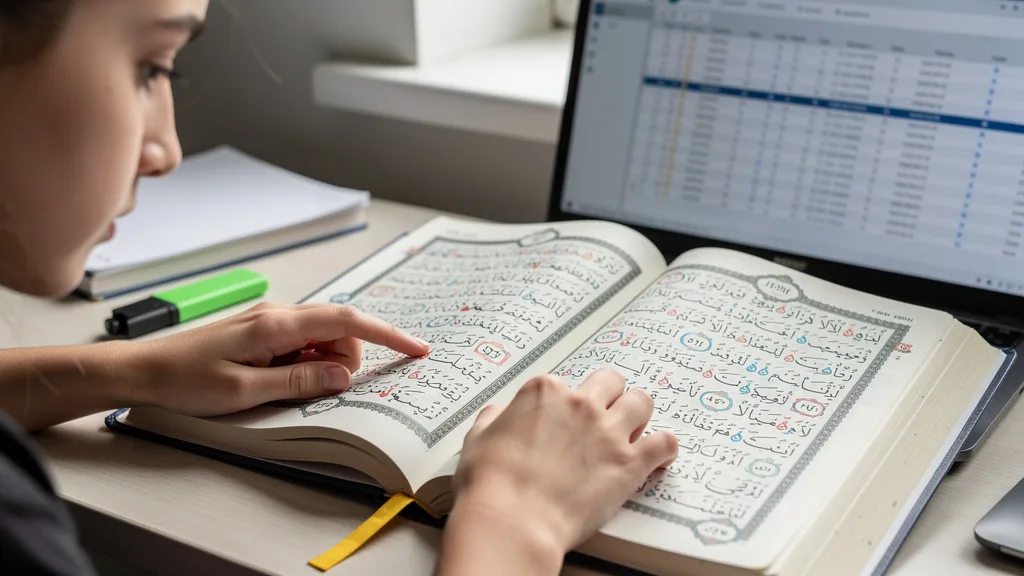
Once the basics are firm, begin a parallel study of foundational Arabic grammar. Start with a beginner-friendly text like Al-Ajurrumiyyah or a modern curriculum that explains concepts like nouns, verbs, particles, and case endings. As you learn these grammatical rules, actively look for their application in the Quranic verses you recite daily. This practice of connecting theory to application is what builds a lasting understanding.
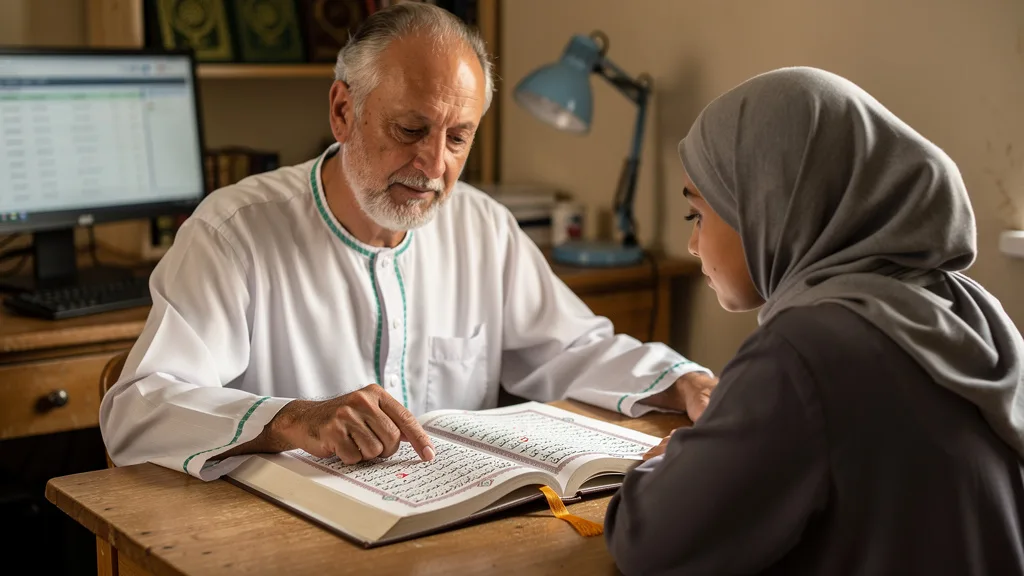
Ultimately, the most crucial step is to find a qualified instructor who is an expert in both Tajweed and Arabic grammar. Self-study can lead to misconceptions, especially with complex topics. An experienced teacher can provide live correction, answer nuanced questions, and guide you through a structured curriculum. Exploring best affordable online Arabic courses for Quran can connect you with certified tutors who specialize in this integrated approach.
Best Practices for Advanced Arabic Grammar Tips for
To effectively integrate grammar into your Tajweed practice, adopting a set of best practices is essential for steady progress. One of the most important habits is to pay constant attention to I'rab. As you recite, consciously identify the final vowel of each word and understand its grammatical reason. This mindful practice sharpens your awareness and significantly improves the accuracy of your connected recitation.
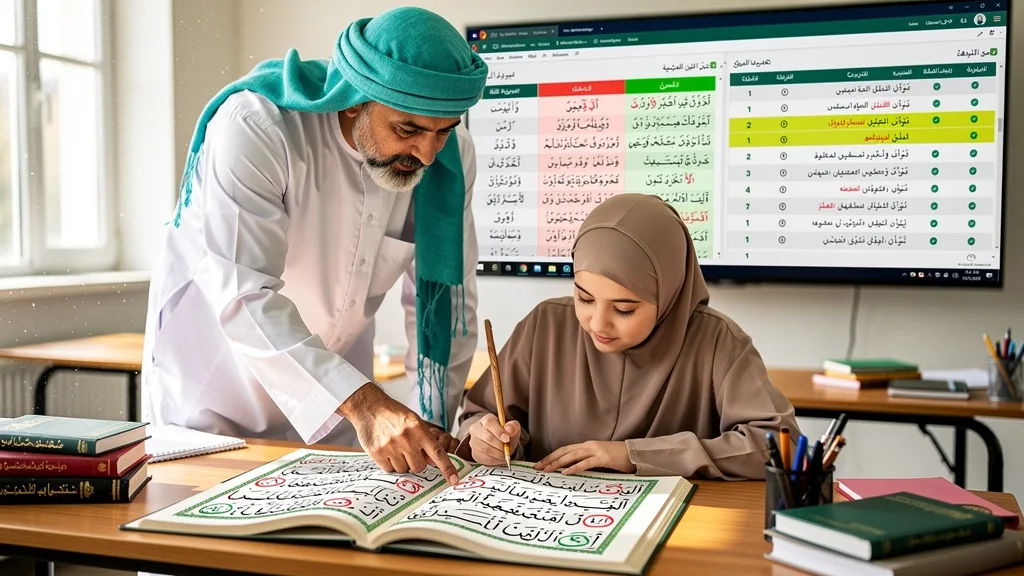
Another key practice is the deep study of Waqf and Ibtida (the science of pausing and starting). This goes beyond simply knowing the stop signs in the mushaf. It involves understanding the types of stops, such as the complete stop (Waqf Tam) and the sufficient stop (Waqf Kafi), and their grammatical justifications. This ensures your pauses do not disrupt or alter the meaning of the verses.
Finally, make it a habit to connect every rule to the meaning. When you learn about a specific grammatical structure or a complex Tajweed rule like sakt madd, ask your teacher or research how it impacts the verse's message. This transforms your learning from a dry academic exercise into a rich, spiritual endeavor. You can explore an advanced tajweed course to see how these principles are taught systematically.
| Aspect | Basic Tajweed Focus | Advanced Tajweed (with Grammar) Focus |
|---|---|---|
| Pronunciation | Correct articulation of individual letters (Makharij and Sifat). | How grammatical case endings (I'rab) affect the pronunciation of words in sequence. |
| Madd (Elongation) | Learning the basic types of Madd (e.g., Madd Tabee'i). | Understanding complex types like Madd Lazim and the grammatical reasons for their lengths. |
| Pausing (Waqf) | Following the prescribed stop signs in the mushaf. | Understanding the grammatical completeness of a sentence to make appropriate, meaning-preserving pauses. |
| Rules | Memorizing rules like Noon Sakinah and Tanween. | Understanding the linguistic and grammatical basis for why these rules are applied. |
Common Mistakes to Avoid
As you delve into advanced Tajweed, there are several common mistakes students make that can hinder progress. Perhaps the most frequent is trying to learn advanced concepts without having a firm grasp of the basics. Before tackling complex Idgham or the nuances of Rawm and Ishmam, you must be completely fluent in the rules of noon sakinah, Qalqalah, and basic Madd. Skipping these foundational steps leads to a weak and inconsistent recitation.
Another significant error is ignoring I'rab and reciting with a monotonous tone that disregards the grammatical endings of words. This often happens when a student has memorized the text without understanding its structure. This mistake can sometimes inadvertently change the meaning of a sentence, which is a serious issue in Quran recitation. Always prioritize understanding the grammatical flow over sheer speed.
Finally, avoid the pitfall of studying in isolation. While self-study resources are plentiful, the subtleties of advanced Tajweed and grammar require the expert ear of a qualified teacher. Without live correction, it is easy to practice mistakes until they become ingrained habits that are difficult to unlearn. A teacher can provide the necessary feedback to ensure your practice is both correct and effective.
Key Takeaways
To elevate your Quranic recitation, integrating advanced Arabic grammar is essential. Here are the key points to remember as you continue your study journey:
- Grammar is the Key: Understanding Arabic grammar (Nahw and Sarf) is the bridge from mechanical recitation to meaningful, accurate delivery. It provides the 'why' behind the 'what' of Tajweed rules.
- Focus on Core Concepts: Pay special attention to I'rab (case endings) and the rules of Waqf wal-Ibtida (pausing and starting), as these are directly governed by grammar and have a major impact on meaning.
- Build a Strong Foundation: Do not attempt to learn advanced topics like the different types of advanced idgham or sakt without first mastering the basic rules of pronunciation and simple Madd.
- Seek Expert Guidance: The subtleties of advanced Tajweed cannot be fully grasped through self-study alone. A certified Quran teacher who is also proficient in grammar is your most valuable asset.
- Practice with Intention: Mindful practice, where you actively think about the grammatical reasons for each rule as you recite, is far more effective than mindless repetition.
Frequently Asked Questions
What are the advanced quran tajweed rules?
Advanced Quran Tajweed rules go beyond basic letter pronunciation and cover the intricate aspects of recitation that are often tied to Arabic grammar. These include the various categories of Madd Al-Far'i (secondary elongations) such as Madd Lazim, Madd 'Arid li-Sukun, and Madd Leen. They also involve detailed rules of Idgham (merging), like Idgham Mutamathilain, Mutajanisain, and Mutaqaribain.
Other advanced topics include Sakt (a brief, breathless pause), Ishmam (indicating a vowel without sound), and Rawm (pronouncing part of a vowel). Crucially, the advanced study of Waqf wal-Ibtida (the science of stopping and starting) is a major component, as it requires grammatical understanding to preserve the intended meaning of the verses.
The primary difference lies in their focus and complexity. Basic Tajweed rules concentrate on the correct pronunciation of each individual letter from its point of articulation (Makhraj) with its specific characteristics (Sifat). They also cover foundational rules like Qalqalah, the rules of Noon Sakinah and Tanween, and the natural elongation (Madd Tabee'i).
Advanced Tajweed rules, on the other hand, deal with the relationships between words and the grammatical context of the sentence. They explain the complex reasons for certain phonetic changes, the intricate rules of pausing and starting to maintain correct meaning, and special cases that occur in specific words throughout the Quran. In essence, basic Tajweed is about pronouncing words correctly, while advanced Tajweed is about reciting sentences beautifully and accurately according to their grammatical structure.
The timeline for mastering advanced Tajweed rules varies significantly from person to person, depending on factors like prior knowledge of Arabic, consistency of practice, and the quality of instruction. For a dedicated student practicing a few hours per week with a qualified teacher, noticeable progress in understanding and applying advanced concepts can be made within six months to a year.
However, true mastery is a lifelong journey. The depth of Quranic language and recitation is vast, and there is always more to learn and perfect. The goal should be continuous improvement and a deeper connection with the Quran, rather than a fixed deadline for completion.
While it is possible to learn the theoretical aspects of advanced Tajweed from books and online resources, it is highly discouraged to practice and implement them without the guidance of a qualified teacher. The nuances of pronunciation, timing, and application of these rules are incredibly subtle and cannot be accurately learned from text alone. An expert teacher provides essential live correction to prevent the formation of bad habits.
A teacher's ear is trained to catch mistakes that a student cannot perceive on their own. For concepts like Ishmam, Rawm, and the correct application of Sakt, direct instruction and feedback are indispensable. Attempting to learn these alone often leads to incorrect application and a flawed recitation.
Advanced Madd rules, or secondary elongations (Madd Al-Far'i), are those that extend beyond the natural two-count Madd. The most significant is Madd Lazim, which is a mandatory six-count elongation that occurs when a letter of Madd is followed by a sukoon that is part of the original word structure. It has several sub-categories, such as Kalimi (in a word) and Harfi (in individual letters at the start of some surahs).
Other advanced rules include Madd 'Arid li-Sukun, which is a permissible elongation of 2, 4, or 6 counts when stopping on a word where the letter before the last is a letter of Madd. Madd Leen is similar but applies to the diphthongs 'waw' and 'yaa' sakinah. Understanding these rules requires recognizing the grammatical and phonetic context of each word.
What is sakt in advanced tajweed?
Sakt is an advanced Tajweed rule that refers to a very brief pause in recitation without taking a breath. The duration of this pause is shorter than a normal stop (waqf). The purpose of Sakt is to distinguish between two words and prevent them from being read as one, which could potentially alter the intended meaning.
There are four mandatory (wajib) instances of Sakt in the Hafs an Asim recitation, which is the most common recitation of the Quran. For example, in Surah Al-Kahf, verse 1, a Sakt is made on the word 'iwajaa. Learning the precise locations and correct timing of Sakt is a key part of advanced Tajweed studies.
What are the types of advanced idgham in tajweed?
Beyond the basic Idgham with and without ghunnah for Noon Sakinah and Tanween, advanced Tajweed covers Idgham based on the relationship between the points of articulation and characteristics of two consecutive letters. The main types are Idgham Mutamathilain (merging two identical letters), Idgham Mutajanisain (merging two letters with the same articulation point but different characteristics), and Idgham Mutaqaribain (merging two letters with close articulation points and characteristics).
Understanding these categories requires a deep knowledge of the Makharij (articulation points) and Sifat (characteristics) of all Arabic letters. This allows the reciter to smoothly and correctly merge letters in various combinations that occur throughout the Quran, leading to a more fluid and professional recitation.
How do waqf and ibtida affect advanced recitation?
Waqf (stopping) and Ibtida (starting) are critical sciences in advanced recitation because they directly relate to preserving the meaning of the Quran. An incorrect pause can fragment a thought or, in some cases, create a completely different or even incorrect meaning. Advanced knowledge of Arabic grammar is essential to properly apply the rules of Waqf and Ibtida.
A reciter must understand where a sentence is grammatically complete (Waqf Tam), where a pause is sufficient (Waqf Kafi), and where it is poor (Waqf Qabih). Similarly, knowing the correct place to resume recitation (Ibtida) is equally important. This art ensures that the listener receives the divine message with its intended coherence and impact, making it a cornerstone of recitation advanced mastery.
Conclusion
Ultimately, pursuing Advanced Arabic Grammar Tips for Tajweed Mastery is about deepening your relationship with the words of Allah. By moving beyond phonetic rules to understand the profound grammatical structure of the Quran, you unlock new layers of meaning and beauty in your recitation. This journey transforms your practice from a technical skill into a spiritual art form, allowing for a more accurate, beautiful, and heartfelt connection to the divine text.
Are you ready to take your recitation to the next level? Our certified Quran teachers are experts in both Tajweed and Arabic grammar, ready to guide you on your journey toward mastery. Start with a personalized assessment to understand your current level and create a roadmap for success. Book Free Trial today and begin the path to perfecting your recitation.