

Have you ever listened to a professional Qari (reciter) and felt deeply moved by the beauty of their Quran recitation, wondering how they achieve such perfect pronunciation and flow? The secret lies in Tajweed, the science of reciting the Quran with precision and eloquence. Understanding what is Tajweed and why it matters for Quran reading is the first step toward transforming your own relationship with the Holy Book.
Tajweed is the set of linguistic and phonetic rules for reciting the Quran correctly, just as it was revealed to Prophet Muhammad (PBUH). It is crucial because it preserves the original meaning of the divine text, prevents errors that can alter the message, and deepens the spiritual connection for the reader. Learning Tajweed ensures you are honoring the words of Allah with the beauty and precision they deserve, making your recitation more meaningful and accepted, Insha'Allah.
What Is Tajweed? A Foundational Overview
Linguistically, the Arabic word 'Tajweed' means 'to improve' or 'to make better'. In the context of the Quran, it is the science that provides the rules for pronouncing each letter correctly from its specific point of articulation (Makhraj) and giving it its required attributes (Sifaat). It governs how letters interact with each other, including when to merge, lengthen, or pause, ensuring the recitation is as close as possible to how the Angel Jibril taught it to Prophet Muhammad (PBUH).
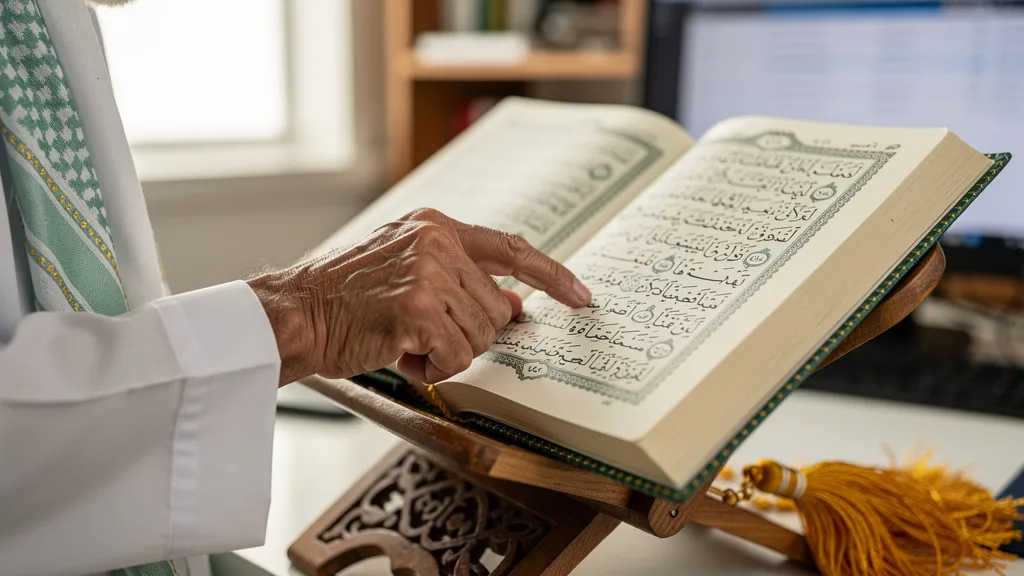
Essentially, Tajweed is the grammar of Quranic recitation. Just as grammatical errors in any language can change the meaning of a sentence, mistakes in recitation can inadvertently alter the meaning of Allah's words. Therefore, learning Tajweed is not an optional aesthetic choice but a fundamental discipline for anyone who wishes to engage with the Quran authentically. It is the key to unlocking the divine rhythm and intended message of the Holy Book.
Why Learning Tajweed Is Essential for Quran Recitation
Embracing the study of Tajweed goes far beyond simply sounding more pleasant during recitation. It is a deeply significant act of worship that carries profound spiritual and practical benefits. For every Muslim, understanding the importance of these rules is central to developing a meaningful and correct relationship with the Quran.
Preserving the Meaning of the Holy Quran
The primary reason for learning Tajweed is to protect the words of Allah from being altered. The Arabic language is incredibly precise, and a minor change in the pronunciation of a letter or the length of a vowel can drastically change a word's meaning. For example, mispronouncing a 'heavy' letter as a 'light' one or vice versa can turn a word of praise into something meaningless or even incorrect.
By adhering to Tajweed rules, you ensure that you are reciting the verses as they were revealed, preserving their intended meaning and divine integrity. This precision is an act of respect and responsibility, safeguarding the message that has been protected for over 1400 years. It prevents the kinds of major and minor mistakes that can corrupt the meaning and, consequently, the reward of your recitation.
Connecting Spiritually with Allah's Words
When you recite the Quran with proper Tajweed, you begin to appreciate its miraculous linguistic beauty and rhythmic flow. The correct application of rules like Ghunnah (nasalization), Madd (elongation), and Qalqalah (vibration) creates a melodious and captivating sound that touches the heart. This beauty is not accidental; it is an inherent part of the Quran's divine nature.
This beautiful recitation helps quiet the mind and focus the heart, allowing for a deeper, more spiritual connection with the text. It transforms the act of reading from a mere vocal exercise into a profound conversation with your Creator. As your recitation improves, so does your Khushu (concentration and humility) in prayer and your overall spiritual fulfillment.
Fulfilling a Religious Obligation
Many Islamic scholars hold that learning the basics of Tajweed to avoid major mistakes in recitation (especially in Surah Al-Fatiha, which is recited in every prayer) is an individual obligation (Fard 'Ayn) for every Muslim. A major mistake is one that alters the meaning significantly. Learning the advanced rules and perfecting recitation is considered a communal obligation (Fard Kifayah), meaning if enough people in a community fulfill it, the obligation is lifted from the rest.
By dedicating yourself to learning Tajweed, you are fulfilling a command to recite the Quran with Tarteel (slow, measured recitation), as Allah says in the Quran, "and recite the Qur'an with measured recitation" (Surah Al-Muzzammil, 73:4). This effort is a significant act of worship that demonstrates your commitment to honoring Allah's book in the best possible manner.
Core Principles of Tajweed: Makharij and Sifaat
To master Tajweed, one must understand its two foundational pillars: Makharij al-Huruf (the points of articulation of the letters) and Sifaat al-Huruf (the attributes of the letters). Together, these two components give each Arabic letter its distinct sound and identity, forming the basis of correct pronunciation.
Understanding Makharij: The Points of Articulation
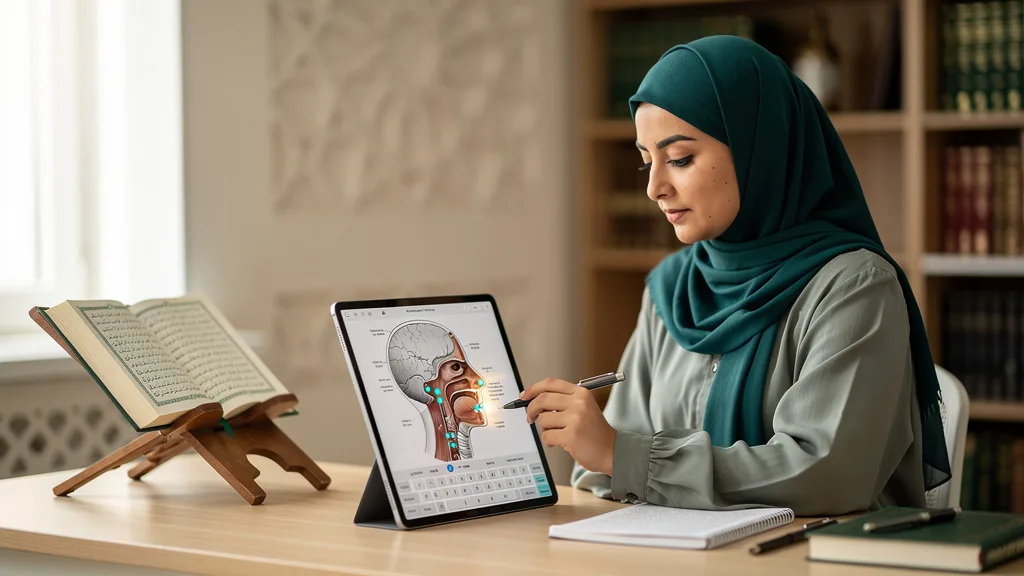
Makharij (singular: Makhraj) refers to the specific point in the vocal tract where a letter originates. Think of it as the 'exit point' for each sound. There are five main areas of articulation in the mouth and throat from which all 28 Arabic letters are produced. Mastering Makharij involves training your mouth, tongue, and throat to produce sounds from their exact points.
The five primary articulation areas are:
- Al-Jawf (The Empty Space): The empty space in the mouth and throat, used for the elongated vowel sounds (Madd letters).
- Al-Halq (The Throat): This area produces six letters from its deepest, middle, and highest parts.
- Al-Lisan (The Tongue): The majority of Arabic letters originate from various parts of the tongue touching different parts of the mouth.
- Ash-Shafatan (The Lips): Four letters are produced using the upper and lower lips.
- Al-Khayshum (The Nasal Cavity): This is the origin for the Ghunnah, or nasalization, which is an attribute of the letters Noon (ن) and Meem (م).
Mastering Sifaat: The Attributes of Letters
While Makhraj tells you *where* a letter comes from, Sifaat (singular: Sifah) tells you *how* it should sound. Sifaat are the characteristics or attributes that give each letter its unique quality. For example, some letters are 'heavy' (Tafkhim) and pronounced with a full mouth, while others are 'light' (Tarqiq) and pronounced with a flatter mouth. Some letters have an echoing quality (Qalqalah), while others have a flow of breath (Hams).
Every letter has a set of attributes, some with opposites (like voiced vs. voiceless) and some without. Understanding Sifaat is what allows a reciter to differentiate between similar-sounding letters like 'س' (Seen) and 'ص' (Saad), or 'ت' (Taa) and 'ط' (Taw). Without the correct Sifaat, the recitation will lack clarity and precision, even if the Makhraj is correct.
How to Learn Tajweed: A Guide for Beginners in 2026
Embarking on the journey of learning Tajweed is a rewarding endeavor. With modern technology, there are more resources available than ever before. The key is to find a structured approach and a qualified guide to help you navigate the rules and correct your pronunciation.
Online Tajweed Courses vs In-Person Classes
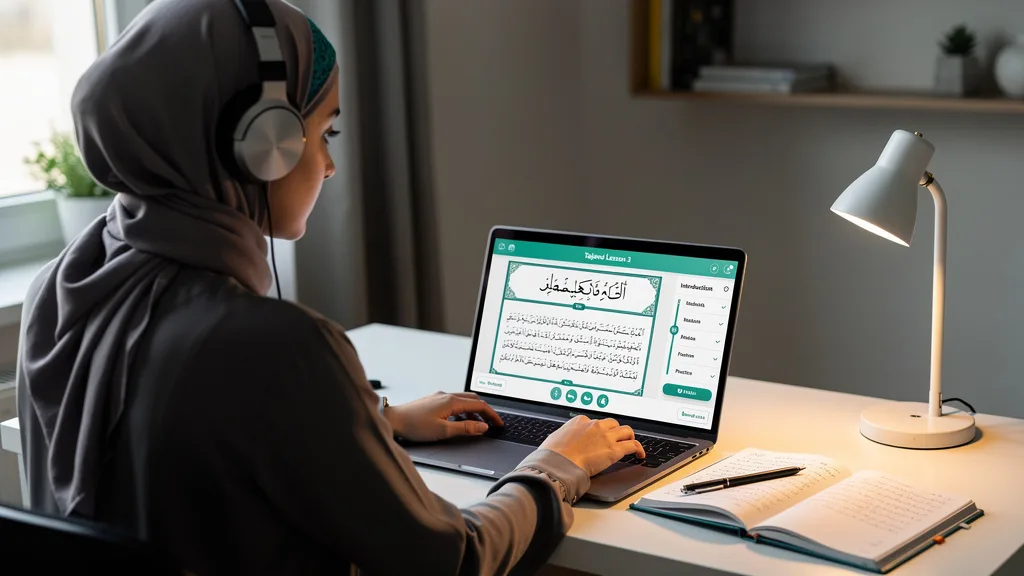
In 2026, learners have two main options: online courses or traditional in-person classes. Online classes offer unparalleled flexibility, allowing you to learn from home and connect with expert teachers from around the world. This is especially beneficial for sisters or those in areas without local qualified teachers, as you can easily find a female Tajweed teacher online. Platforms like Zoom and WhatsApp make one-on-one feedback seamless, as you can see and hear your teacher clearly. You can compare various platforms like Zoom vs WhatsApp vs Google Meet for Quran classes to see which works best for you.

In-person classes, on the other hand, provide a different kind of direct interaction and a sense of community with fellow students. The teacher can physically demonstrate mouth and tongue positions, which some beginners find helpful. However, they are often less flexible with scheduling and limited by geographic location. Ultimately, the best choice depends on your personal learning style, schedule, and accessibility to qualified instructors.
How to Find a Qualified Tajweed Teacher
The single most important factor in learning Tajweed is finding a qualified teacher. A good teacher will not only explain the rules but also listen to your recitation and provide immediate, precise corrections. Look for a teacher who has an 'Ijazah' (a license to teach) in Quranic recitation, as this indicates they have mastered Tajweed and are connected to an authentic chain of narration back to the Prophet (PBUH). You can often find highly qualified instructors who are graduates of renowned institutions; the Al Azhar method is particularly respected worldwide.
"Applying Tajweed is not merely about perfecting pronunciation; it is about beautifying your conversation with Allah. Every correctly articulated letter is an act of love and reverence for His words."
Beyond qualifications, seek a teacher who is patient, encouraging, and able to explain complex concepts clearly. For many sisters and children, learning with a female teacher creates a more comfortable and effective environment. A trial class is a great way to assess if a teacher's style is the right fit for you before committing.
Best Books and Apps for Self-Study
While a teacher is indispensable for correcting pronunciation, books and apps are excellent supplementary tools. For books, classics like "Tajweed Rules of the Qur'an" by Kareema Czerepinski are highly recommended for English speakers, as they break down the rules systematically. Another excellent resource is the work of Sheikh Ayman Suwayd, whose detailed explanations are widely available in video and text formats.
In the digital realm, several apps can aid your learning in 2026. Tarteel AI uses artificial intelligence to listen to your recitation and highlight mistakes. Apps like Quran.com and Muslim Pro often feature color-coded Tajweed scripts, which visually guide you on applying rules as you read. These tools can help you practice between lessons but should be used to support, not replace, the guidance of a live teacher.
Online Quran Schools for Tajweed: A 2026 Comparison
Choosing an online Quran school is a significant decision. Many platforms offer Tajweed courses, but their methods, teacher qualifications, and platforms can vary. While Hidayah Quran Academy specializes in private one-on-one lessons with qualified female teachers, it's helpful to understand what other platforms offer. Below is a comparison of some popular online Quran schools.
| Feature | Qutor | Baynaat | Firdaws Academy |
|---|---|---|---|
| Teacher Profile | Marketplace of various independent tutors (male & female) | Primarily Egyptian teachers, many with Al-Azhar background | Diverse tutors, including native Arab speakers and Western converts |
| Learning Format | One-on-one classes via their proprietary platform | One-on-one and group classes | One-on-one classes |
| Curriculum Focus | Varies by tutor; includes Qaida, Tajweed, Hifz | Structured curriculum with emphasis on Tajweed and Arabic | Personalized plans for Quran, Arabic, and Islamic Studies |
| Free Trial | Yes, typically offered | Yes, available upon request | Yes, a free evaluation session is offered |
Qutor Overview
Qutor operates as a marketplace, connecting students with a wide range of independent Quran tutors from different backgrounds. Its strength lies in the variety of choices available, allowing students to browse profiles, read reviews, and select a tutor that fits their budget and schedule. The platform includes interactive tools like a shared whiteboard, but the teaching quality and methodology can vary significantly from one tutor to another.
Baynaat Overview
Baynaat is known for its structured approach and its roster of teachers, many of whom are from Egypt and hold qualifications from Al-Azhar University. This often ensures a high standard of Tajweed instruction rooted in traditional methods. They offer a more formalized curriculum, which can be beneficial for students who prefer a clear, progressive path of study from Noorani Qaida to advanced Tajweed and Ijazah programs.
Firdaws Academy Overview
Firdaws Academy provides personalized one-on-one tutoring in Quran, Arabic, and Islamic studies. They pride themselves on creating customized learning plans tailored to each student's goals, whether they are a complete beginner or an advanced learner. Their pool of tutors includes both native Arab speakers and fluent English-speaking teachers from diverse backgrounds, offering flexibility for students worldwide.
Key Takeaways
Grasping the fundamentals of Tajweed is a transformative step in your Quranic journey. As you move forward, keep these essential points in mind to guide your learning and deepen your connection with the Holy Quran.
- Tajweed is Essential: Learning what is Tajweed and why it matters for Quran reading is not optional; it is a crucial discipline for preserving the meaning of the Quran and reciting it as it was revealed.
- Core Principles: Mastery depends on understanding the two pillars of Tajweed: Makharij (the articulation points of letters) and Sifaat (the attributes of letters).
- Find a Qualified Teacher: While self-study tools are helpful, you cannot learn correct pronunciation without a live, qualified teacher to listen and provide real-time feedback.
- Consistency is Key: Learning Tajweed is a journey, not a race. Consistent daily practice, even for a short period, is more effective than infrequent long sessions.
- Spiritual Connection: The ultimate goal of Tajweed is not just technical perfection but to beautify your recitation in a way that enhances your spiritual connection with Allah's words.
Frequently Asked Questions
How much do online Tajweed classes cost?
The cost of online Tajweed classes can vary widely based on factors like the teacher's qualifications, location, and whether classes are private or in a group. As of 2026, one-on-one classes typically range from $10 to $30 per hour. Academies based in countries with a lower cost of living may offer more affordable rates.
Many institutions, including Hidayah Quran Academy, offer package deals that reduce the hourly rate. It's always a good idea to research and understand the full pricing structure of online Quran classes before enrolling. Remember that investing in a qualified teacher is an investment in your relationship with the Quran.
Are online Tajweed certifications recognized?
Yes, many online Tajweed certifications are highly recognized, especially the 'Ijazah'. An Ijazah is a license granted by a qualified teacher (who has their own Ijazah) certifying that the student has mastered recitation and is now permitted to teach it. This certification connects the student to an unbroken chain of reciters back to the Prophet Muhammad (PBUH).
Certificates from reputable institutions like Al-Azhar University, or from teachers who are Al-Azhar graduates, carry significant weight. When evaluating a program, it's important to understand the difference between various Quran certifications to ensure you are pursuing one that is authentic and widely respected.
How long does it typically take to learn Tajweed?
The time it takes to learn Tajweed depends entirely on the student's dedication, previous experience with Arabic, and the frequency of lessons. A beginner can learn the fundamental rules and correct the most common mistakes within 6 to 12 months with consistent practice and a good teacher. and flow.
However, mastering Tajweed and achieving a level of proficiency where the rules are applied effortlessly is a lifelong journey. The key is patience and consistency. Focus on making steady progress rather than rushing to a finish line.
Can I effectively learn Tajweed on my own?
You can learn the theoretical rules of Tajweed on your own using books, videos, and apps. These resources are excellent for understanding concepts like which letters are heavy, where Madd is required, and the rules of Noon Saakin. However, you cannot effectively learn the practical application, especially Makharij (articulation points), without a teacher.
A qualified teacher's role is to listen to you, identify subtle errors in your pronunciation that you cannot hear yourself, and provide instant correction. Without this live feedback, it is very easy to practice mistakes and ingrain incorrect habits that are difficult to fix later.
What is the difference between Tajweed and Tarteel?
Tajweed and Tarteel are related but distinct concepts. Tajweed is the science or the set of rules that governs how the Quran should be pronounced. It is the theoretical knowledge of Makharij, Sifaat, and all other rules of recitation.
Tarteel, on the other hand, is the practical application of those Tajweed rules in a slow, clear, and measured recitation. It is the act of reciting the Quran thoughtfully and beautifully, giving each letter its due right without rushing. As Allah commands in the Quran, "and recite the Qur'an with Tarteel." So, you use the science of Tajweed to achieve the beautiful recitation style of Tarteel.
Conclusion
Learning Tajweed is an incredibly rewarding act of devotion that transforms your recitation from a simple reading into a beautiful and precise conversation with Allah. By understanding its core principles and committing to practice with a qualified guide, you not only preserve the sacred meaning of the Holy Quran but also unlock a deeper, more profound spiritual connection to its message. This journey of improvement is a lifelong pursuit that brings immense blessings and draws you closer to the words of your Creator.
Are you ready to beautify your recitation and connect with the Quran like never before? Hidayah Quran Academy offers private, one-on-one classes with qualified female teachers for sisters and children. Take the first step today with a no-obligation, free 30-minute trial class. Book Free Trial
If you want help turning this into a concrete plan for your site or team, take the next step below to apply What Is Tajweed and Why It Matters for Quran Reading with confidence.
Ready to act on What Is Tajweed and Why It Matters for Quran Reading? Book Free Trial — tell us your goal, and we will help you pick the highest-leverage next step so you are not guessing alone.