

Have you ever wanted to understand the Quran on a deeper level by learning its language, starting with the very basics like numbers? Learning to count is a fundamental step in mastering any language, and for students of the Quran, it opens up a new layer of appreciation for the sacred text. Understanding numbers as they appear in the Quran can enhance your recitation, comprehension, and connection to Allah's words.
This guide provides a complete walkthrough of Arabic numbers 1 to 100: how to count in Quranic Arabic. We will cover everything from the basic digits to forming complex numbers, complete with a transliteration chart and pronunciation tips. By the end, you will have a solid foundation for recognizing and using numbers in your Quranic studies and beyond.
Understanding Arabic Numerals vs. Written Words
Before diving into counting, it is important to distinguish between Arabic numerals and their written word forms. Arabic numerals are the symbols used to represent numbers, such as ١ (1), ٢ (2), and ٣ (3). These are known as Eastern Arabic numerals and are commonly used in the Arab world. Interestingly, the number system used in the West (1, 2, 3) is also called the Hindu-Arabic numeral system because it originated in India and was introduced to Europe by Arab mathematicians.

The written words, on the other hand, are the spelled-out names of these numbers, like 'wāḥid' for one and 'ithnān' for two. In the Quran and formal Arabic texts, you will encounter both numerals and written words. Understanding both is crucial for comprehensive literacy. For example, a verse number will be written as a numeral, while a quantity mentioned within the verse itself is often spelled out.
Grasping this distinction is the first step toward fluency. While numerals are straightforward, learning the vocabulary for the written words requires memorization and practice, which we will cover in the following sections. A solid foundation in the language is key, and our guide on Quranic Arabic vocabulary for beginners can help you expand your knowledge.
The Foundation: Counting from 1 to 10 in Arabic
The numbers from one to ten are the building blocks for the entire Arabic counting system. Mastering their pronunciation and written forms is essential before moving on to larger numbers. Each number has a unique name that you will need to memorize. Consistent practice is the key to making them feel as natural as counting in your native language.

Pay close attention to the transliteration to help with pronunciation. Arabic has sounds that may not exist in English, so listening to a native speaker can be incredibly helpful. Here is the list of the first ten numbers, which form the core of your counting journey.
- 1: وَاحِد (wāḥid)
- 2: اِثْنَان (ithnān)
- 3: ثَلَاثَة (thalātha)
- 4: أَرْبَعَة (arbaʿa)
- 5: خَمْسَة (khamsa)
- 6: سِتَّة (sitta)
- 7: سَبْعَة (sabʿa)
- 8: ثَمَانِيَة (thamāniya)
- 9: تِسْعَة (tisʿa)
- 10: عَشَرَة (ʿashara)
Mastering the Teens: Numbers 11 Through 19
Once you are comfortable with numbers 1-10, learning the teens becomes much easier. The numbers from 13 to 19 follow a consistent and logical pattern. They are formed by combining the unit number (3 through 9) with the word for ten, 'ashar. For example, thirteen is simply 'three-ten' (thalāthata ʿashar).
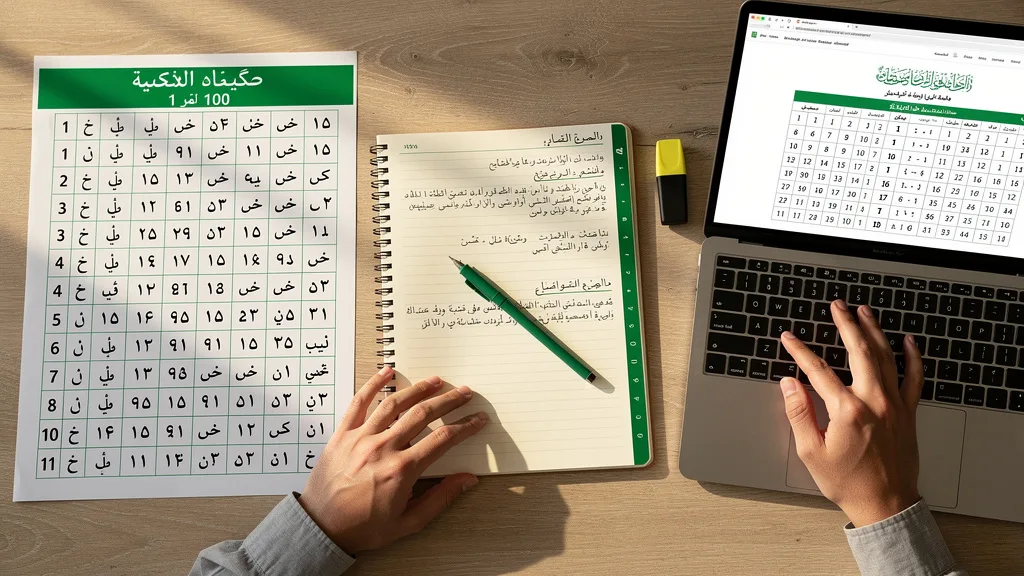
The numbers 11 and 12 are slightly irregular and have their own unique forms that need to be memorized separately. Number 11 is 'aḥada ʿashar', and number 12 is 'ithnā ʿashar'. After these two, the pattern becomes predictable, making it simple to construct the rest of the teen numbers. Notice how the 'ta marbuta' (ة) at the end of the base numbers (3-9) is dropped when forming these compound numbers.
Here is the list of numbers from 11 to 19:
- 11: أَحَدَ عَشَرَ (aḥada ʿashar)
- 12: اِثْنَا عَشَرَ (ithnā ʿashar)
- 13: ثَلَاثَةَ عَشَرَ (thalāthata ʿashar)
- 14: أَرْبَعَةَ عَشَرَ (arbaʿata ʿashar)
- 15: خَمْسَةَ عَشَرَ (khamsata ʿashar)
- 16: سِتَّةَ عَشَرَ (sittata ʿashar)
- 17: سَبْعَةَ عَشَرَ (sabʿata ʿashar)
- 18: ثَمَانِيَةَ عَشَرَ (thamāniyata ʿashar)
- 19: تِسْعَةَ عَشَرَ (tisʿata ʿashar)
Counting by Tens: 20, 30, up to 90
The multiples of ten in Arabic also follow a clear pattern, which makes them relatively easy to learn. The word for twenty is 'ʿishrūn', and from there, the numbers 30 through 90 are formed by taking the root of the single-digit number and adding the suffix '-ūn'. For instance, 'thalātha' (three) becomes 'thalāthūn' (thirty).
This structure is consistent all the way up to ninety. This system simplifies the process of learning larger numbers significantly. Once you know the words for 1-9 and this pattern for tens, you have most of the components needed to count all the way to 99.
Here is the list of the multiples of ten from 20 to 90:
- 20: عِشْرُونَ (ʿishrūn)
- 30: ثَلَاثُونَ (thalāthūn)
- 40: أَرْبَعُونَ (arbaʿūn)
- 50: خَمْسُونَ (khamsūn)
- 60: سِتُّونَ (sittūn)
- 70: سَبْعُونَ (sabʿūn)
- 80: ثَمَانُونَ (thamānūn)
- 90: تِسْعُونَ (tisʿūn)
How to Form Compound Numbers from 21 to 99
Forming compound numbers between 21 and 99 in Arabic involves a simple formula that reverses the order used in English. Instead of saying 'twenty-one', you say 'one and twenty'. This structure applies to all numbers in this range. You state the unit number first, followed by the word 'wa' (meaning 'and'), and then the multiple of ten.
For example, the number 23 is 'thalātha wa-ʿishrūn' (three and twenty). Similarly, 56 is 'sitta wa-khamsūn' (six and fifty). This rule is consistent and makes constructing these numbers straightforward once you have memorized the units (1-9) and the tens (20, 30, 40, etc.). This logical structure is a helpful feature of the Arabic language.
Let's look at a few more examples to solidify the concept:
- 21: وَاحِد وَعِشْرُونَ (wāḥid wa-ʿishrūn)
- 34: أَرْبَعَة وَثَلَاثُونَ (arbaʿa wa-thalāthūn)
- 78: ثَمَانِيَة وَسَبْعُونَ (thamāniya wa-sabʿūn)
- 99: تِسْعَة وَتِسْعُونَ (tisʿa wa-tisʿūn)
Reaching 100: The Number One Hundred in Arabic
The number one hundred in Arabic has its own distinct word: 'miʾa' (مِائَة). Unlike the compound numbers that come before it, 100 is a single term. This word serves as a new base for counting into the hundreds. For example, two hundred is 'miʾatān' (the dual form), and three hundred is 'thalāthu miʾa' (three hundreds).
Knowing the word for one hundred completes your ability to count from 1 to 100. It is a significant milestone in your Arabic language journey. From here, you can begin to understand larger numbers mentioned in the Quran, historical texts, and modern contexts. Reaching this point equips you with the fundamental numerical vocabulary needed for deeper study.
"Learning the Arabic numbers 1 to 100 is not just about counting; it's about unlocking a deeper connection to the language of the Quran and appreciating the mathematical precision within its verses."
Complete Arabic Numbers 1-100 Chart with Transliteration
To help you practice and review, here is a comprehensive chart of Arabic numbers from 1 to 100. This table includes the numeral, the Arabic word with English transliteration for pronunciation, and the English word. You can use this as a reference sheet for your studies.
| Numeral | Arabic Word (Transliteration) | English Word |
|---|---|---|
| ١ | wāḥid | One |
| ٢ | ithnān | Two |
| ٣ | thalātha | Three |
| ٤ | arbaʿa | Four |
| ٥ | khamsa | Five |
| ٦ | sitta | Six |
| ٧ | sabʿa | Seven |
| ٨ | thamāniya | Eight |
| ٩ | tisʿa | Nine |
| ١٠ | ʿashara | Ten |
| ١١ | aḥada ʿashar | Eleven |
| ١٢ | ithnā ʿashar | Twelve |
| ١٣ | thalāthata ʿashar | Thirteen |
| ١٤ | arbaʿata ʿashar | Fourteen |
| ١٥ | khamsata ʿashar | Fifteen |
| ١٦ | sittata ʿashar | Sixteen |
| ١٧ | sabʿata ʿashar | Seventeen |
| ١٨ | thamāniyata ʿashar | Eighteen |
| ١٩ | tisʿata ʿashar | Nineteen |
| ٢٠ | ʿishrūn | Twenty |
| ٢١ | wāḥid wa-ʿishrūn | Twenty-one |
| ٣٠ | thalāthūn | Thirty |
| ٤٠ | arbaʿūn | Forty |
| ٥٠ | khamsūn | Fifty |
| ٦٠ | sittūn | Sixty |
| ٧٠ | sabʿūn | Seventy |
| ٨٠ | thamānūn | Eighty |
| ٩٠ | tisʿūn | Ninety |
| ٩٩ | tisʿa wa-tisʿūn | Ninety-nine |
| ١٠٠ | miʾa | One hundred |
Tips for Correct Pronunciation and Practice
Proper pronunciation is vital for being understood and for accurate recitation of the Quran. Arabic contains several unique sounds, such as the 'ʿayn' (ع) and 'ḥā' (ح), that require practice for non-native speakers. The best way to learn these is by listening to and imitating native Arabic speakers.
To practice, try counting objects around your home in Arabic. Recite the numbers aloud daily to build muscle memory in your mouth and tongue. You can also use flashcards with the numeral on one side and the written word on the other. Finally, working with a qualified teacher provides personalized feedback and correction, which is the most effective way to master pronunciation. A structured approach can make all the difference, and to get started, you can learn Quranic Arabic online with our complete 2026 guide.
Key Takeaways
Learning to count in Quranic Arabic is an achievable goal that greatly enhances your connection with the holy text. By understanding the patterns and rules, you can quickly build confidence. Here are the most important points to remember from this guide:
- Memorize 1-10: These numbers are the fundamental building blocks for all other numbers.
- Understand the Teens: Numbers 11 and 12 are unique, while 13-19 follow a simple 'unit + ten' formula.
- Learn the Tens: Multiples of ten (20, 30, 40, etc.) are formed by adding the suffix '-ūn' to the root of the single digit.
- Master Compound Numbers: Numbers like 21-99 use a 'unit + and + ten' structure, such as 'wāḥid wa-ʿishrūn' for 21.
- Practice Pronunciation: Listen to native speakers and practice daily to master the unique sounds of the Arabic language.
Frequently Asked Questions
Who invented Arabic numerals?
The number system we call 'Arabic numerals' (1, 2, 3) was actually invented by Indian mathematicians around the 6th or 7th century. Arab mathematicians and scholars, such as Al-Khwarizmi, adopted the system and were instrumental in spreading it throughout the Middle East and eventually to Europe. The numerals used in Arabic script (١, ٢, ٣) are known as Eastern Arabic numerals.
This transmission of knowledge was a pivotal moment in the history of mathematics, enabling more complex calculations and advancing fields like algebra and astronomy. The name 'Arabic numerals' honors the crucial role of Arab scholars in popularizing this efficient system globally.
What is the Arabic number for zero?
The Arabic word for zero is 'sifr' (صِفْر). The concept of zero, also originating from ancient India, was another revolutionary idea transmitted by Arab mathematicians. The word 'sifr' is the etymological root of the English words 'cipher' and 'zero' itself.
The introduction of zero was fundamental to the development of the decimal place-value system we use today. It allows us to distinguish between numbers like 5, 50, and 500, a concept that was clumsy or impossible in older numeral systems like Roman numerals.
Are Arabic numbers written from right to left like the script?
This is a common point of confusion. While the Arabic script is written and read from right to left, the numerals are written from left to right, just like in English. So, if you were to write the number 257, you would write the ٢, then the ٥, then the ٧, moving from left to right (٢٥٧).
This convention is standard across the Arabic-speaking world. When you encounter a number embedded in a right-to-left Arabic sentence, the flow of reading pauses, you read the number from left to right, and then continue reading the text from right to left.
Is there a difference between Modern and Quranic Arabic numbers?
The basic numbers and the counting system are essentially the same in both Quranic (Classical) Arabic and Modern Standard Arabic (MSA). The words for one, ten, hundred, etc., have not changed. However, there can be stylistic and grammatical differences in how numbers are used in sentences, particularly concerning gender agreement with the nouns they modify.
Quranic Arabic has more complex grammatical rules that are sometimes simplified in modern usage. For a student focused on the Quran, it is important to learn the classical rules. To learn more, you can explore the key differences between Quranic and Modern Standard Arabic in our detailed article.
How can I practice pronouncing Arabic numbers correctly?
The best method is to listen to native speakers and repeat after them. You can find many resources online, such as videos and audio clips, that demonstrate the pronunciation of each number. Using language learning apps can also provide interactive exercises with audio feedback.
For personalized guidance, nothing is more effective than practicing with a qualified teacher who can correct your mistakes in real time. Many excellent tools are available to help you, and we have compiled a list of the best free apps to learn Quranic Arabic in 2026 to supplement your learning.
Conclusion
Mastering the Arabic numbers from 1 to 100 is a foundational skill that empowers your journey into Quranic Arabic. This guide has provided the rules, patterns, and a complete chart to help you count confidently. By practicing these numbers regularly, you will not only improve your language skills but also deepen your ability to engage with the Quran in its original form. The next step is to apply this knowledge through consistent practice and listening.
Are you ready to take your Quranic Arabic studies to the next level with personalized guidance? At Hidayah Quran Academy, our qualified female teachers offer private, one-on-one classes for sisters and children in a supportive environment. Start your journey today with a complimentary 30-minute trial session. Book Free Trial.