
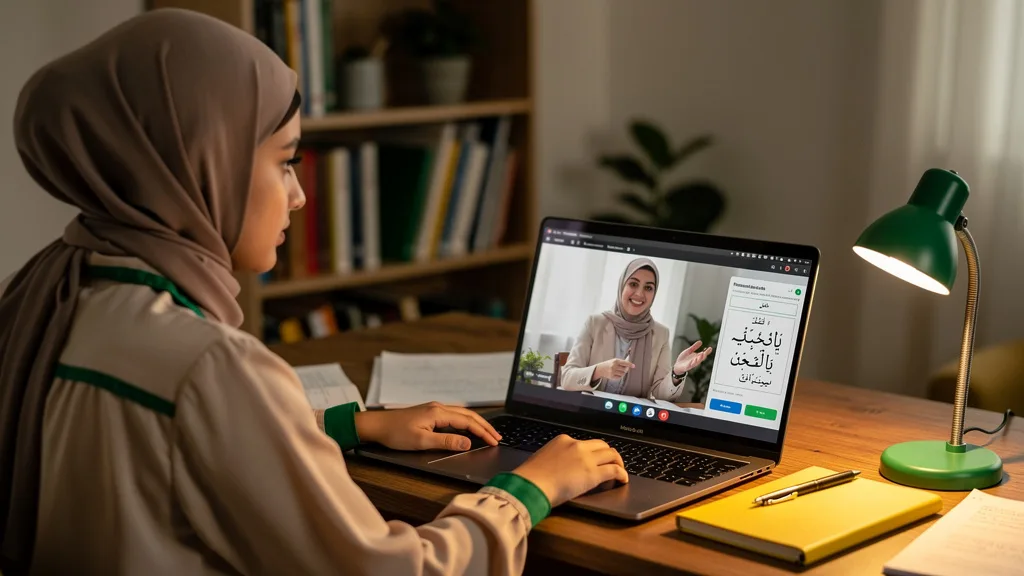
Is it truly possible to achieve fluency in Arabic using only online tools? As digital education continues to evolve, the resources available for language learners have become more sophisticated and accessible than ever. With the right approach and resources, effective online Arabic learning is not just a possibility but a reality for dedicated students in 2026.
Yes, online Arabic learning can be highly effective, provided you choose a program that combines a structured curriculum, interactive practice, and guidance from qualified instructors. The key is to find a method that aligns with your learning style and goals, whether that involves using language apps for vocabulary, joining a comprehensive online course, or working one on one with a private tutor for personalized feedback and conversation practice.
This guide will navigate the landscape of online Arabic education, comparing the most popular platforms, explaining different dialects, and outlining the features that define a successful program. We will explore everything from free resources for beginners to comprehensive courses designed to guide you toward fluency, helping you make an informed decision for your language journey.
Are Online Programs Effective for Achieving Arabic Fluency?
Online programs can be exceptionally effective for learning Arabic, often providing a level of flexibility and resource variety that traditional classroom settings cannot match. The success of online arabic learning effective strategies depends heavily on the learner's discipline and the quality of the program. Modern platforms offer everything from gamified vocabulary drills to live video sessions with native speakers, catering to diverse learning preferences and schedules.
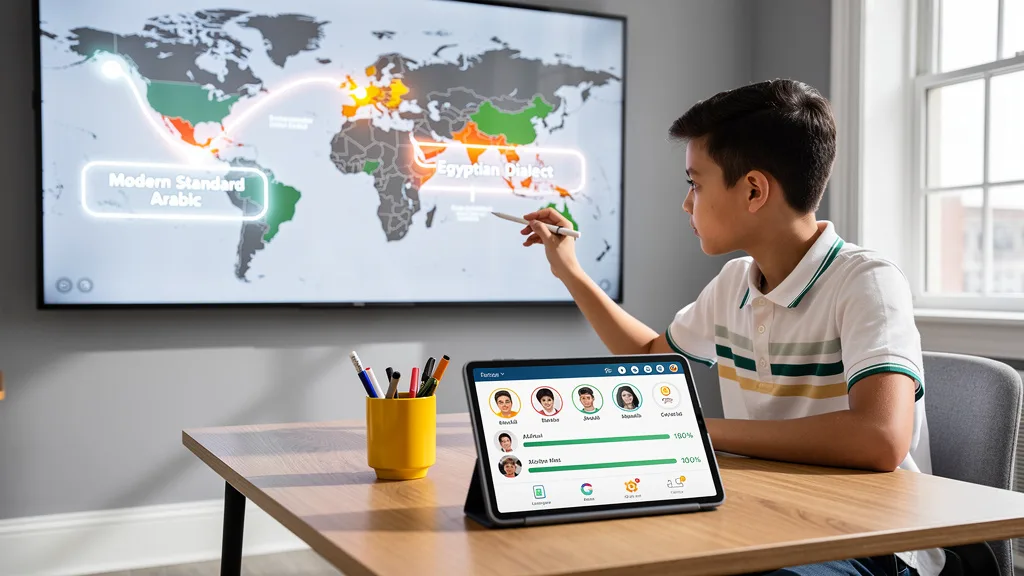
The primary advantage of online learning is access. You can connect with native-speaking tutors from around the world, access high-quality learning materials anytime, and progress at your own pace. However, this freedom requires self-motivation. To achieve fluency, you must actively engage with the material, practice speaking regularly, and consistently immerse yourself in the language beyond your scheduled lessons.
"The most successful online Arabic learners are those who combine structured lessons with daily practice. An app can build your vocabulary, but only consistent conversation with a native speaker can build true fluency. The effectiveness of any online program is ultimately measured by the student's commitment to using the language."
Ultimately, online programs provide the tools, but you must build the house. A blended approach often works best: using apps for daily reinforcement, following a structured course for grammatical foundations, and hiring a tutor for conversational practice. This combination ensures you are developing all key language skills: reading, writing, listening, and speaking.
Choosing Your Dialect: Modern Standard vs Egyptian Arabic
Before diving into a course, you must decide which form of Arabic you want to learn. The two most common starting points for learners are Modern Standard Arabic (MSA) and a major spoken dialect, like Egyptian Arabic. Your choice will depend entirely on your personal and professional goals for learning the language.
Understanding Modern Standard Arabic (MSA)
Modern Standard Arabic, or MSA (known as fusha), is the formal version of Arabic used in literature, news broadcasts, academic settings, and official communications across the Arab world. It is the direct descendant of the language of the Quran, making it essential for anyone interested in Islamic studies, journalism, or diplomacy. Learning MSA provides a strong foundation that makes it easier to understand the formal language used in any Arab country.
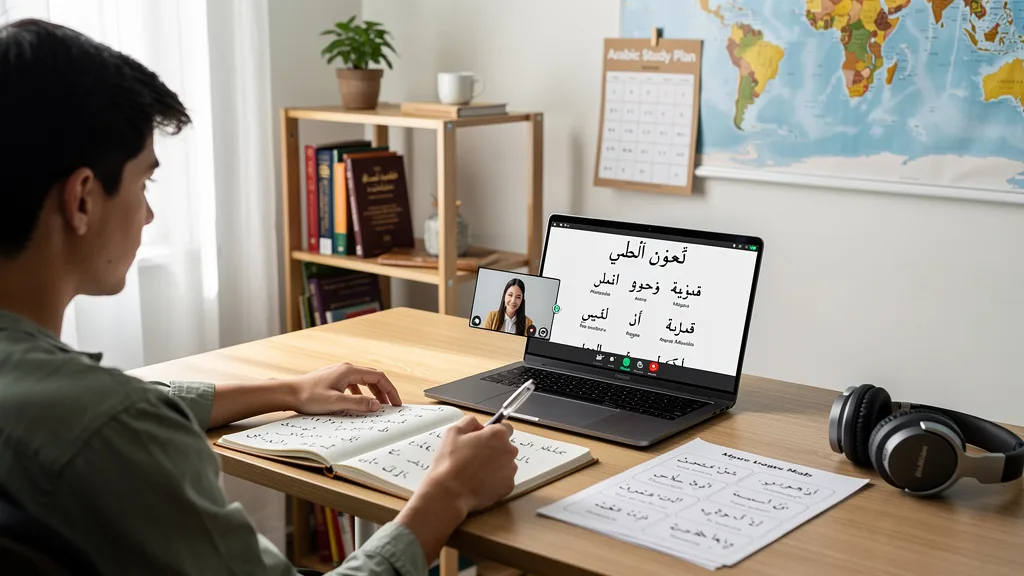
However, no one speaks MSA in their daily, informal conversations. While it allows you to read newspapers from Morocco to Oman, you may struggle to understand casual chats, movies, or music. Think of it like learning the formal English of a legal document; it's correct and universally understood in formal contexts, but it is not how people speak at home. For students focused on religious texts or professional communication, MSA is the ideal choice. Many learners also find that a solid grounding in MSA helps them pick up dialects more easily later on. For those specifically wanting to learn Quranic Arabic online, MSA is the foundational starting point.
Exploring Spoken Dialects like Egyptian Arabic
Spoken dialects, or 'ammiyya, are the languages of everyday life. Each region of the Arab world has its own distinct dialect, and they can be quite different from one another. Egyptian Arabic is one of the most widely understood dialects due to Egypt's significant influence on the region's film and music industries for decades. If your goal is to converse with people, travel, and understand popular culture, learning a dialect is essential.
Choosing Egyptian Arabic means you will be able to communicate effectively with over 100 million people in Egypt and be widely understood in many other Middle Eastern countries. Other popular dialects for learners include Levantine (spoken in Lebanon, Syria, Jordan, and Palestine) and Gulf (spoken in the GCC countries). Starting with a dialect makes conversation possible much faster, which can be highly motivating for many learners.
The Most Effective Online Arabic Courses in 2026
The market for online Arabic courses is vast, with options ranging from free mobile apps to university-level programs. The most effective course for you will depend on your budget, learning style, and commitment level. As of 2026, the top options can be grouped into three main categories: language apps, tutor marketplaces, and comprehensive online schools.
Language Apps: Babbel vs Duolingo vs Rosetta Stone
Language apps are excellent tools for building vocabulary and practicing basic grammar on the go. They use gamification and spaced repetition to make learning feel engaging and manageable in short bursts. However, they are generally insufficient on their own for achieving conversational fluency.
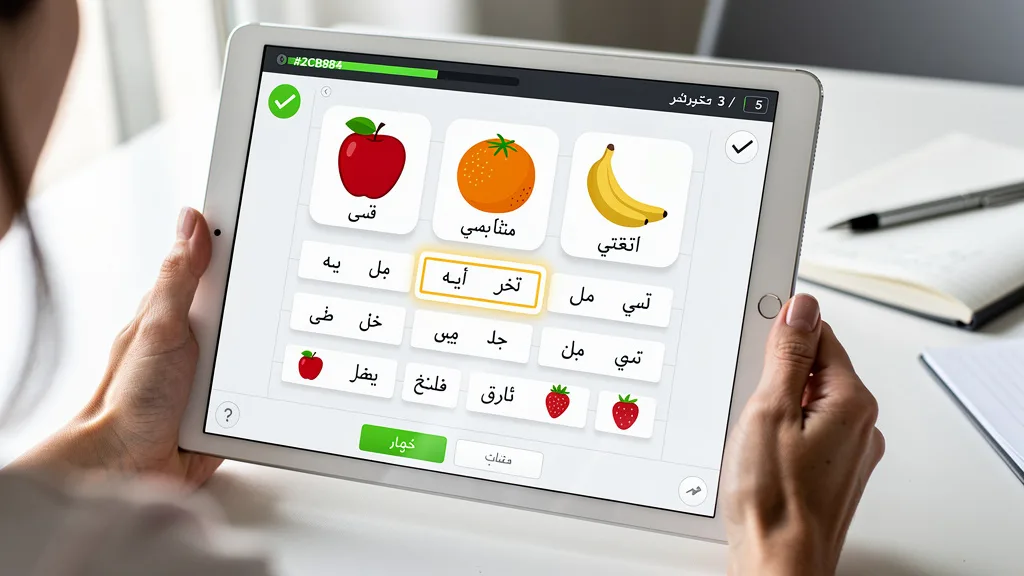
Duolingo is a popular free option that is great for absolute beginners learning the alphabet and basic phrases. Babbel offers more structured, grammar-focused lessons that are often considered more practical for building conversational skills. Rosetta Stone uses an immersive method with no English translation, forcing you to learn through context, which can be effective but challenging for some.
| Feature | Duolingo | Babbel | Rosetta Stone |
|---|---|---|---|
| Best For | Absolute beginners, vocabulary | Conversational phrases, grammar | Immersive learning, pronunciation |
| Dialect Taught | Modern Standard Arabic (MSA) | Modern Standard Arabic (MSA) | Modern Standard Arabic (MSA) |
| Pricing Model | Freemium | Subscription | Subscription |
| Speaking Practice | Limited (basic recognition) | Dialogue-based exercises | Advanced speech recognition |
While these apps are useful supplements, they rarely teach regional dialects and lack the personalized feedback of a live instructor. For a deeper dive into app-based learning, you might find a guide on the best free apps to learn Quranic Arabic helpful in making your choice.
Tutor Marketplaces: Natakallam vs italki
For those who prioritize speaking practice, tutor marketplaces are an invaluable resource. These platforms connect you with native Arabic speakers for one-on-one video lessons. This is arguably the fastest way to improve your conversational skills, pronunciation, and listening comprehension.
italki is one of the largest platforms, offering a vast selection of community tutors and professional teachers at various price points for numerous dialects. You can book lessons individually, providing maximum flexibility. Natakallam offers a unique social enterprise model, pairing learners with tutors from refugee and displaced communities, providing them with an economic lifeline. This adds a powerful social impact dimension to your learning experience. The personalized attention from a tutor helps correct mistakes and build confidence in a way that apps cannot replicate.
Comprehensive Online Schools and Programs
For the most structured and thorough approach, comprehensive online schools offer complete curricula that guide you from beginner to advanced levels. These programs often combine video lessons, interactive exercises, homework, and live classes with qualified instructors. They function like a traditional language school but with the convenience of online access.
Institutions like Hidayah Quran Academy and others provide curated learning paths, often specializing in areas like Quranic Arabic or specific dialects. These programs are ideal for serious learners who want a clear, step-by-step roadmap to fluency and prefer the accountability of a formal course structure. They represent a higher investment of time and money but often yield the most significant and well-rounded results.
Key Features of an Effective Online Arabic Program
When evaluating different online Arabic learning options, certain features consistently correlate with student success. Look for programs that incorporate a structured curriculum, interactive practice, and access to qualified, native-speaking instructors. These elements create a balanced learning environment that develops all your language skills.
Structured Curriculum and Clear Learning Paths
An effective program should have a logical progression, starting with the absolute basics and gradually building toward more complex topics. A clear curriculum ensures you are not just learning random vocabulary but are systematically mastering grammar, sentence structure, and conversational nuances. Look for a program that provides a syllabus or learning path so you can track your progress and understand what comes next.
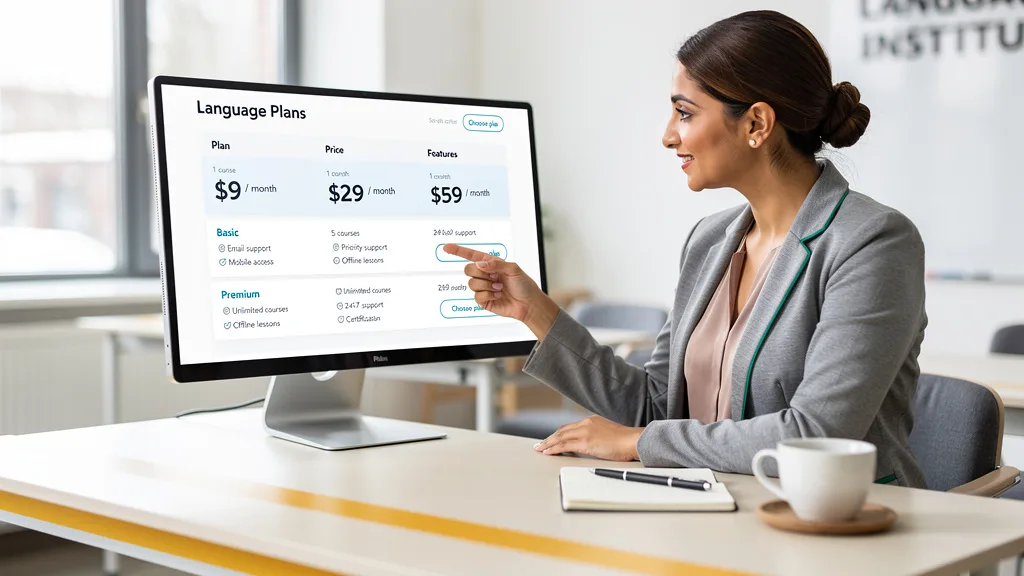
A well-designed curriculum should cover:
- The Arabic alphabet (alif-ba-ta) and pronunciation
- Basic vocabulary for everyday topics
- Core grammar concepts (e.g., verb conjugations, noun cases)
- Sentence construction and question formation
- Cultural context and etiquette
Interactive Exercises and Speaking Practice
Passive learning, like just watching videos, is not enough to master a language. The best online programs incorporate interactive exercises that force you to actively use what you have learned. This can include quizzes, fill-in-the-blanks, matching games, and flashcards. These activities help reinforce memory and make the learning process more engaging.
Most importantly, a program must provide opportunities for speaking practice. This could be through speech recognition software, virtual conversation groups, or, ideally, one-on-one sessions with a tutor. Speaking is a skill that must be practiced, and regular conversational exercises are non-negotiable for anyone aiming for fluency.
Qualified Native-Speaking Instructors
While technology is a powerful tool, the human element remains irreplaceable in language learning. Access to qualified, native-speaking instructors can dramatically accelerate your progress. A good teacher can correct your pronunciation, explain complex grammar points in a way you understand, and provide cultural insights that you cannot get from an app.
When looking for a tutor or an online school, inquire about the instructors' qualifications and experience. For specialized learning, such as Tajweed for Quranic recitation, finding a certified female Tajweed teacher online can provide a comfortable and expert-led learning environment. This personalized feedback and guidance are often what separates students who succeed from those who give up.
How Much Does It Cost to Learn Arabic Online?
The cost of learning Arabic online varies dramatically, ranging from completely free to several thousand dollars for a comprehensive program. Your total investment will depend on the method you choose, the intensity of your studies, and the level of personalization you desire. Understanding the different pricing models can help you budget effectively for your language goals.
Subscription App Pricing Tiers
Language learning apps typically operate on a subscription model. Free versions, like Duolingo's, are supported by ads and have limited features. To unlock the full experience, you will need to subscribe to a premium plan. As of 2026, you can expect to pay anywhere from $7 to $15 per month for most major apps like Babbel or Duolingo Plus. Longer-term subscriptions (e.g., yearly or lifetime) often offer a significant discount.
Private Tutor Rates Per Hour
Hiring a private tutor through a marketplace like italki is one of the most cost-effective ways to get personalized instruction. Prices are set by the individual tutors and vary based on their qualifications, experience, and location. You can find community tutors for conversational practice for as little as $5-$10 per hour. Professional, certified teachers typically charge between $15 and $30 per hour. This flexible model allows you to control your spending based on your needs and budget. A comprehensive breakdown of Arabic classes cost can provide more detailed insights.
Full Course Enrollment Fees
Comprehensive online courses from language schools or universities represent the highest cost. These programs offer a complete package, including a structured curriculum, learning materials, and access to instructors. Prices can range from a few hundred dollars for a self-paced course to several thousand dollars for a university-affiliated program that may offer academic credit. While more expensive, these courses provide the most structure and support, making them a worthwhile investment for serious learners.
Free Resources for Learning the Arabic Alphabet
Starting your Arabic journey does not have to cost anything. There is a wealth of high-quality free resources available online, especially for mastering the foundational skill of reading and writing the Arabic alphabet. Before committing to a paid course, you can build a strong base using these tools.
Many learners find that a combination of videos, websites, and printable charts is the most effective way to memorize the 28 letters and their various forms. Here are some of the best free resources to get you started:
- YouTube Channels: Numerous channels offer entire series dedicated to teaching the Arabic alphabet. Look for videos that clearly demonstrate how to pronounce each letter and show the proper stroke order for writing it.
- Language Learning Websites: Websites like Madinah Arabic and various university resource pages offer free interactive lessons on the alphabet, often with audio clips and quizzes.
- Printable Charts and Worksheets: A quick search will yield hundreds of free, printable PDF charts of the Arabic alphabet. You can also find worksheets to practice tracing and writing the letters by hand.
- Alphabet Apps: There are many free mobile apps specifically designed to teach the Arabic alphabet through flashcards and games. These are perfect for practicing on the go.
Using these resources, you can become comfortable with reading and writing basic Arabic script within a few weeks. This will give you a significant head start when you decide to enroll in a more structured program or work with free qualified teachers in trial sessions.
Key Takeaways
Navigating the world of online Arabic learning can be overwhelming, but focusing on a few core principles can lead to success. To make your online Arabic learning effective, remember these key points from our 2026 guide:
- Effectiveness is User-Dependent: Online tools are highly effective, but they require your discipline and active engagement. A blended approach combining apps, courses, and live practice yields the best results.
- Choose Your Dialect Wisely: Decide early whether to learn Modern Standard Arabic (MSA) for formal and written communication or a spoken dialect like Egyptian for conversation and media.
- Select the Right Tool for the Job: Use apps for vocabulary, tutor marketplaces for speaking practice, and comprehensive courses for structured, in-depth learning. No single tool does it all.
- Prioritize Core Features: Look for programs with a structured curriculum, interactive exercises, and access to qualified, native-speaking instructors for personalized feedback.
- Budget Accordingly: Costs can range from free to thousands of dollars. Determine your budget and choose a method that offers the best value for your goals, whether it's a subscription app, hourly tutoring, or a full course enrollment.
Frequently Asked Questions
Which apps are best for learning conversational Arabic?
For conversational Arabic, apps that focus on dialogue and practical phrases are more effective than those that only teach isolated vocabulary. Babbel is often recommended for its conversation-based lessons that simulate real-world scenarios. Pimsleur is another excellent option that uses an audio-based method to build your speaking and listening skills from day one.
While these apps provide a strong foundation, they should be supplemented with practice with native speakers. Apps like HelloTalk or Tandem connect you with language exchange partners for free, allowing you to practice your conversational skills via text and voice messages with real people.
How long does it typically take to learn Arabic online?
The time it takes to learn Arabic depends on several factors, including your native language, the intensity of your study schedule, and your definition of "learned." The U.S. Foreign Service Institute estimates it takes approximately 2200 class hours (88 weeks) for a native English speaker to reach professional working proficiency in Arabic, placing it in the most difficult category of languages.
However, you can achieve conversational basics much faster. With consistent daily study (around one hour per day) using effective online resources, most learners can expect to handle basic introductions and simple conversations within 6-12 months. Reaching fluency is a long-term commitment that takes years of dedicated practice.
Can I become fluent in Arabic using only free resources?
While it is theoretically possible to become fluent using only free resources, it is extremely challenging and requires immense self-discipline and resourcefulness. You would need to piece together a curriculum from YouTube videos, free websites, language exchange apps, and public library materials. The biggest challenge would be the lack of a structured path and the absence of personalized feedback from a qualified teacher.
Most learners find that investing in at least one paid resource, such as an affordable private tutor or a structured course, provides the guidance and accountability needed to progress efficiently. Free resources are best used as supplements to a core learning program.
What is the hardest part of learning Arabic for English speakers?
For most English speakers, the most difficult aspects of learning Arabic are the new sounds, the grammar, and the script. Arabic has several guttural sounds that do not exist in English, and mastering their pronunciation takes significant practice. The grammar is also challenging, with its root system, verb conjugations, and gendered nouns that differ greatly from English.
The script, which is written from right to left and in which letters change shape depending on their position in a word, also presents an initial hurdle. However, with consistent practice, most learners find they can master the alphabet and reading basics relatively quickly. Overcoming these challenges requires patience and a good learning strategy.
Is it better to learn Arabic with a live tutor or an app?
The best approach is to use both. An app and a live tutor serve different but complementary purposes. Apps are fantastic for building a foundational vocabulary, practicing grammar drills, and fitting learning into a busy schedule. They are convenient, low-cost, and great for repetition.
A live tutor, on the other hand, is essential for developing real conversational skills. A tutor can correct your pronunciation in real-time, answer your specific questions, tailor lessons to your needs, and build your speaking confidence. Using an app for daily practice and meeting with a tutor once or twice a week is an ideal combination for making steady and well-rounded progress.
Conclusion
In 2026, learning Arabic online is more effective and accessible than ever before. By choosing the right dialect for your goals, combining the strengths of different learning tools, and prioritizing consistent practice, you can successfully navigate the path to proficiency. The key is to move beyond passive learning and actively engage with the language through structured lessons and, most importantly, conversation with native speakers. This proactive approach will transform your study from a simple hobby into a tangible skill.
If you are a sister or are looking for classes for your children, finding a comfortable and private learning environment is key. Hidayah Quran Academy offers one on one classes with qualified female teachers to help you or your children learn Quranic Arabic with confidence and personalized attention. Start your journey today with a no-obligation trial session. We invite you to Book Free Trial.