
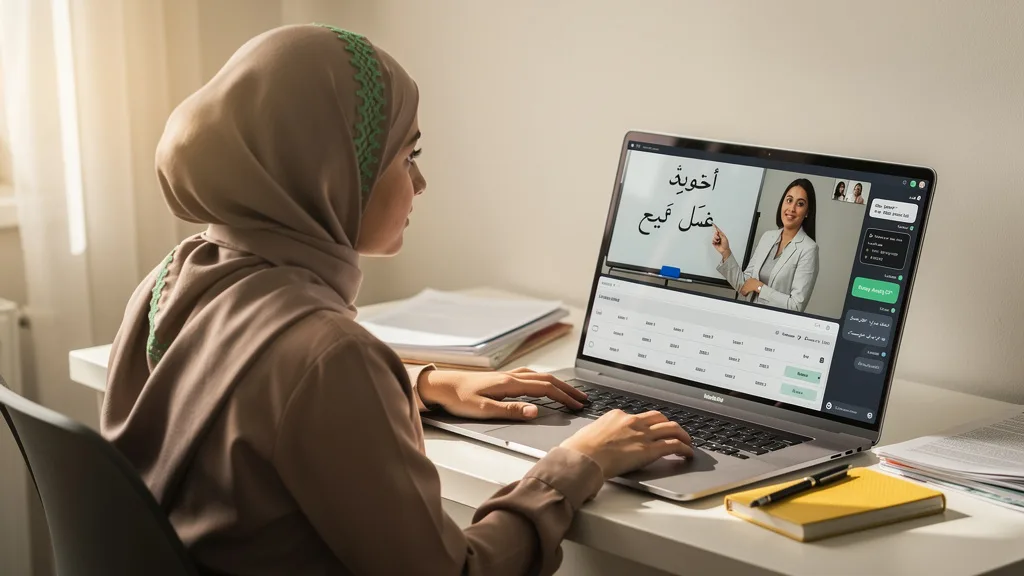
Are you looking for a way to learn the beautiful Arabic language without the high cost of traditional classes? Finding credible resources can feel overwhelming, but it is entirely possible to begin your journey with excellent guidance at no initial cost. In 2026, the digital landscape is rich with opportunities for dedicated learners.
You can learn Arabic online for free by leveraging trial lessons from professional tutoring sites, using free tiers of language apps, watching educational YouTube channels, and enrolling in university MOOCs. The key is to find platforms that vet their instructors and to supplement self-study with opportunities for live practice, ensuring you connect with qualified teachers who can guide your progress effectively.
How to Find Free Arabic Classes with Qualified Teachers in 2026
The first step in your language journey is identifying where to find credible instruction. While completely free, long-term tutoring from a professional is rare, many avenues provide access to qualified teachers for free, especially at the beginning. These initial interactions are crucial for building a solid foundation in pronunciation and grammar.
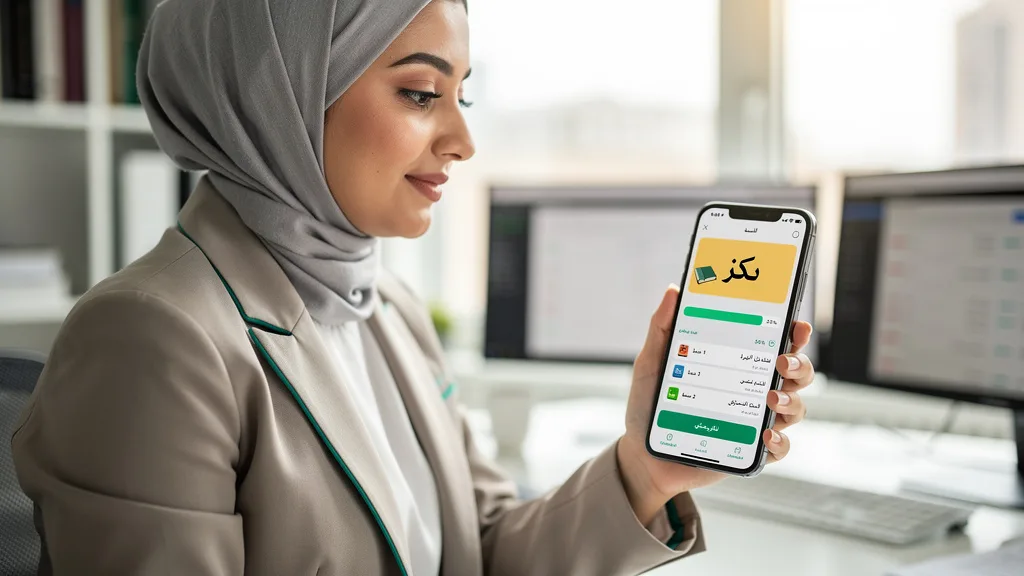
Your goal is to find a balance between structured learning materials and real human interaction. A combination of self-paced resources and live practice with a knowledgeable guide is the most effective strategy. This approach helps you stay motivated and ensures you are learning the language correctly from the start.
Identifying Platforms with Vetted Instructors
Many online platforms connect students with language tutors, but not all have the same quality control. Look for services that have a clear vetting process for their instructors. These platforms often require teachers to submit qualifications, undergo interviews, and provide proof of their experience. While many of these are paid services, they are excellent places to find professionals for trial lessons.
A vetted platform gives you peace of mind, knowing that the teachers have been evaluated for their proficiency and teaching ability. This is especially important when learning a language with a different script and complex grammar like Arabic. You want to ensure your first teacher sets you on the right path, not one who teaches incorrect habits that are difficult to unlearn later.
Leveraging Community Tutors and Language Exchange Partners
Language exchange websites and apps offer a fantastic way to practice speaking for free. On these platforms, you can find a native Arabic speaker who wants to learn English or another language you speak. You then arrange to spend half the time speaking in Arabic and half the time in their target language. This method is excellent for improving conversational skills and cultural understanding.
While community tutors on these platforms may not be professional teachers, they provide invaluable real-world practice. This informal setting can be less intimidating for beginners. It allows you to use what you have learned in a practical context, build confidence, and make new friends from around the world. Just be mindful that they are not trained to teach grammar, so this should supplement more structured learning.
Utilizing Trial Lessons from Professional Tutoring Sites
One of the best ways for someone wondering how to learn Arabic online free with qualified teachers is to take advantage of free trial lessons. Many reputable online academies and tutoring services offer a complimentary introductory session, typically around 30 minutes. This allows you to meet a teacher, experience their teaching style, and assess if their approach fits your learning needs without any financial commitment.
These trials are not just a sales pitch; they are a genuine opportunity to receive expert instruction. A qualified teacher can provide valuable feedback on your pronunciation and give you a structured plan for your first few steps. For instance, many services provide free online Quran classes for sisters and beginners that include an introduction to the Arabic alphabet, serving as a perfect starting point.
Top Resources for Free Online Arabic Courses
Beyond live tutoring, a wealth of self-study resources can form the backbone of your learning program. These tools are perfect for learning vocabulary, understanding grammar rules, and practicing reading and listening skills at your own pace. Combining these resources will create a comprehensive and flexible learning experience.
The key is to choose high-quality materials from reputable sources. From university-level courses to engaging mobile apps, you can build a full curriculum without spending a dime. Consistency is more important than the specific resource you choose, so find tools that you enjoy using and can incorporate into your daily routine.
University MOOCs and Open Courseware
Many world-renowned universities offer Massive Open Online Courses (MOOCs) through platforms like Coursera and edX. You can often audit these courses for free, giving you access to all the lecture videos, readings, and assignments. These courses are designed by academic experts and provide a structured, high-quality introduction to Arabic.
Additionally, some universities have Open Courseware initiatives, publishing course materials directly on their websites for public access. While you will not get direct interaction with a professor or a certificate, the content is top-tier. This is an excellent option for disciplined, self-motivated learners who appreciate an academic approach to language learning.
Comprehensive Language Learning Apps with Free Tiers
Language learning apps have become incredibly popular for their convenience and gamified approach to learning. Many of the top apps, such as Duolingo and Memrise, offer robust free versions that can teach you the basics of Arabic, from the alphabet to vocabulary and sentence structure. These apps are great for daily practice and reinforcing what you learn elsewhere.
When choosing an app, look for one that focuses on both the script and pronunciation. Some apps are specifically designed for Quranic Arabic, which can be a great entry point. For a detailed comparison, exploring a list of the best free apps to learn Quranic Arabic in 2026 can help you find the perfect tool for your goals.
Educational YouTube Channels from Native Arabic Speakers
YouTube is a treasure trove of free Arabic lessons from native speakers. You can find channels dedicated to teaching everything from the alphabet and basic phrases to complex grammar and different dialects. Many creators offer structured playlists for beginners, essentially providing a full course for free.
"Finding a qualified teacher, even for a free trial lesson, is the most critical first step. An expert can correct your pronunciation of letters like 'ayn' (ع) and 'ḥā' (ح) from day one, which self-study apps often cannot do. This early guidance prevents long-term mistakes and accelerates your entire learning process."
The advantage of YouTube is the visual and auditory component, which is crucial for mastering pronunciation. Look for channels with clear audio, good explanations, and positive comments from other learners. Subscribing to a few high-quality channels can provide a steady stream of new content to keep your learning fresh and engaging.
Strategies for the Easiest Way to Learn Arabic at Home
Learning a new language, especially one as rich as Arabic, is a marathon, not a sprint. The "easiest" way to learn is the one you can stick with consistently. Creating a sustainable study habit and using effective learning strategies will make the process feel more manageable and rewarding.
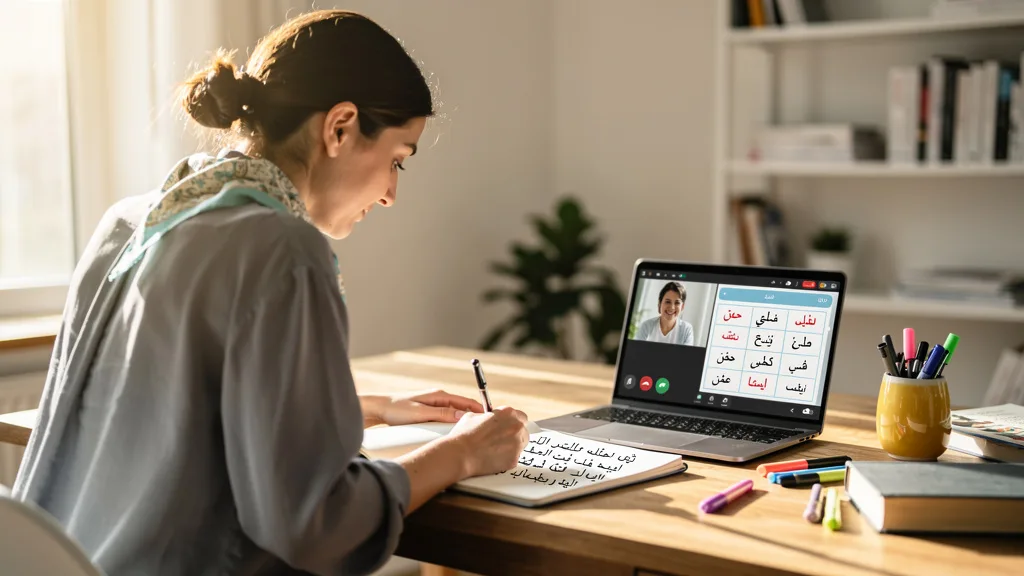
Focus on practical application and immersion rather than just rote memorization. The goal is to use the language, not just know about it. By integrating Arabic into your daily life, you will make faster progress and find the learning journey more enjoyable.
Creating a Consistent and Realistic Study Schedule
Consistency is the single most important factor in language learning success. It is far more effective to study for 30 minutes every day than to cram for four hours once a week. Create a realistic schedule that fits into your life. Whether it is during your morning coffee, on your lunch break, or before bed, find a dedicated time for Arabic.
Use a calendar or planner to block out your study time and treat it like any other important appointment. Start small, perhaps with just 15-20 minutes a day, and gradually increase the duration as you build the habit. This steady, consistent effort will build momentum and lead to significant progress over time.
Focusing on Practical Conversation Skills from Day One
Many learners get stuck in the trap of endlessly studying grammar rules and vocabulary lists without ever speaking. To avoid this, prioritize practical conversation skills from the very beginning. Learn common greetings, how to introduce yourself, and how to ask simple questions. Platforms offering access to Online Arabic tutors & teachers can be a good place to find conversation partners.
Practice speaking out loud, even if you are just talking to yourself. Repeat phrases you hear in videos or apps. The physical act of producing the sounds of Arabic will build muscle memory and make you more confident when you have the chance to speak with a native speaker. The goal is communication, not perfection.
Immersing Yourself with Arabic Media and Content
Immersion is a powerful tool for accelerating your learning. Surround yourself with the Arabic language as much as possible. Listen to Arabic music, watch children's shows or movies with subtitles, and try listening to podcasts for learners. Even if you do not understand everything, you will be training your ear to the sounds and rhythm of the language.
Change the language settings on your phone or social media apps to Arabic for a few hours a day. Label items around your house with their Arabic names. The more you expose your brain to the language in different contexts, the more naturally you will begin to acquire it. This passive learning is an excellent complement to your active study sessions.
How to Vet the Quality of a Free Arabic Tutor
When you find a potential tutor, especially through a free trial or language exchange, it is important to assess their quality. Not every native speaker is a good teacher. A great tutor has a deep understanding of the language and knows how to explain concepts clearly to a non-native speaker. Here is how to evaluate them.

Taking a few minutes to check a teacher's background and teaching style can save you hours of frustration later. A good match will make your learning experience more effective and enjoyable, setting a strong foundation for your future studies.
Reviewing Teacher Profiles and Student Feedback
On any tutoring platform, the teacher's profile is your first source of information. Read it carefully. Look for details about their teaching experience, their approach to lessons, and the dialects they teach. Many professional arabic tutors will have detailed profiles outlining their methodology.
Most importantly, read the reviews and ratings from other students. Look for comments that mention the teacher's patience, clarity, and ability to tailor lessons to individual needs. Consistent positive feedback is a strong indicator of a quality instructor. Pay attention to reviews from learners who were at the same level as you are now.
Assessing Their Teaching Style in Introductory Videos
Many tutors post short introductory videos on their profiles. Watch these videos to get a feel for their personality and teaching style. Do they seem friendly and approachable? Is their audio clear and easy to understand? Do they speak in a way that is accessible to beginners?
This short video is your first glimpse into what a lesson with them would be like. A well-made intro video shows that the tutor is professional and serious about their online teaching. It can help you decide if their energy and communication style are a good fit for you before you even book a trial lesson.
Checking for Formal Education or Teaching Certifications
While not always necessary, formal qualifications can be a strong sign of a dedicated and knowledgeable teacher. Look for certifications in teaching Arabic as a foreign language (like TAFL) or degrees in Arabic literature or linguistics. For those interested in learning Quranic Arabic, a teacher with an Ijazah (a license to teach the Quran) is the gold standard.
For example, knowing that many of the best instructors are certified by prestigious institutions gives learners confidence. Understanding how Al Azhar teachers make Quran learning effective demonstrates the value of formal training. These qualifications show that the teacher has not only mastered the language but has also studied the pedagogy of how to teach it effectively.
Can You Get a Certificate from a Free Online Arabic Course?
A common question from learners is whether free courses provide a certificate upon completion. Generally, most free resources like YouTube channels, language apps, and informal exchanges do not offer certificates. Their primary purpose is to help you acquire language skills, not to provide formal credentials.
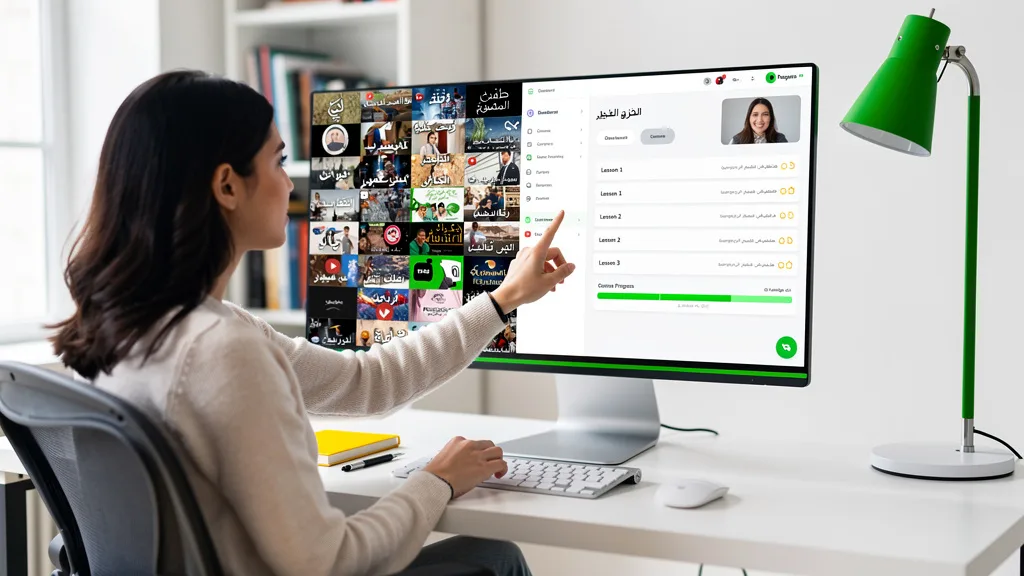
However, some university MOOCs on platforms like Coursera or Arab Academy offer an option to receive a verified certificate for a small fee. While you can audit the course material for free, the certificate requires payment. It is important to ask yourself why you want the certificate. If your goal is fluency, the skill itself is far more valuable than the paper. If you need it for a job or academic credit, then exploring the paid certificate track of a MOOC might be worthwhile.
Paid vs. Free Online Arabic Learning: A Comparison
While free resources are an amazing starting point, it is helpful to understand their limitations compared to paid options. Paid lessons typically offer a more personalized and structured experience. This comparison can help you decide when it might be time to invest in your learning, even with a modest budget. You can find more details in a comprehensive Arabic classes cost guide.
| Feature | Free Resources (Apps, YouTube) | Paid Tutors/Courses |
|---|---|---|
| Personalization | Generic content for a mass audience. No individual feedback. | Lessons tailored to your specific goals, pace, and learning style. |
| Teacher Interaction | None or limited to public comments. No live correction. | Direct, one-on-one interaction with a qualified teacher for instant feedback. |
| Structure & Curriculum | Often disjointed. You must build your own curriculum. | A structured, logical path from beginner to advanced levels. |
| Accountability | Relies entirely on self-discipline. Easy to skip sessions. | Scheduled lessons and teacher expectations provide motivation and accountability. |
| Speaking Practice | Limited to repetition. No real conversation. | Dedicated time for live conversation and pronunciation correction. |
Key Takeaways
Embarking on your Arabic learning journey is an exciting endeavor. As you navigate the many resources available, keep these core principles in mind to maximize your success and stay motivated. Arab Academy.
- Utilize Free Trials: The best way to access a qualified teacher for free is through trial lessons offered by professional online academies.
- Combine Resources: A mix of self-study apps, YouTube videos, and language exchange provides a well-rounded, no-cost education.
- Prioritize Consistency: Short, daily study sessions are more effective than infrequent, long ones. Create a realistic schedule and stick to it.
- Vet Your Tutors: Always check reviews, watch introductory videos, and look for formal qualifications to ensure you are learning from a credible source.
- Focus on Speaking: From day one, practice speaking out loud to build confidence and conversational fluency.
Frequently Asked Questions
What is a realistic timeline for learning basic Arabic for free?
Here are answers to some common questions new learners have when starting their Arabic studies online.
How much time should I dedicate daily to learning Arabic online?
With consistent daily practice (30-60 minutes), most learners can grasp the Arabic alphabet, basic greetings, and simple sentence structures within 3 to 6 months. Reaching a conversational level where you can handle everyday topics will likely take over a year of dedicated effort using a combination of free resources and practice.
Are free resources enough to become fluent in Arabic?
The timeline heavily depends on your starting point, the time you invest, and the quality of your learning materials. Focusing on a specific dialect, like Modern Standard Arabic (MSA) or a regional dialect, can also help you progress faster in that particular area.
What are the main dialects of Arabic I can learn online?
Aim for at least 20-30 minutes of focused study every day. Consistency is more important than duration. This could be 15 minutes on a vocabulary app and 15 minutes watching a lesson on YouTube. If you have more time, 45-60 minutes a day will yield much faster results, especially if it includes speaking practice.
Can I learn to read the Quran through free online Arabic courses?
It is best to create a sustainable habit. If you try to do too much too soon, you risk burning out. Start with a manageable goal and gradually increase your study time as you become more comfortable and motivated by your progress.
While it is theoretically possible, achieving a high level of fluency using only free resources is extremely difficult. Free tools are excellent for reaching a beginner or intermediate level. However, to reach fluency, you typically need the personalized feedback, structured curriculum, and advanced conversation practice that a qualified, paid teacher provides.
Free resources often lack the structure and expert correction needed to overcome intermediate plateaus. Think of free resources as the perfect way to start your journey and build a strong foundation before deciding to invest in more advanced, personalized instruction to achieve fluency.
Online resources are available for several Arabic dialects. The most common ones you will find are Modern Standard Arabic (MSA), which is used in news and formal writing, and Egyptian Arabic, which is widely understood due to Egypt's film and media industry. You can also find resources for Levantine Arabic (spoken in Lebanon, Syria, Jordan, and Palestine) and Gulf Arabic.
For beginners, starting with MSA is often recommended as it provides a strong foundation in grammar and vocabulary that is applicable across the Arab world. After mastering the basics of MSA, you can then branch out to learn a specific dialect that interests you for travel, work, or family connections.
Yes, you can certainly begin to learn to read the Quran using free resources. Many online courses and apps focus specifically on the Arabic alphabet and Tajweed (the rules of recitation). These tools are designed to help you recognize the letters, learn their sounds, and begin piecing together words from the Quran.
However, for accurate pronunciation and a deep understanding of Tajweed, guidance from a qualified teacher is highly recommended. Many free trial lessons for Quranic studies focus on these foundational skills, providing an excellent starting point for your spiritual and educational journey.
Conclusion
Learning Arabic online for free in 2026 is more accessible than ever. By strategically using free trials with qualified teachers, leveraging high-quality apps and university courses, and committing to a consistent practice schedule, you can build a strong foundation in this rich language. The key is to move from passive learning to active practice and seek expert feedback early to ensure you are on the right track. Your journey to understanding Arabic begins with that first, informed step.
For sisters and children seeking a private, comfortable environment to start this journey, a trial lesson can be the perfect introduction. We invite you to experience our one-on-one approach with a qualified female teacher. Book Free Trial.