
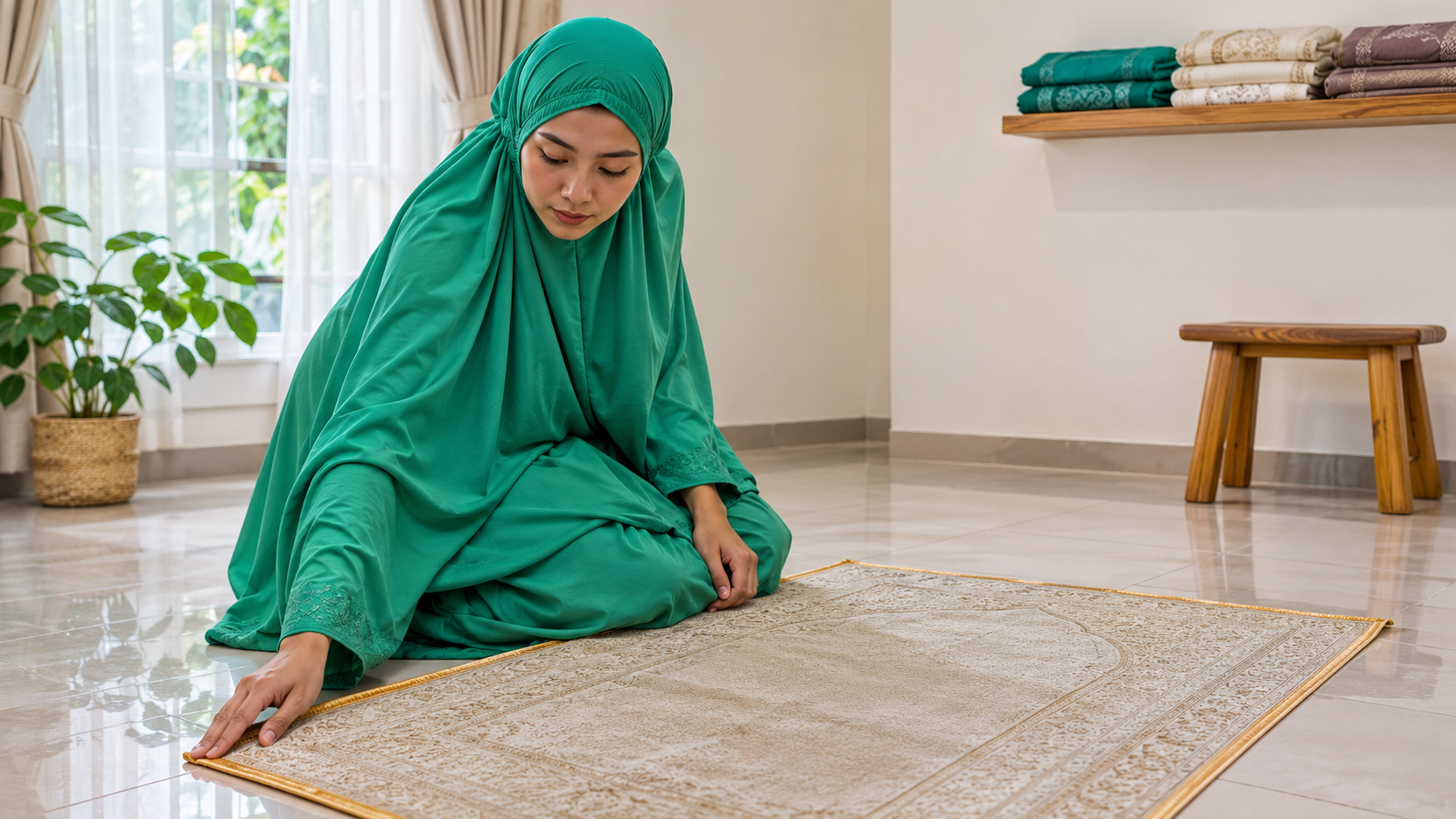
When a decision weighs on you and you feel unsure what to do next, how do you turn to Allah in prayer? If you want to learn how to pray Salatul Hajat step by step, perform wudu, face the qiblah, and pray two voluntary rak’ahs. End with salam, then ask Allah for your need in du’a.
For this prayer of need, make your intention in your heart and follow the familiar two rak’ah prayer sequence. Recite Al Fatiha and another passage of the Quran in each rak’ah, then finish with the final sitting and salam. Afterward, praise Allah, send blessings upon the Prophet Muhammad ﷺ, and make your request in words you understand.
Preparing for Salatul Hajat
Prepare for Salatul Hajat as you would for another voluntary prayer by checking your ritual purity, clothing, prayer space, and direction. Choose a clean spot with enough room to stand, bow, and prostrate comfortably. If you are learning the movements, review them first so you can give the prayer your attention once you begin.

Salatul Hajat is the name commonly given to voluntary prayer offered when you want to ask Allah for help with a particular need. That need might be a decision about work, a family difficulty, or the strength to handle a situation patiently. The Quran connects seeking help with patience and prayer, a principle you can reflect on before you begin. Surah Al Baqarah 2:153
Perform Wudu and Face the Qiblah
Make wudu if you need to renew it, then face the qiblah, the direction toward the Ka’bah in Makkah. If you already have valid wudu, you can pray with it. Follow the ablution steps you have learned, taking enough time to wash each area properly.
If you are unsure which way to face, use a mosque’s prayer direction, ask someone familiar with the location, or check a reliable qiblah compass. At home, identifying the direction once can make it easier to set up for future prayers. Check your clothing and prayer space before standing so you can begin without distractions.
Make Your Intention to Pray
Make the niyyah, or intention, in your heart that you are offering two voluntary rak’ahs for Allah and will ask Him for help. A spoken formula is unnecessary. If you have several concerns on your mind, you can bring them up once you reach the du’a. Surah Al Baqarah 2:153.
Pause briefly if you have rushed from another task and need a moment to settle. Decide what you are about to do, then begin the prayer with the opening takbir. You can explain the details of your situation after salam, when you have time to speak plainly and at your own pace.
How to Perform the Hajat Prayer
Perform the Hajat prayer as two voluntary rak’ahs, using the same basic recitation and movements you know from salah. Each rak’ah includes standing, bowing, and two prostrations. The second also leads into the final sitting and salam.
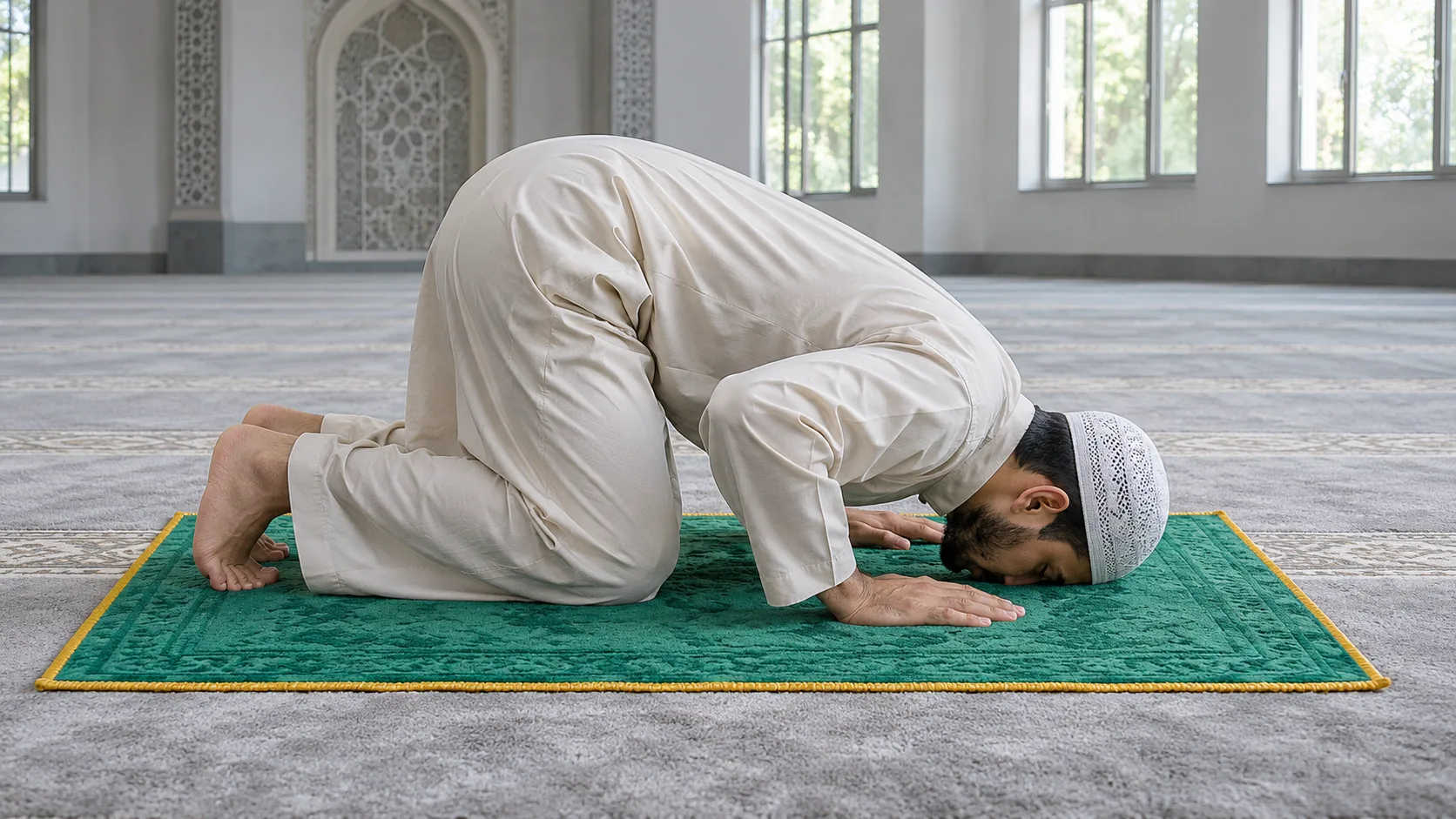
Move at a steady pace so you can complete each posture before going on. If you are still learning what to say in each position, review our guide to praying namaz before you start. Use the details taught in your school of prayer for the opening supplication, the words in each posture, and the final sitting.
| Part of the prayer | What you do |
|---|---|
| First rak’ah | Begin with takbir, recite, bow, rise, and complete two prostrations. |
| Second rak’ah | Stand to recite again, then bow, rise, and complete two prostrations. |
| Final sitting and salam | Recite the tashahhud and the concluding supplications you have learned, then give salam. |
| Du’a after prayer | Praise Allah, send blessings upon the Prophet ﷺ, and ask for your need. |
Step 1: Begin the First Rak’ah
Stand facing the qiblah and say Allahu akbar to begin the first rak’ah. Follow your usual opening recitation, then read Al Fatiha and another surah or passage you know. Choose a short passage you can recite clearly, such as Surah Al Ikhlas if you have learned it.
Bow into ruku and say the remembrance you normally recite while bowing. Rise fully, then go into the first sujud, sit briefly, and make the second sujud. Stand for the next rak’ah after you complete that second prostration.
Step 2: Complete the Second Rak’ah
In the second rak’ah, recite Al Fatiha and another surah or Quran passage while standing. Bow, rise back to standing, and perform two prostrations with a brief sitting between them. After the second prostration, stay seated for the final part of the prayer.
Recite the tashahhud, often called At Tahiyyat, in the final sitting. Continue with the blessings upon the Prophet ﷺ and any concluding supplication you have learned for this position. If you are practising the order outside prayer, pair each recitation with its posture so you can remember when it belongs.
Step 3: End With Salam
End the prayer by giving salam as you normally do, turning to the right and then to the left if that is the practice you follow. A familiar wording is As salamu alaykum wa rahmatullah, which asks for peace and Allah’s mercy. With the salam complete, you have finished the two rak’ahs.
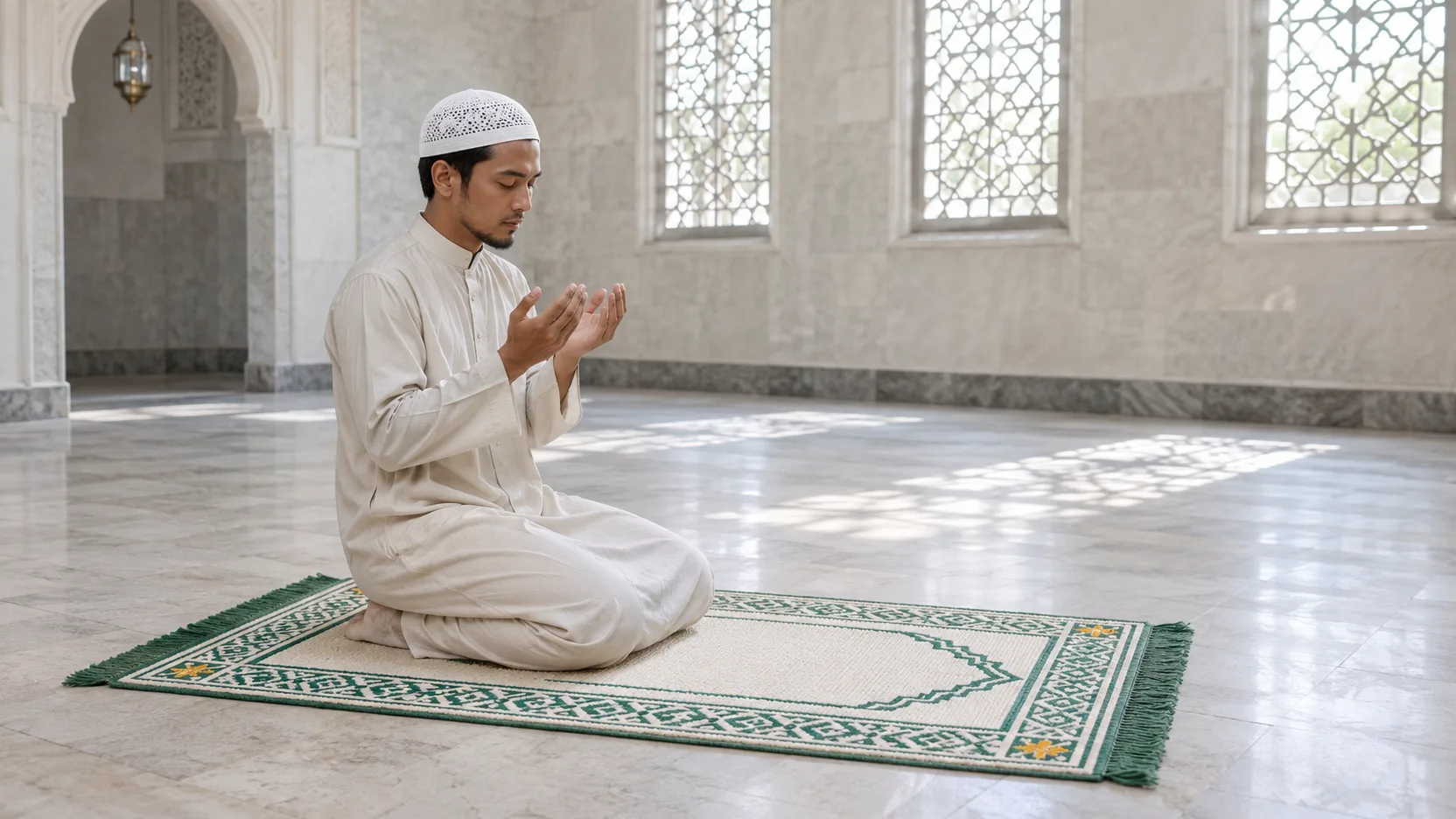
You can remain seated for du’a and take a moment to gather your thoughts. Begin with praise, then describe the need that brought you to the prayer. If you find yourself searching for the right words, start with one plain sentence about the help you are asking Allah to give you.
Making Du’a for Your Need
After salam, make du’a by praising Allah, sending blessings upon the Prophet ﷺ, and asking for what you need. You can speak in English or another language you understand when making this supplication outside the prayer. Take enough time to express both your immediate concern and the help you need to respond to it.
You can make a personal request even if you have yet to learn a longer Arabic supplication. If you want help forming your request, our Salatul Hajat du’a guide gives you wording to reflect on. You can also ask for qualities that will help you through the situation, such as patience, sound judgment, and courage.
Praise Allah Before Your Request
Begin your du’a with praise such as Alhamdulillah, which means that all praise belongs to Allah. You can thank Him for a blessing you recognise or call upon Him by a name connected to your need. For example, you might call upon Allah as Al Hakim, the All Wise, when you are seeking sound judgment.
Then send blessings upon the Prophet Muhammad ﷺ using wording you know. If you have memorised the blessings you recite in the final sitting of salah, you can use that familiar wording. Give yourself time to consider what you are saying before moving to your request.
Ask for What You Need
State the need plainly and ask Allah to grant what is good for you. If you are facing a difficult conversation, you might ask for calm, honest words, and a fair resolution. If the answer affects other people, you can also ask Allah to protect their well-being and guide you in how you treat them.
After making du’a, consider what action is within your reach. You might seek advice from someone you trust, gather information, or make a decision once you have had time to think. The following reflection gives you a way to connect your request with your next step.
“As you learn how to pray Salatul Hajat step by step, ask Allah for what is good and for the wisdom to act on what you can do today.”
Key Takeaways
The sequence to remember is wudu and qiblah, two voluntary rak’ahs, salam, then du’a. If you can already perform a two rak’ah prayer, you can use that familiar pattern when a need arises. Give yourself enough time afterward to make a thoughtful request.
When you practise, pay particular attention to the point where the two rak’ahs differ. You stand after the second prostration in the first rak’ah and sit after the second prostration in the final rak’ah. Once you know where the prayer ends, you can move into your personal supplication with confidence.
- Check your wudu, face the qiblah, and make your intention.
- Complete two rak’ahs, the final sitting, and salam.
- Praise Allah, send blessings upon the Prophet ﷺ, and make your request.
Frequently Asked Questions
How does Salatul Hajat differ from Tahajjud?
Salatul Hajat is a voluntary prayer associated with a need, and questions about it often concern when to offer it or how it relates to other prayers. Knowing what each prayer is for helps you decide how to use the time available to you. Your school of practice can also help you apply general guidance to your local prayer schedule.
Is Salatul Hajat sunnah or nafl?
A need can arise at any hour, and you can turn to Allah in du’a when it does. If you want to offer voluntary salah as well, check whether the time is suitable. With a personal decision such as marriage, it also helps to distinguish asking for assistance from seeking guidance about a specific choice.
Can you pray Salatul Hajat for marriage?
Salatul Hajat is offered for a need. Tahajjud is voluntary night prayer, commonly understood as prayer after sleeping and waking before Fajr. You can make du’a for your need during that part of the night as well.
When can you pray Salatul Hajat?
If you already get up for Tahajjud, you can include your request in your supplication. You can also offer a separate voluntary prayer when the time permits. Our guide covers Salatul Hajat after Tahajjud.
You can pray the two rak’ahs as nafl, meaning voluntary prayer. Scholars differ on the strength of the narration describing a specifically prescribed Hajat prayer and its wording. That affects how confidently they attribute the specific form to the Sunnah.
The commonly cited narration appears in the hadith collection of Al Tirmidhi. You can offer voluntary salah and ask Allah for help using a personal supplication. For the transmitted wording and Al Tirmidhi’s comments, see the hadith entry. Jami at Tirmidhi 479 Jami at Tirmidhi 479.
Yes, you can pray Salatul Hajat and ask Allah for a suitable spouse. You can ask for someone of good character and for a marriage that brings well-being to you both. You may also ask for patience while you look.
If you are deciding whether to accept a particular proposal, you can also pray Istikhara to seek guidance about that decision. Take time to ask questions and consider compatibility. The hadith about Istikhara gives wording for asking Allah to guide a specific choice. Sahih al Bukhari 1166
You can pray Salatul Hajat when voluntary salah is permitted. A convenient time is after Isha. Restrictions on voluntary prayer commonly apply after Fajr and Asr, with details that vary by school.
If you plan to pray close to sunrise, sunset, or the sun’s highest point, check the timing with your local mosque or teacher. They can explain the applicable intervals for your location. You can make du’a in the meantime.
Conclusion
Knowing how to pray Salatul Hajat step by step gives you a simple way to turn to Allah when a need weighs on you. Make wudu and face the qiblah, offer two voluntary rak’ahs, and make du’a after salam. This week, choose a suitable time to pray and think of one clear request you want to make in your own words.
At Hidayah Quran Academy, sisters, children, and adult beginners can meet a qualified female Quran teacher in a free 30 minute private trial via Zoom or WhatsApp. Use the session to discuss what you or your child wants to learn and try a lesson at your current level. Book Free Trial
If you want help turning this into a concrete plan for your site or team, take the next step below to apply How to Pray Salatul Hajat Step by Step with confidence.
Ready to act on How to Pray Salatul Hajat Step by Step? Book Free Trial — tell us your goal, and we will help you pick the highest-leverage next step so you are not guessing alone.