
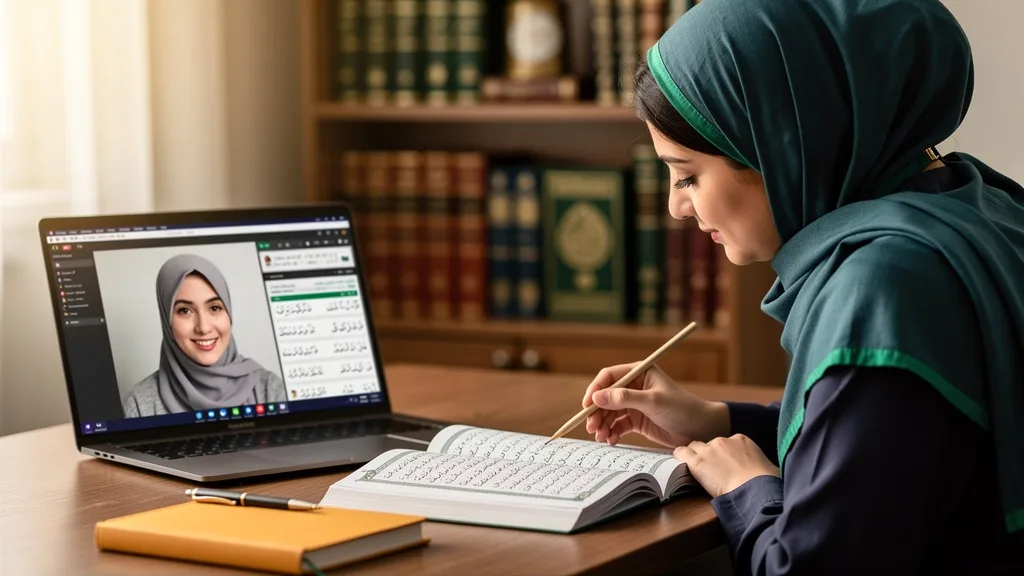
Do you long to connect with the Quran directly but feel held back because you don't speak Arabic? For millions of Muslims worldwide, this is a common challenge, yet it is one that can be overcome. The desire to recite the words of Allah as they were revealed is a beautiful and attainable goal, even if you are not a native Arabic speaker. This guide provides a clear path forward, showing you exactly where to begin your journey.
You can absolutely read the Quran without knowing Arabic by first mastering the Arabic alphabet and its vowel system through a foundational guide like the Noorani Qaida. Next, you learn the basic rules of Tajweed for correct pronunciation. With these skills, you can begin reading short surahs, using audio recitations to guide your fluency. This approach allows you to engage with the sacred text directly, paving the way for deeper understanding and memorization over time.
Foundational Steps for Reading the Quranic Script
Before you can read the verses of the Quran, you must first become familiar with the script in which it was revealed. This process is similar to learning the ABCs before reading English. The Arabic script has its own unique letters, sounds, and rules that form the building blocks of every word in the Quran. Focusing on these fundamentals ensures you create a strong base for accurate and beautiful recitation.
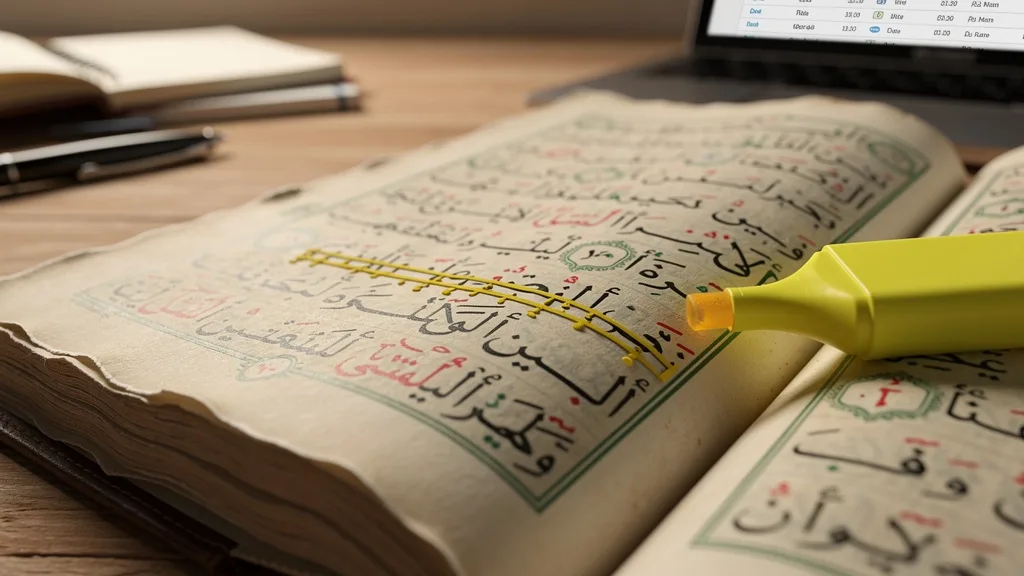
This initial stage is not about understanding the meaning but about recognizing and vocalizing the sounds correctly. It requires patience and consistent practice, but mastering these basics is the most critical step in your journey. Once you are comfortable with the script, the path to reading full verses becomes much clearer and more accessible.
Master the Arabic Alphabet with a Qaida
The first practical step is to learn the 28 letters of the Arabic alphabet using a Qaida. A Qaida, such as the widely used Noorani Qaida, is a beginner's booklet designed to teach the alphabet in a systematic and logical order. It introduces each letter with its name, shape, and sound, helping you build recognition and muscle memory for pronunciation.
Working through a Qaida teaches you how letters connect to form words, which is a key feature of the Arabic script. Unlike English, Arabic letters often change their shape depending on their position within a word (initial, medial, or final). A Qaida breaks this down into simple, digestible lessons, making the learning process manageable for students of all ages.
Learn the Arabic Vowel System (Harakat)
Once you are familiar with the letters, the next step is learning the Harakat, or the short vowel markings. These are small symbols written above or below a letter to indicate its vowel sound. The three primary Harakat are the Fatha (an 'a' sound), Kasra (an 'i' sound), and Dammah (a 'u' sound). Another critical symbol is the Sukoon, which indicates the absence of a vowel.
The Harakat are essential because the Quranic script is written with them to ensure precise pronunciation. Without them, a single word could be read in many different ways. Learning these markings allows you to vocalize words correctly and is a non-negotiable step toward accurate recitation. This system removes the ambiguity and helps you read as the words are meant to be read.
Understand Basic Tajweed Rules for Proper Pronunciation
Tajweed is the science of reciting the Quran correctly. It covers everything from the precise articulation point of each letter (Makharij) to the specific qualities (Sifaat) each letter possesses. While mastering advanced Tajweed takes years, learning the basics is crucial from the very beginning to avoid developing incorrect pronunciation habits.
Fundamental rules include proper elongation of vowels (Madd), the distinct sounds of similar-looking letters, and how to pronounce nasal sounds (Ghunna). Understanding these tajweed rules ensures your recitation is not only correct but also melodious and respectful of the divine text. This is an area where a qualified teacher becomes invaluable, as they can provide the real-time feedback needed to perfect your pronunciation.
A Practical Approach to Start Reading Surahs
After building a foundation with the alphabet and basic rules, it's time to apply your knowledge by reading directly from the Quran. This transition can feel intimidating, but a strategic approach makes it manageable. The key is to start small and use supportive tools to build your confidence and fluency gradually. Don't aim to read an entire chapter on your first day; instead, focus on reading a single verse correctly.

This phase is about putting theory into practice. You will combine your knowledge of letters, vowels, and Tajweed to decode words and verses. Consistency is more important than speed. A few verses read correctly and thoughtfully each day will build a stronger skill set than rushing through pages with many mistakes.
Begin with Short Surahs from Juz Amma
The best place for a beginner to start reading is Juz Amma, the final and 30th part of the Quran. This section contains the shortest chapters (surahs) of the book, which are often rhythmic and easier to memorize and recite. Many of these surahs, such as Al-Fatiha, Al-Ikhlas, and Al-Asr, are recited daily in prayers, so you may already be familiar with their sound.
Starting with these short surahs provides a sense of accomplishment and motivates you to continue. Their brevity allows you to focus intensely on the pronunciation of each word without feeling overwhelmed. As you master one surah, you can move to the next, slowly building your stamina and ability to read longer passages.
Use Transliteration as a Temporary Aid, Not a Crutch
Transliteration, which is the practice of writing Arabic words using the English (or another) alphabet, can be a helpful tool for absolute beginners. It can bridge the gap between hearing a sound and seeing its corresponding Arabic letter. It helps you associate the sounds you hear in recitations with the written text.
However, it's crucial to view transliteration as a temporary aid. The English alphabet cannot accurately capture all the unique sounds of Arabic, which can lead to mispronunciation. Relying on it for too long can hinder your ability to read the Arabic script directly. Use it to get started, but make it your goal to transition to reading the pure Arabic text as soon as possible.
Listen to Recitations to Train Your Ear
Listening to recordings of expert Qaris (Quran reciters) is an invaluable practice. This passive learning technique helps you internalize the correct rhythm, pace, and pronunciation of the Quran. Choose a reciter whose voice and style you find clear and pleasant, such as Sheikh Mishary Rashid Alafasy or Sheikh Abdul-Rahman Al-Sudais.
Follow along in the Quran as you listen, pausing and repeating verses to mimic the reciter's pronunciation. This active listening trains your ear to recognize the subtleties of Tajweed and helps you develop a natural flow in your own recitation. You can find high-quality recitations on websites like Quran.com and through various mobile applications.
The Importance of Working with a Qualified Quran Teacher
While self-study resources are abundant, the guidance of a qualified teacher is irreplaceable on the journey to reading the Quran. A teacher does more than just impart knowledge; they provide personalized feedback, structure, and motivation that apps and recordings cannot offer. This human connection is especially vital when learning a skill as nuanced as Quranic recitation.
"A dedicated teacher turns the challenge of learning into a guided journey, ensuring you never feel lost or unmotivated. They correct your mistakes before they become habits and celebrate your progress every step of the way."
Investing in a teacher accelerates your learning and ensures you are building your skills on a correct foundation. For sisters and children, finding a supportive and comfortable environment with a female teacher can make all the difference, fostering a positive and encouraging learning experience. This is a core part of our mission at Hidayah Quran Academy.
Receiving Real Time Pronunciation Correction
The most significant advantage of a live teacher is immediate, personalized correction. The subtleties of Arabic pronunciation, especially the articulation points of certain letters, are difficult to grasp on your own. You may not even realize you are making a mistake until it has become a deep-rooted habit.
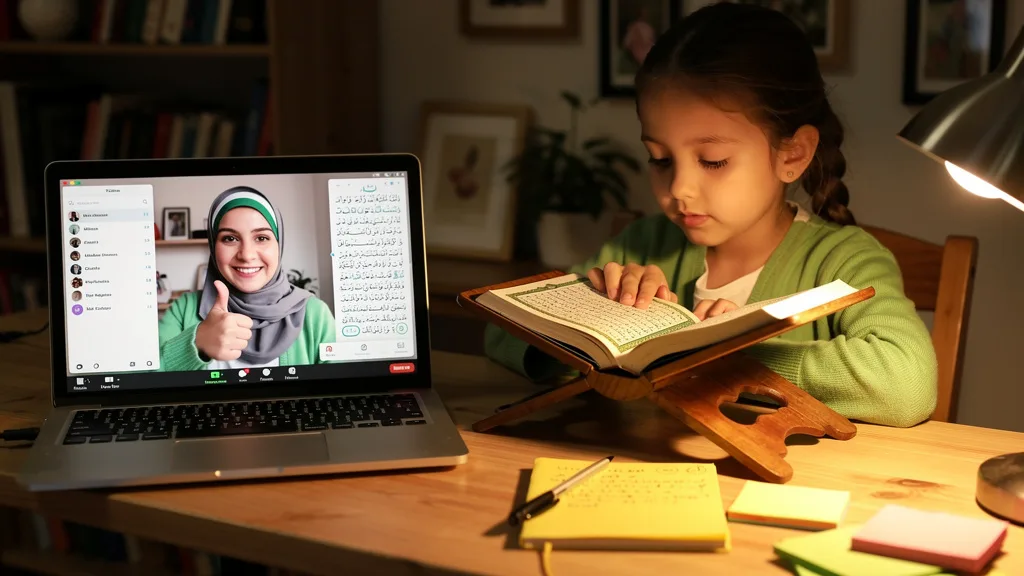
A qualified teacher listens to you recite, identifies errors in real time, and provides specific instructions on how to correct them. For example, they can explain how to position your tongue to differentiate between the letters 'ت' (ta) and 'ط' (ṭa). This one-on-one feedback is the fastest and most effective way to master authentic Tajweed.
Staying Motivated with a Structured Learning Plan
Learning to read the Quran is a marathon, not a sprint. It's easy to lose motivation when studying alone, especially when you hit a plateau. A teacher acts as your personal guide and mentor, creating a structured learning plan tailored to your pace and goals.
This plan breaks the journey down into achievable milestones, from mastering the alphabet to reading your first full surah. Having regular lessons creates accountability and a consistent routine. A good teacher also provides encouragement and celebrates your progress, which is essential for maintaining long-term motivation and commitment to your studies.
Bridging the Gap Between Reading and Understanding
Once you can comfortably read the Arabic script, the next beautiful phase of your journey begins: striving to understand the message of the Quran. Reading the words is the first step, but comprehending their meaning is what allows the guidance of the Quran to truly enter your heart. This doesn't require you to become a fluent speaker of conversational Arabic overnight.
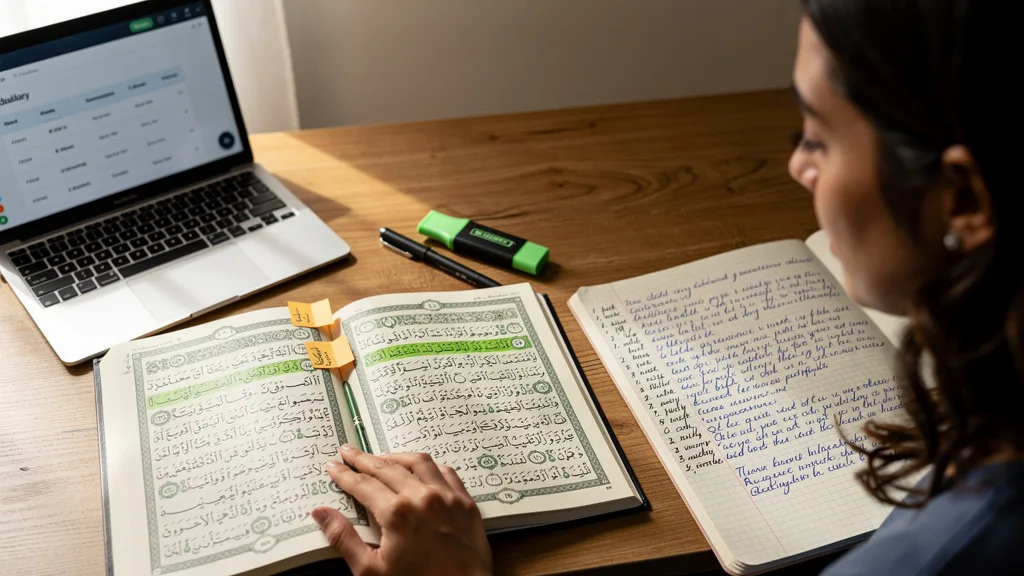
Instead, you can take practical steps to build a foundational understanding of Quranic Arabic. This form of Arabic has a defined vocabulary, and by focusing on the most common words and concepts, you can begin to grasp the meaning of the verses you recite. This process transforms recitation from a purely phonetic exercise into a deeply spiritual conversation.
Using Reliable Translations to Grasp the Message
The most immediate way to understand what you are reading is to use a reliable English translation. Keep a copy of the Quran with a side-by-side translation as you practice. After reading a verse or a section in Arabic, read its English meaning to comprehend the message, commands, and stories being conveyed.
Choose a translation that is respected for its accuracy, such as the Sahih International, The Clear Quran, or the translation by Abdullah Yusuf Ali. While no translation can fully capture the eloquence of the original Arabic, it serves as an indispensable bridge to the meaning. This practice enriches your Salah (prayer) and your overall relationship with the Quran.
Learning High-Frequency Quranic Arabic Words
A powerful strategy for understanding the Quran directly is to learn its high-frequency words. Studies have shown that a relatively small number of words make up a large percentage of the Quranic text. For example, learning just a few hundred of the most common words can help you understand over 70% of the Quran.
Focus on learning core nouns, verbs, and particles that appear repeatedly. You can use resources like a Quranic Arabic vocabulary list to get started. This targeted approach is far more efficient than trying to learn all of modern Arabic. As your vocabulary grows, you will begin to recognize words and phrases directly as you read, reducing your reliance on translations.
| Arabic Word | Transliteration | English Meaning | Frequency in Quran |
|---|---|---|---|
| ٱللَّه | Allah | God | 2,698 |
| رَبّ | Rabb | Lord, Sustainer | 970 |
| قَالَ | Qala | He said | 1,618 |
| كَانَ | Kana | He was / It was | 1,360 |
| ٱلَّذِينَ | Allatheena | Those who | 1,080 |
How to Memorize the Quran Without Knowing Arabic
Many people assume that you must know Arabic to memorize the Quran, but this is a common misconception. Millions of non-Arab Muslims throughout history have become Hafiz (one who has memorized the entire Quran). Memorization, or Hifz, is primarily a process of repetition, dedication, and a strong connection with the text.
While understanding the meaning certainly helps with retention, it is not a prerequisite. The primary tools for Hifz are a strong will, a consistent schedule, and effective memorization techniques. It is a spiritual journey that is open to anyone who is committed, regardless of their native language.
Effective Hifz Techniques for Non-Arabic Speakers
The foundation of memorization for non-Arabic speakers is repetition and auditory learning. The goal is to commit the sound and flow of the verses to memory so perfectly that you can recite them from heart. Here are some proven techniques:
- Set a Realistic Schedule: Decide on a specific amount to memorize each day, even if it's just one or two lines. Consistency is more important than volume.
- Listen and Repeat: Play a recording of the verses you are memorizing over and over. Listen carefully, then pause the audio and repeat the verse aloud until you can say it without help.
- Break It Down: Don't try to memorize a whole page at once. Break the page down into smaller sections or even individual verses. Master one verse before moving to the next.
- Constant Revision: Dedicate a significant portion of your Hifz time to reviewing what you have already memorized. This is the key to long-term retention.
These methods rely on creating strong auditory patterns in your brain. A teacher is also crucial here to ensure that what you are memorizing is pronounced correctly, as it is very difficult to unlearn a verse that has been memorized with mistakes.
How Basic Arabic Knowledge Can Accelerate Memorization
While not essential, acquiring a basic understanding of Quranic Arabic can significantly aid the memorization process. When you understand the words you are reciting, your brain can form logical connections between them, making them easier to remember. It changes the process from memorizing a string of sounds to memorizing a meaningful story or message.
Even learning high-frequency words can make a difference. When you recognize words like 'Allah' (God), 'Jannah' (Paradise), 'An-Naar' (The Fire), and 'Rasul' (Messenger), the verses begin to have more context. This context acts as a memory aid, helping you recall the sequence of words more easily and making the entire Hifz journey more engaging and spiritually rewarding.
Key Takeaways
Embarking on the journey to read and understand the Quran is a deeply rewarding endeavor. As we've explored, you don't need to be a fluent Arabic speaker to begin. Here are the essential points to remember:
- Start with the Basics: Mastering the Arabic alphabet and vowel system with a Qaida is the non-negotiable first step.
- Prioritize Pronunciation: Learn fundamental Tajweed rules from the beginning to ensure your recitation is accurate.
- Practice with Short Surahs: Begin reading from Juz Amma and use audio recitations from skilled Qaris to guide your fluency.
- Find a Teacher: The guidance and real-time feedback from a qualified teacher, especially for pronunciation, are invaluable.
- Bridge to Understanding: Use reliable translations and learn high-frequency Quranic words to start comprehending the divine message.
- Memorization is Attainable: You can memorize the Quran without knowing Arabic through consistent repetition, listening, and a structured revision schedule.
Frequently Asked Questions
Is it mandatory to read the Quran in Arabic?
Yes, for the purposes of formal worship like the five daily prayers (Salah), it is a requirement for Muslims who are able to do so to recite the Quran in its original Arabic. This is because the Arabic text is considered the literal, unchangeable word of Allah, and its recitation is an act of worship in itself. Translations are interpretations of the meaning, not the divine word itself.
Why is reading the Quran in its original Arabic important?
While reading translations is highly encouraged for understanding the message, they cannot replace the recitation of the Arabic text in prayer. Learning to read the Arabic script is therefore a vital skill for every Muslim to fulfill their religious obligations and connect with the text as it was revealed.
Can you learn to read the Quran on your own without a teacher?
Reading the Quran in its original Arabic is important because the Arabic language is an integral part of the revelation. The Quran's linguistic and literary beauty, its inimitable eloquence (I'jaz), and its phonetic perfection are all tied to the Arabic text. These aspects are lost in translation, which can only convey a portion of the original meaning and none of its divine sound.
How long does it take to read the Quran fluently as a beginner?
Furthermore, reciting the Arabic words is a source of immense spiritual reward (thawab). The Prophet Muhammad (peace be upon him) said that a person will be rewarded for every letter they recite from the Quran. This direct engagement with the words of Allah fosters a unique spiritual connection that cannot be replicated through a translation.
Is it sinful to mispronounce words while learning to read the Quran?
It is possible to learn the very basics, such as the alphabet, on your own using apps and online resources. However, it is highly discouraged to proceed without a teacher, especially when it comes to pronunciation and Tajweed. The Arabic language has many sounds that do not exist in English, and it is nearly impossible to master them without feedback from a qualified instructor.
Studying alone often leads to the development of incorrect pronunciation habits that are very difficult to correct later. A teacher ensures you are learning correctly from the start, provides motivation, and tailors the learning plan to your specific needs. For an authentic and accurate recitation, a teacher is essential.
The time it takes to read the Quran fluently varies greatly from person to person. It depends on factors like your native language, the amount of time you dedicate to practice each week, and whether you are working with a teacher. With consistent effort and guidance, a dedicated beginner can typically learn to read basic verses within a few months.
Achieving fluency, which means reading smoothly and with correct Tajweed at a moderate pace, can take a year or more of regular practice. The key is not to focus on the timeline but on consistent, daily progress. Every small step forward is a victory on this blessed journey.
No, it is not considered sinful to make mistakes while you are genuinely trying to learn. In fact, there is a special reward for those who struggle to recite the Quran. The Prophet Muhammad (peace be upon him) said that the one who is proficient in the Quran will be with the noble and obedient scribes (angels), and the one who recites the Quran and finds it difficult, stammering through it, will have a double reward.
This hadith provides immense comfort and encouragement to learners. Allah rewards the effort and the intention, not perfection. As long as you are sincere in your desire to improve and are actively seeking to correct your mistakes, your efforts are valued and rewarded.
Conclusion
Reading the Quran in its original Arabic is a profound and achievable goal for every Muslim, regardless of their linguistic background. The path begins with simple, foundational steps: learning the alphabet, understanding basic pronunciation rules, and practicing with short chapters. By embracing available tools, listening to recitations, and, most importantly, seeking guidance from a qualified teacher, you can unlock the ability to recite the words of Allah with confidence and clarity. This journey not only fulfills a religious duty but also opens a direct line of communication to the divine message, enriching your faith and daily life.
If you are a sister or a parent seeking a supportive, one-on-one learning environment for yourself or your children, our qualified female teachers at Hidayah Quran Academy are here to guide you. Take the first step on your journey with a personalized lesson. Start today with a Book Free Trial.