

Mastering Quran Recitation: Your 2026 Guide to Online Tajweed Classes
Do you long to recite the Quran with the beauty, clarity, and precision it deserves, just as it was revealed? For many, the path to perfecting recitation can seem challenging, especially when balancing daily responsibilities. Fortunately, the growth of digital learning has made connecting with the holy book more accessible than ever.
Mastering Quran recitation is achievable for everyone in 2026 through structured online Tajweed classes. These programs provide direct access to qualified teachers, flexible scheduling, and personalized one-on-one feedback, allowing you to learn the sacred rules of pronunciation and articulation from the comfort of your home. This approach helps you build a profound and correct connection with the words of Allah SWT.
Understanding Tajweed and Its Importance for Proper Recitation
Tajweed is the science of perfecting the recitation of the Quran. The word itself means "to improve" or "to make better." It encompasses a set of rules that govern how each letter of the Quranic Arabic should be pronounced, including its specific point of articulation (makhraj) and its inherent and conditional qualities (sifaat). Learning Tajweed is not merely about phonetics; it is an act of devotion aimed at reciting the Quran as the Prophet Muhammad (peace be upon him) did.
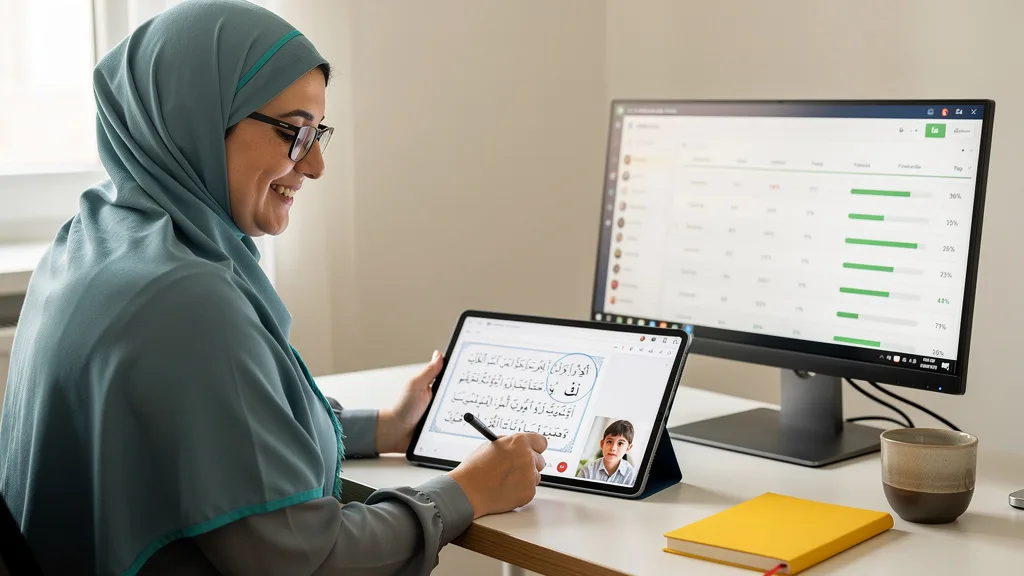
The primary importance of Tajweed is to prevent mistakes that could alter the meaning of the sacred text. Even a small error in pronunciation can change a word and, consequently, the message of a verse. By applying these rules, you preserve the integrity of the words of Allah SWT and deepen your personal connection during worship. It transforms your recitation from simple reading into a beautiful, melodic, and spiritually uplifting experience that honors the divine origin of the Quran.
Key Benefits of Learning Tajweed Through Online Classes
Enrolling in online Tajweed classes offers a unique combination of convenience, quality, and personalization that traditional learning environments often cannot match. For sisters, children, and busy adults, the digital classroom removes geographical and scheduling barriers, making consistent learning a realistic goal. This modern approach empowers students to connect with expert instructors and a structured curriculum from anywhere in the world.
Access to Qualified Tutors from Around the World
One of the most significant advantages of online learning is the ability to connect with highly qualified and certified tutors, regardless of your location. You are no longer limited to the teachers available in your local community. This is especially beneficial for sisters seeking a female Tajweed teacher online in a private, comfortable setting. Whether you are in the UK, USA, or Australia, you can find an experienced instructor from a country with a strong tradition of Quranic education who can guide you with expertise and authenticity.
Flexible Scheduling to Fit Your Lifestyle
Life is busy, and finding time for dedicated study can be difficult. Online Quran classes are designed with flexibility in mind, allowing you to schedule sessions that fit around your work, family, and personal commitments. Whether you are an early riser or a night owl, you can arrange classes at times that work best for you. This adaptability eliminates the stress of commuting and rigid schedules, ensuring that your journey to master Quran recitation is sustainable and enjoyable.
Personalized Feedback in One-on-One Sessions
Mastering the subtleties of Tajweed requires focused, individual attention. In one-on-one online sessions, your teacher can dedicate their entire focus to your recitation. They can instantly identify and correct your specific mistakes, whether in the articulation of a letter or the application of a rule like Idgham or Ikhfa. This personalized feedback loop accelerates learning and builds a strong foundation, which is often difficult to achieve in a group setting where a teacher's attention is divided.

How to Choose the Right Online Tajweed Program for You
With a growing number of online options, selecting the right program is crucial for your success. The best choice depends on your learning style, goals, and specific needs. Taking the time to evaluate different academies and instructors will ensure you find a supportive and effective environment for your Quranic education journey.
Evaluate Instructor Credentials and Teaching Style
The qualification of the instructor is the most important factor. Look for teachers who are not only fluent in reciting with Tajweed but also hold certifications (Ijazah) that verify their knowledge and teaching authority. Beyond credentials, consider their teaching style. Are they patient, encouraging, and clear in their explanations? A good teacher adapts their method to the student's pace and needs, creating a positive and motivating learning atmosphere.
Review the Curriculum and Learning Materials
A structured curriculum is the backbone of an effective program. Inquire about the learning path, which typically starts with the Noorani Qaida to build a strong foundation in letter recognition and basic pronunciation. The curriculum should then progress systematically through the rules of Tajweed, supported by clear and accessible learning materials. Ask if they provide digital resources, PDFs, or practice exercises to supplement the live sessions.
Look for Interactive Features and Small Class Sizes
Effective online learning is interactive, not passive. The best programs utilize platforms like Zoom or WhatsApp for live, face-to-face interaction. One-on-one classes are the gold standard for learning Tajweed, as they guarantee the instructor's undivided attention. This ensures you receive immediate corrections and can ask questions freely, which is essential for mastering the intricate details of pronunciation and articulation.
Utilize Free Trial Classes to Assess Compatibility
Most reputable online Quran academies offer a free trial class. This is an invaluable opportunity to experience the platform, meet a potential teacher, and assess the overall quality of the program without any commitment. During the trial, you can see if the teacher's style resonates with you and if the technology is easy to use. Taking advantage of a free trial for Quran classes is the most reliable way to make an informed decision and find the perfect fit for your learning journey.

A Step-by-Step Guide to Mastering Your Recitation
Learning Tajweed is a journey that combines knowledge with consistent practice. By following a structured approach, you can systematically improve your recitation and build a lasting connection with the Quran. This step-by-step guide provides a clear path to help you achieve mastery and confidence in your reading. Online Quran classes are designed.
Step 1: Set Clear Goals and a Consistent Practice Schedule
Begin by defining what you want to achieve. Is your goal to perfect the pronunciation of all letters, master the rules of noon saakin and tanween, or recite a specific surah flawlessly? Once you have clear goals, establish a realistic and consistent practice schedule. Even 15-20 minutes of dedicated practice each day is more effective than a long, infrequent session. Consistency is the key to embedding the rules of Tajweed into your long-term memory.
Step 2: Focus on One Rule at a Time to Avoid Overwhelm
Tajweed contains many rules, and trying to learn them all at once can be overwhelming. Work with your teacher to focus on one rule at a time. For example, spend a week dedicated solely to understanding and applying the rule of Qalqalah. Practice it with different letters and in various verses until it becomes second nature. This methodical approach ensures deep comprehension and prevents confusion, building a solid foundation for more complex rules later.
Step 3: Record and Listen to Your Own Recitation
One of the most powerful tools for self-correction is listening to your own voice. Use your phone or computer to record yourself reciting a few verses. When you play it back, listen carefully and compare your recitation to that of a qualified Qari (reciter). This practice helps you identify mistakes that you might not notice while you are actively reciting. It provides an objective perspective on your progress and highlights specific areas that need more attention from your teacher.
Step 4: Actively Seek and Apply Feedback from Your Teacher
Your teacher is your most valuable resource. During your one-on-one sessions, do not be shy about asking for corrections. Welcome their feedback as a gift that helps you improve. After each lesson, make notes of the specific points your teacher highlighted. During your practice sessions throughout the week, consciously work on applying that feedback. This active loop of seeking, receiving, and applying corrections is what accelerates progress more than anything else.
Step 5: Practice Reciting Aloud to Build Confidence
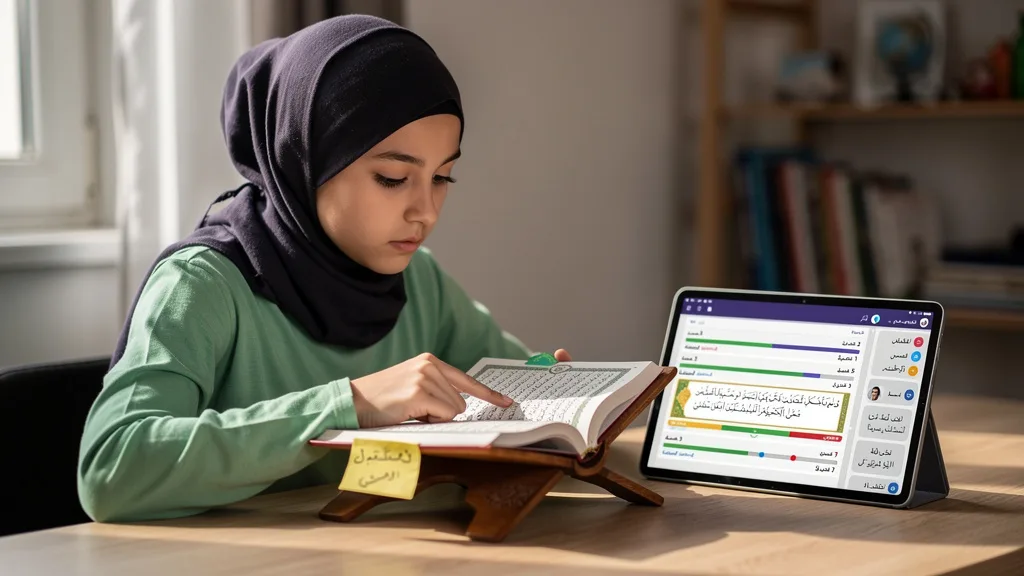
While silent practice is useful for memorization, reciting aloud is essential for mastering Tajweed. It engages the muscles of your mouth and tongue, helping you perfect the points of articulation (makharij). Reciting aloud also builds confidence and prepares you for reading in front of others or during prayer. Start by reciting to yourself, then perhaps to a family member, to gradually become more comfortable with the beautiful sound of your own correct recitation.
Common Mistakes to Avoid When Learning Tajweed Online
As you embark on your journey to how to master Quran recitation with online Tajweed classes, being aware of common pitfalls can help you stay on the right path. Avoiding these mistakes will ensure your efforts are effective and that you build a correct and strong foundation from the very beginning. A mindful approach to learning prevents the need to unlearn bad habits later on.
The online format, while convenient, requires discipline and a commitment to fundamentals. Many students are eager to recite fluently and may rush past the most critical aspects of Tajweed. By understanding these common errors, you can adopt a more patient and methodical learning strategy that leads to true mastery.
| Common Mistake | Correct Approach |
|---|---|
| Rushing to read full verses without mastering individual letters. | Spending ample time on the Noorani Qaida to perfect the makhraj (articulation point) and sifaat (qualities) of each letter first. |
| Practicing silently or only in your head. | Reciting aloud daily to train the muscles of the mouth and allow for self-correction and teacher feedback. |
| Focusing on memorizing rules without applying them. | Actively finding examples of each new rule in the Quran and practicing them repeatedly in context. |
| Practicing inconsistently, such as once a week. | Establishing a short, daily practice routine to build muscle memory and reinforce learning consistently. |
Neglecting the Basics of Makharij and Sifaat
The most fundamental aspect of Tajweed is the correct pronunciation of each Arabic letter from its specific articulation point (makhraj) with all its inherent qualities (sifaat). Many learners are in a hurry to learn the rules of elongation (madd) or merging (idgham) and neglect to perfect the letters themselves. This is like building a house on a weak foundation. If the letter 'ح' (Ha) sounds like 'ه' (ha), no amount of advanced rules will fix the recitation. Dedicate significant time with your teacher to mastering the basics before moving on. qualified and certified tutors.
Rushing Through Lessons Without True Comprehension
It can be tempting to move to the next lesson or rule to feel a sense of progress. However, true progress in Tajweed is measured by mastery, not speed. If you move on from a rule without being able to apply it correctly and consistently, you are only accumulating theoretical knowledge. Ensure you fully understand and can implement one concept before tackling the next. A good teacher will pace the lessons according to your comprehension, not a fixed timeline.
Inconsistent Practice and Lack of Discipline
Online classes provide the structure of a lesson, but the real improvement happens during your personal practice time between sessions. One of the biggest mistakes is relying solely on the class time and neglecting daily practice. Learning Tajweed is a skill that requires muscle memory and consistent reinforcement. A lack of disciplined, daily practice, even for a short period, will significantly slow down your progress and make it difficult to retain what you have learned.
Key Takeaways
To successfully master Quran recitation, it is vital to combine structured learning with dedicated personal effort. As you navigate your journey with online Tajweed classes in 2026, keep these essential points in mind to ensure your path is both effective and rewarding.
- Foundation First: Mastering the basics of makharij (articulation points) and sifaat (letter qualities) is non-negotiable and the key to correct recitation.
- Personalized Feedback is Crucial: One-on-one classes provide the focused, individual attention needed to correct subtle mistakes and accelerate your learning.
- Consistency Over Intensity: Short, daily practice sessions are far more effective for building muscle memory and long-term retention than infrequent, long sessions.
- Utilize Free Trials: Always take advantage of a trial class to assess teacher compatibility and the quality of the program before committing.
- Record and Reflect: Listening to your own recitation is a powerful tool for self-assessment and identifying areas for improvement.
Frequently Asked Questions
How long does it take to learn Tajweed online?
The time it takes to learn Tajweed varies greatly depending on the individual's starting level, consistency of practice, and the frequency of lessons. For a complete beginner, mastering the basic rules can take anywhere from 6 to 12 months with consistent effort. Achieving advanced proficiency is a lifelong journey of refinement.
Can I learn Tajweed by myself without a teacher?
While you can learn the theoretical rules of Tajweed from books or videos, it is nearly impossible to master the practical application without a qualified teacher. A teacher provides essential, real-time feedback to correct pronunciation mistakes that you cannot hear yourself. The Quran was transmitted orally, and learning its recitation should follow that same teacher-student tradition.
What is the difference between group and one-on-one classes?
Group classes involve one teacher instructing multiple students simultaneously, which can be a cost-effective option for learning theory. However, one-on-one classes provide personalized, undivided attention where the teacher focuses solely on your recitation. This allows for immediate correction and a customized learning pace, making it the most effective method for mastering practical Tajweed.
Are online Tajweed classes suitable for complete beginners?
Yes, online classes are perfectly suitable and often ideal for complete beginners, including both adults and children. A good program will start with the foundational Noorani Qaida to teach the Arabic alphabet and basic pronunciation. With a patient, one-on-one teacher, even someone with no prior Arabic knowledge can begin their journey, like those in our adult Quran classes online.
How much do online Tajweed classes typically cost in 2026?
The cost of online Tajweed classes in 2026 can vary based on the teacher's qualifications, location, and whether the classes are one-on-one or group sessions. On average, you can expect to pay between $50 to $200 per month for weekly one-on-one classes. Many academies offer package deals or discounts for multiple family members. For a detailed breakdown, you can review typical online Quran class costs.
Conclusion
Learning how to master Quran recitation with online Tajweed classes is a beautiful and attainable spiritual goal in 2026. By embracing the flexibility of online learning, you can connect with qualified female tutors who provide the personalized, one-on-one guidance necessary for true mastery. Remember to focus on a strong foundation, practice consistently, and actively apply the feedback from your teacher. This dedicated effort will not only beautify your recitation but also deepen your relationship with the words of Allah SWT.
If you are a sister, mother, or parent looking for a private and supportive environment for yourself or your children to learn the Quran correctly, we are here to help. Hidayah Quran Academy specializes in connecting students with certified female teachers for personalized lessons.
Ready to take the first step towards beautiful recitation? Book Free Trial today and experience the difference a dedicated teacher can make.