
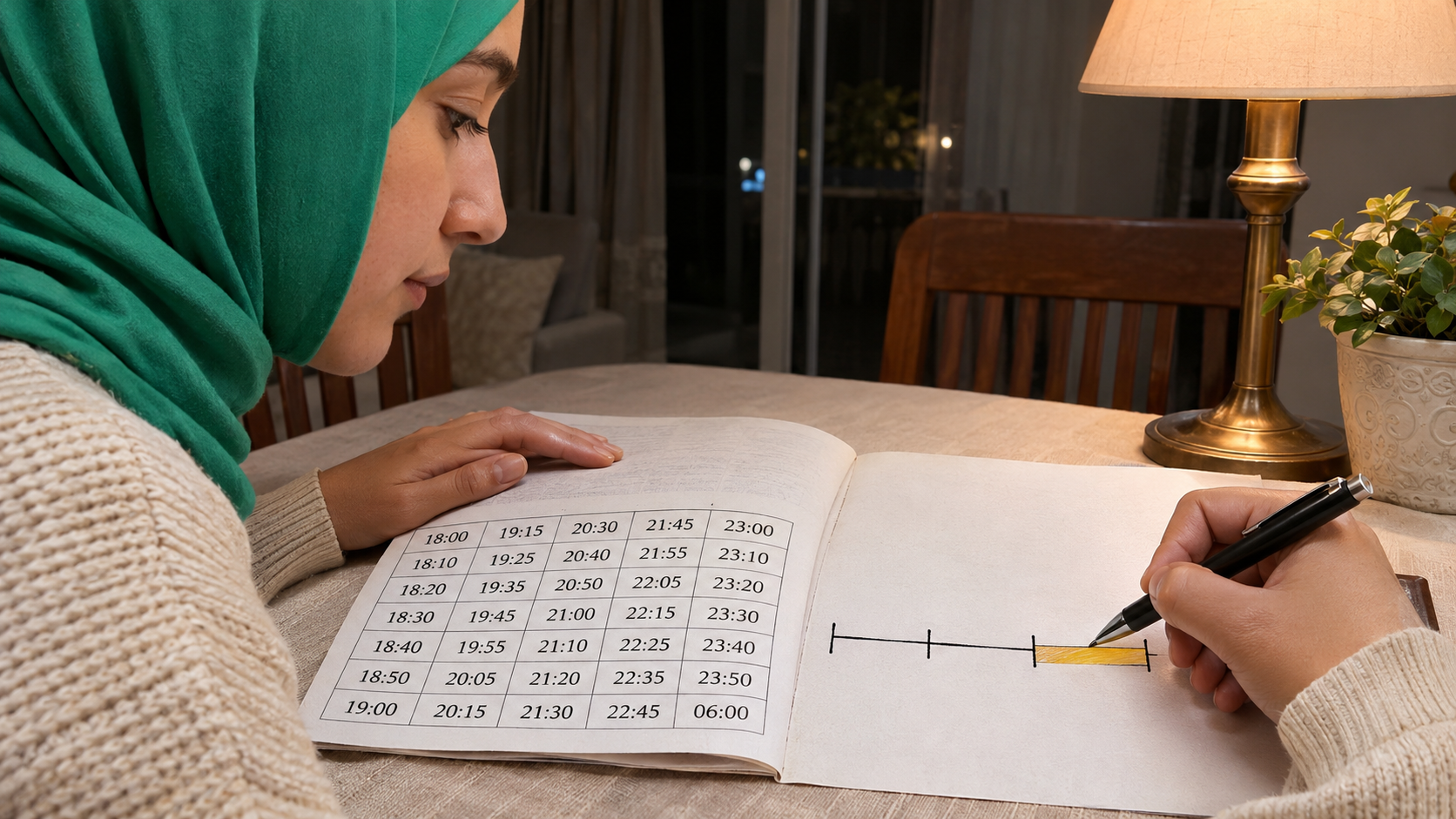
In a nine hour night, the final three hours are the best time to pray Salatul Hajat at night because the last third is a particularly blessed time to ask Allah for help. The window ends when Fajr begins. If waking before dawn would make it harder to pray Fajr on time, you can offer your voluntary prayer after Isha and make dua then.
To find the best time to pray Salatul Hajat at night, count the hours from local Maghrib to the following Fajr, divide that duration by three, and subtract one third from Fajr. Within that window, leave enough time to make wudu, pray two rak‘ahs, and ask Allah for what you need before dawn.
Finding the Last Third of the Night
The last third of the night begins two thirds of the way from Maghrib to the next Fajr. Its start moves as sunset and dawn change, so calculate it from your local timetable for the date you plan to pray. Midnight may fall before or within the window, depending on where you live and the season.
The virtue of this period comes from a hadith in Sahih al-Bukhari that describes Allah inviting people to call upon Him, ask of Him, and seek His forgiveness in the final third of the night. That teaching applies to supplication generally, including when you ask for help with a particular need. You can read the narration in the hadith on late-night dua.
Local Maghrib and Fajr Times
Use the Maghrib and Fajr times for the place where you will pray. If you are calculating on Friday evening, use Friday’s Maghrib and Saturday’s Fajr. On a mosque timetable, look for the time Fajr begins, since the congregational prayer may be scheduled later.
If you use a prayer app, check the city and calculation settings against the timetable you normally follow. This matters when you travel or when different local timetables give different dawn times. In areas with unusually short nights or special twilight conventions, ask a local mosque which Fajr time to use.
Worked Example for Calculating the Start Time
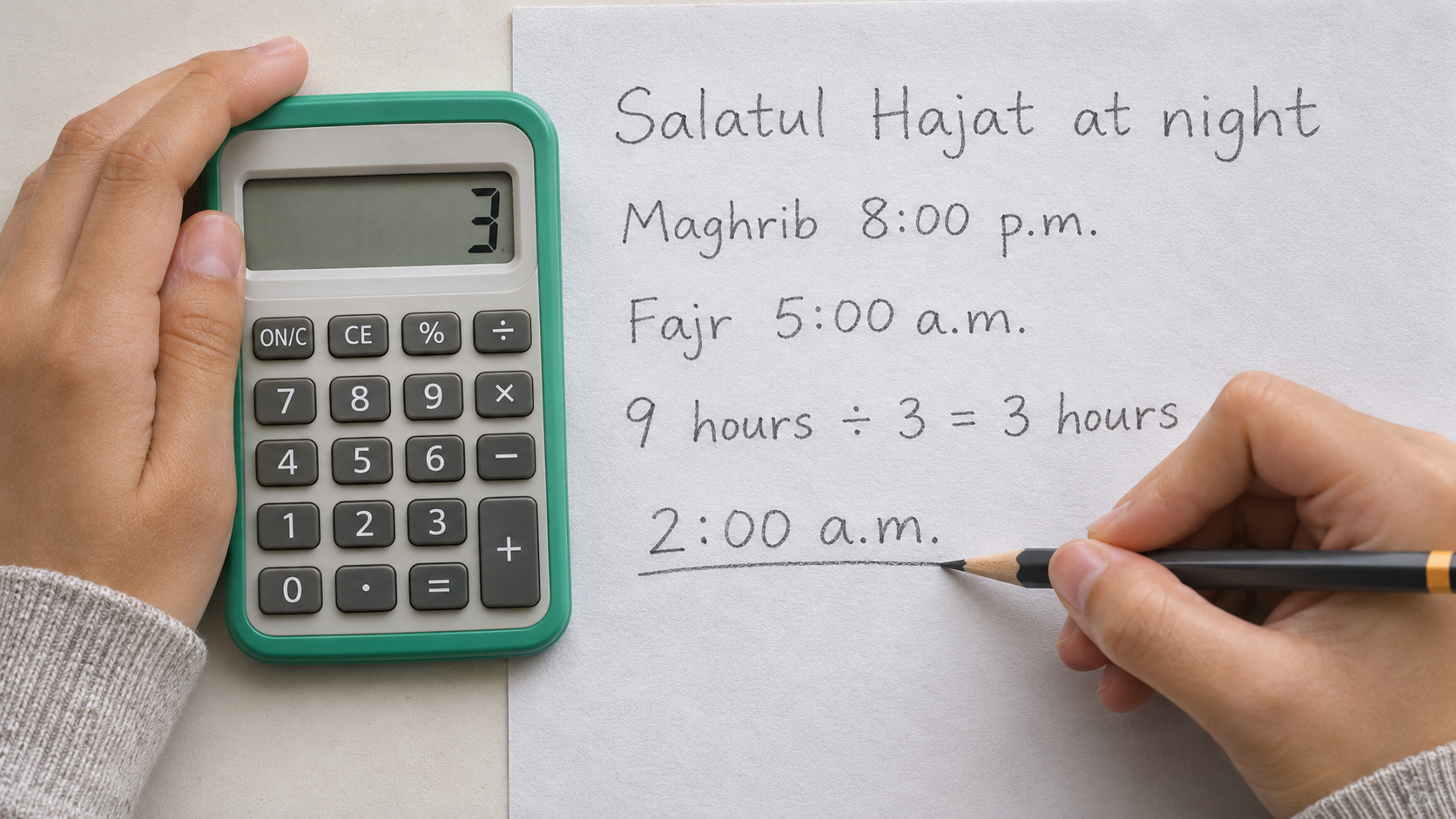
If Maghrib is at 8:00 p.m. and Fajr begins at 5:00 a.m., the last third starts at 2:00 a.m. There are four hours from Maghrib to midnight and five more from midnight to Fajr. Divide the total of nine hours by three, then count back three hours from 5:00 a.m.
When your timetable gives times that do not divide evenly into hours, convert the whole night to minutes first. For instance, 570 minutes divided by three gives 190 minutes, or three hours and ten minutes. Once you find the window, choose a start time that leaves you room for both the prayer and an unhurried dua.
| Timetable entry or calculation | Example result |
|---|---|
| Evening Maghrib | 8:00 p.m. |
| Following morning’s Fajr | 5:00 a.m. |
| Total time from Maghrib to Fajr | 9 hours |
| One third of the total | 3 hours |
| Last third of the night | 2:00 a.m. until Fajr begins at 5:00 a.m. |
How to Perform Salatul Hajat
To perform Salatul Hajat, make wudu, pray two voluntary rak‘ahs, and then ask Allah for help with your need. The name means the prayer of need, and you may hear it called Salat al Hajah. The prayer uses the familiar movements and recitation of two voluntary units.
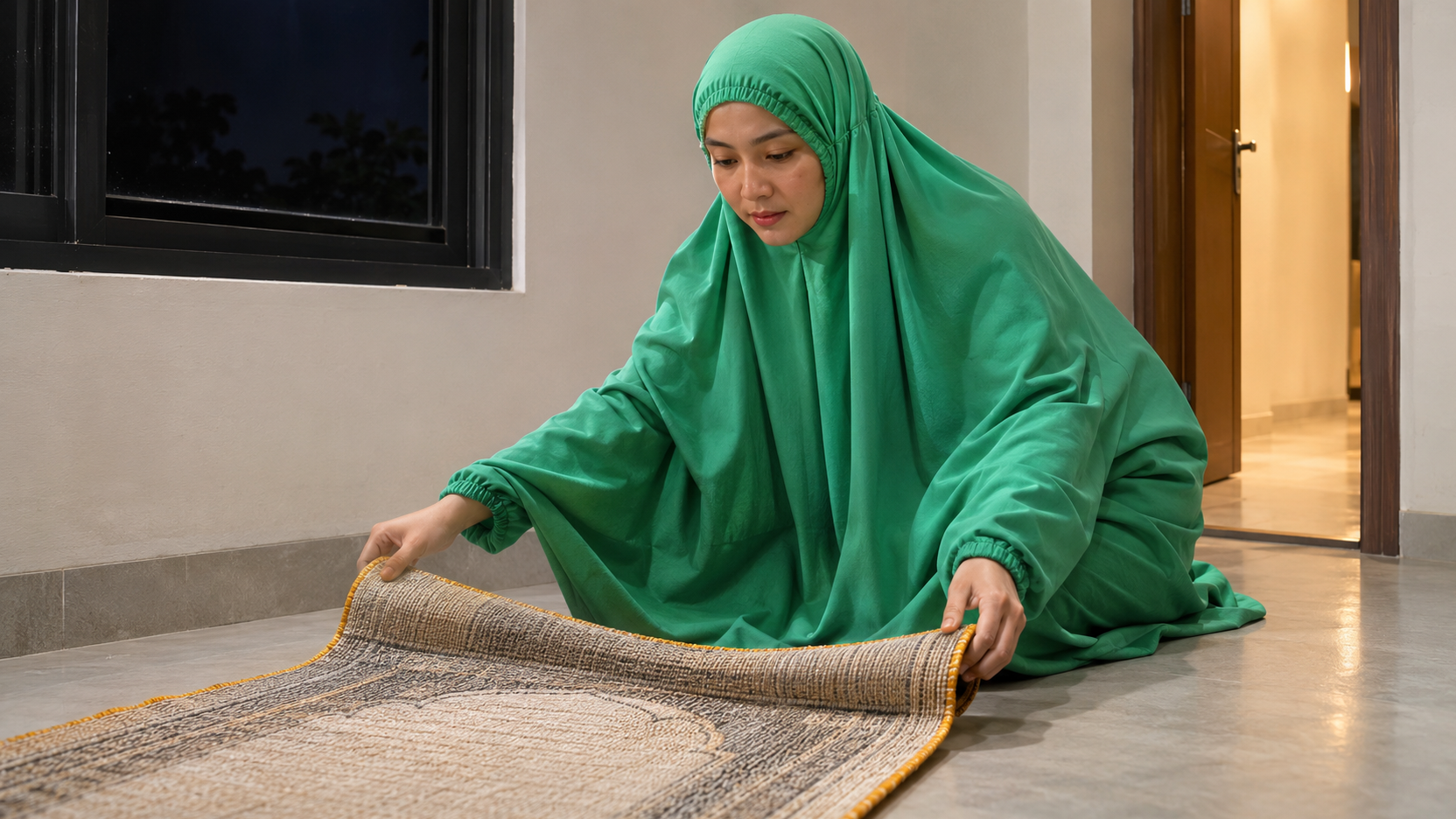
Set aside enough time to prepare, face the qiblah, and complete the prayer calmly. If you are learning the movements or recitation, you can review the basic steps of prayer beforehand. Then choose a short surah you already know so you can focus on the prayer itself.
Intention for the Prayer of Need
Before you begin, intend in your heart to offer a voluntary prayer for Allah and seek His help. You can hold that intention without reciting a formula aloud. Start the prayer with the opening takbir as you would for other voluntary prayers.
If your concern has several parts, take a moment before you begin to identify what you most want to ask for. For example, if you are worried about a debt, you might ask for lawful income, a manageable repayment plan, and patience while you work through it. Save the details of that request for your dua after the prayer.
Performing Two Units of Prayer
Pray two rak‘ahs in the usual way and finish with salam. Begin each rak‘ah with Al Fatihah and follow it with a surah or verses you know, according to the method you have learned. Complete the bowing and two prostrations in each rak‘ah before moving on.
After the second rak‘ah, sit for the concluding recitations and end the prayer with salam. You can then remain seated to praise Allah, send blessings upon the Prophet, and make your request. If you are still learning the voluntary prayer of need, practise the sequence earlier in the day so it feels familiar when you wake at night. basic steps of prayer.
Making Dua for Your Need
After the prayer, ask Allah directly for the help you need. A simple way to begin is to praise Allah and send blessings upon the Prophet before naming your concern. You can ask for a specific outcome and also ask Allah to guide you toward what is best for you.
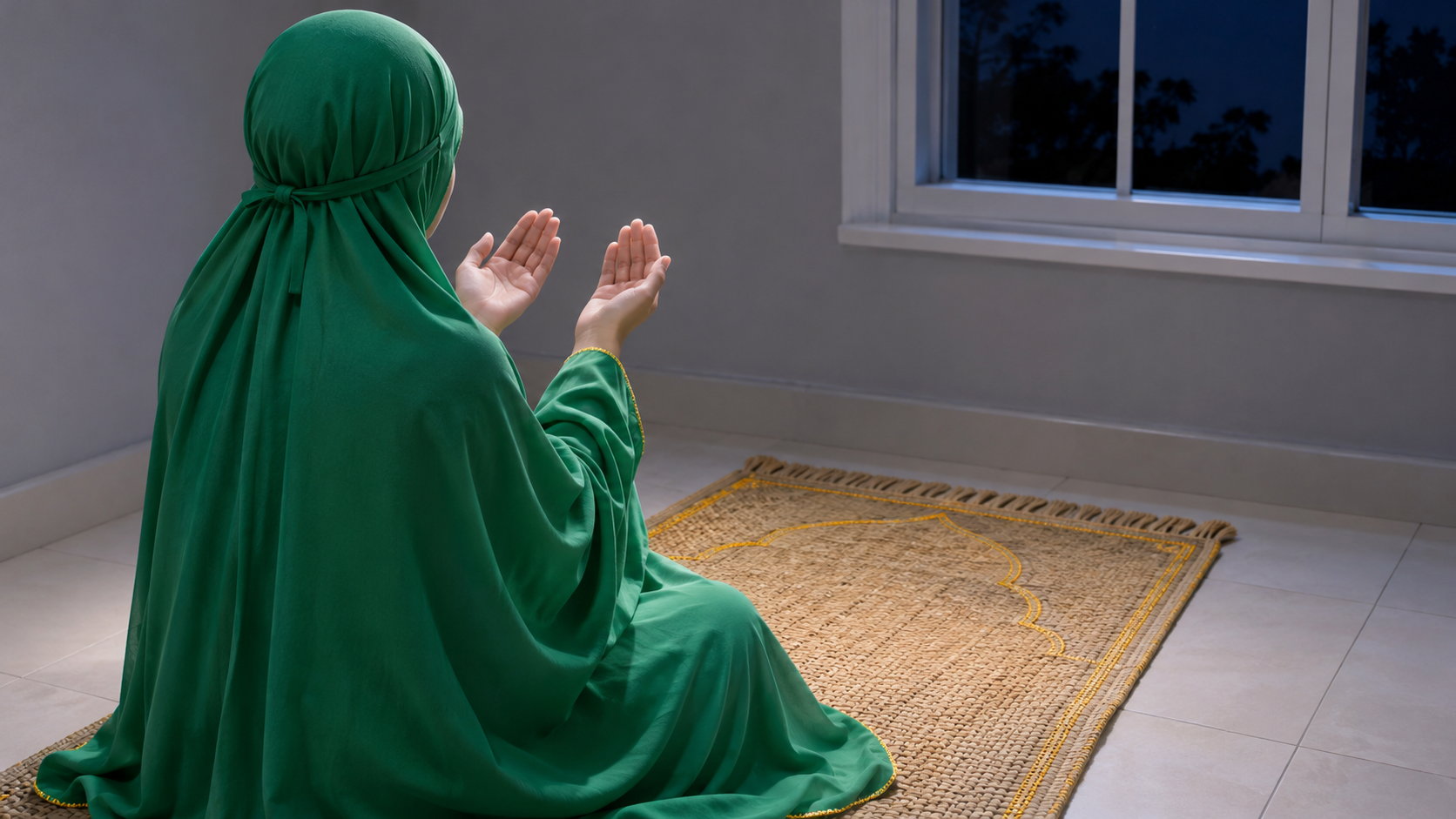
Give yourself a moment to think about both the outcome and what you need in order to act wisely. If you are facing a difficult family conversation, for example, you can ask for calm, fairness, and the right words as well as a good resolution. Our prayer of need dua guide offers further reading on supplication.
Evidence for a Specific Dua
A widely shared dua for Salatul Hajat comes from a weak narration in Jami‘ at-Tirmidhi. The report describes making wudu, praying two rak‘ahs, praising Allah, sending blessings upon the Prophet, and saying a particular supplication. You can read the wording and grading in the prayer of need narration.
You can ask Allah for mercy, forgiveness, and relief using those meanings or other permissible words. If you share the reported formula with someone, describe its grading accurately. The authentic hadith about the last third establishes the virtue of asking Allah during that time, so you can rely on that evidence when choosing a time for your dua.
Asking Allah in Your Own Words
Once you have finished the prayer, make dua in a language you understand. Name the matter plainly, whether you are seeking a good marriage, relief from debt, or help with an urgent decision. If you are unsure which outcome is best, ask for guidance as well as relief. the three solar intervals.
For example, you might say, “O Allah, if this choice is good for me, make it easy for me and bless it. Guide me to what is better if it would bring me harm.” You can also ask for help taking the next practical step, such as calling someone for advice or setting aside money for a repayment.
Key Takeaways
Choose a time you can realistically keep, with Fajr as your priority. If you plan to wake late in the night, check the next morning’s Fajr time before setting an alarm. Leave yourself a comfortable margin for wudu, two rak‘ahs, and dua.
You can make the routine easier by preparing for it before you go to bed. Keep your prayer clothes and mat ready, and decide what you want to ask Allah for. If your schedule changes or you sleep through your alarm, you can make dua when you wake and offer voluntary prayer at another permissible time.
- Check today’s Maghrib and tomorrow’s Fajr for your location.
- Subtract one third of the night’s duration from the Fajr start time.
- Allow time to pray two rak‘ahs and make dua before dawn.
“The best time to pray Salatul Hajat at night is the last third before Fajr. If you can reliably pray after Isha, make use of that time.”
Frequently Asked Questions
When is the best time to pray Salatul Hajat?
The main timing decisions concern when to pray, when to wait, and whether to pray separate sets of rak‘ahs. Keep the difference between voluntary salah and dua in mind as you read. You can still ask Allah for help when you are waiting for a permissible time to offer the prayer.
At what times should you avoid praying Salatul Hajat?
Use your local mosque timetable to identify the relevant boundaries. A timetable may list both the opening of a prayer window and the later congregation time. For details that depend on your school of law, ask a qualified local scholar how to apply those boundaries. prayer of need narration.
Can you pray Salatul Hajat right after Fajr?
The best time is the last third of the night, before Fajr begins. This is a blessed time for dua generally. Within it, pick a time that lets you pray calmly.
Can you pray Salatul Hajat and Tahajjud together?
If you expect to sleep through that window, you can pray after Isha. This is also an option on work or school nights. Give the obligatory Fajr prayer priority when planning your sleep.
Avoid offering it after Fajr until the sun has risen sufficiently, and after Asr until sunset. Also avoid the brief period when the sun is at its highest point before Dhuhr. These windows concern voluntary salah.
One narration covers the periods after dawn and Asr, and another identifies the brief solar intervals. Your local timetable can help you locate them. See Sahih Muslim on prayer restrictions and the three solar intervals.
Wait until the sun has risen sufficiently before offering it after Fajr. You can make dua immediately after your obligatory prayer. If the matter is urgent, ask Allah for help then.
For the next permissible prayer time, use the Ishraq time if your mosque lists it. If your timetable only gives sunrise, ask your mosque how long to wait. Allow for that interval before you pray.
Yes, you can offer both during the same night. You can finish Tahajjud and offer a separate pair of rak‘ahs for your need. You can also make your personal dua after Tahajjud itself.
If you want a distinct prayer of need, use separate sets of rak‘ahs. Leave enough time to finish before Fajr begins. Read more about praying Hajat after Tahajjud.
Conclusion
The final third before Fajr gives you a blessed opportunity to pray two voluntary rak‘ahs and ask Allah for help. This week, check your local Maghrib and Fajr times, calculate the start of the last third, and choose one night when you can wake without compromising Fajr. If your schedule makes that difficult, pray after Isha and make your request in words you understand.
Hidayah Quran Academy offers private one on one Quran lessons with a qualified female teacher for sisters, children, and adult beginners. In a free 30 minute trial on Zoom or WhatsApp, you can meet your teacher, discuss your learning goals, and see how a lesson works. Book Free Trial
If you want help turning this into a concrete plan for your site or team, take the next step below to apply Best Time to Pray Salatul Hajat at Night with confidence.
Ready to act on Best Time to Pray Salatul Hajat at Night? Book Free Trial — tell us your goal, and we will help you pick the highest-leverage next step so you are not guessing alone.